

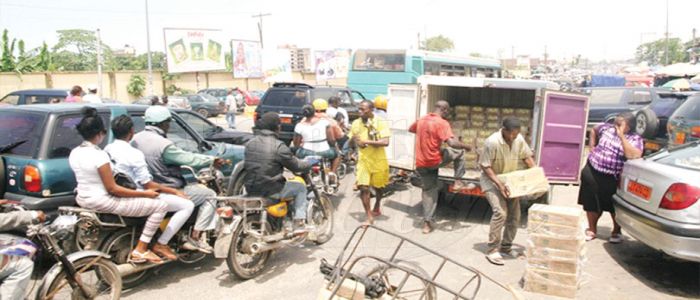
The main worry is poor maintenance, low safety rate, inefficiency, poor quality service and dangerous state of the vehicle or motorcycle.
The public transport sector has suffered years of neglect and this has resulted in disorganized, confused and money?wasting transport systems. Every day there is an increasing number of unregulated, low-capacity and poor quality service offers from clandestine (“clando”) transport operators.
In the midst of this chaos, accidents abound with both financial and material damages that have their ugly effects on the economy. Doubtless is the fact that the use of “clandos” slows down economic development and reduces the quality of life for citizens as the large number of vehicles required to meet demand causes congestion and parking issues and, in the main, citizens suffer with high levels of local associated pollution and low levels of security and safety.
Today, public transport in the economic capital is dominated by operations of the informal sector with many clandestine or “clando” forms. Apart from a few remaining companies, almost all publicly owned and managed public transport enterprises ceased to exist during the 1990s, often as a consequence of structural adjustment policies required to comply with aid programmes associated with international agencies.
What is called “clando” include commercial vehicles and motorcycles such as shared taxis which do not have the yellow taxi colour, minibuses transporting passengers within the city, tricycles and motorcycle taxis otherwise known as “benskins”.
Underlying efforts to fill this mobility gap by the informal operators, incursion into the commercial motorcycle sector by the unemployed youth and other categories of the population who seek means of livelihood has contributed to traffic insecurity, chaos and unethical behavior, tax evasion...
Cet article complet est réservé aux abonnés
Déjà abonné ? Identifiez-vous >
Accédez en illimité à Cameroon Tribune Digital à partir de 26250 FCFA
Je M'abonne1 minute suffit pour vous abonner à Cameroon Tribune Digital !

- Votre numéro spécial cameroon-tribune en version numérique
- Des encarts
- Des appels d'offres exclusives
- D'avant-première (accès 24h avant la publication)
- Des éditions consultables sur tous supports (smartphone, tablettes, PC)









Commentaires