
From Submerged Areas: In the Frontline Of Cameroon's Guéré District
- Par Kimeng Hilton
- 07 Dec 2025 14:21
- 0 Likes
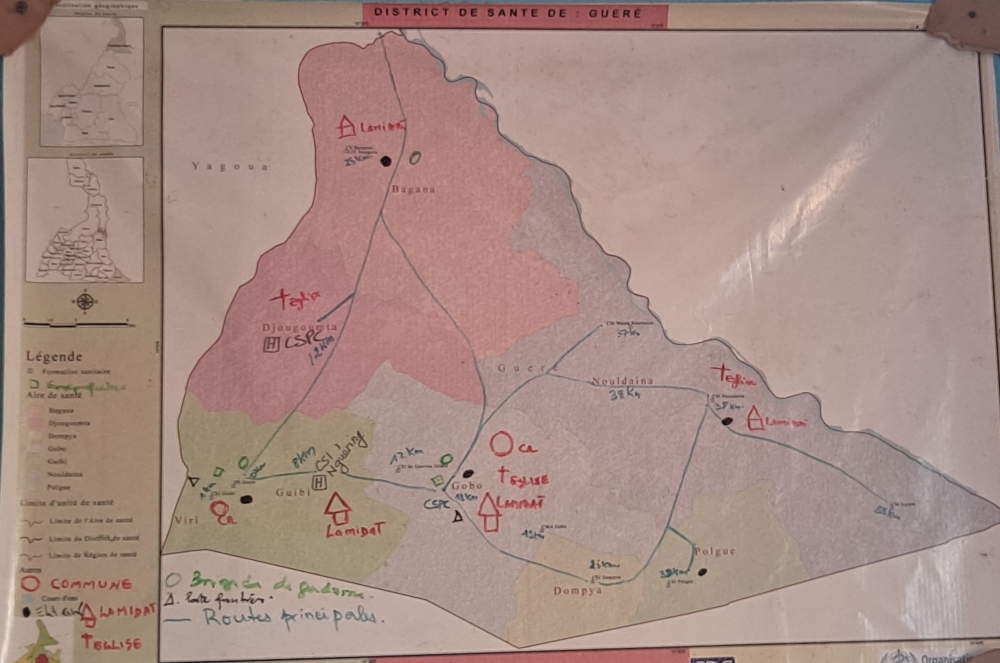
Beyond the logistical nightmare, floods inflict long-term damage, destroying crops, jeopardizing livelihoods, and exacerbating food insecurity.
Guéré, Mayo Danay Division, Cameroon - In the remote Mayo Danay Division of Cameroon's Far North Region, the rhythm of life is dictated by the Logone River. Each year, from July to August, seasonal floods transform the landscape, cutting off communities and forcing healthcare officials to navigate a challenging terrain of isolation, malnutrition, and cross-border public health threats.
At the heart of this struggle is the Guéré Health District, an area of 950 square kilometres with a population of 159,604 inhabitants. As Dr. Louis-Roger Monthé, the District Medical Officer, describes, the rainy season renders the area completely inaccessible by vehicle; only motorcycles can traverse the submerged paths, if at all.
Porous Borders, Shared Vulnerability
The challenge is unique in Guéré, which lies just 3.5km from the Chadian border. The free movement of people across the porous border means the 13 local health facilities (11 public, two private) serve a dual population of Cameroonians and Chadians who are, in many respects, the same people. This necessitates a robust, collaborative approach to public health.
"Active cross-border disease surveillance is the key," states Dr. Monthe. The district coordinates with three Chadian health districts to manage shared issues, a strategy crucial for containing the spread of waterborne diseases like cholera, typhoid, and dysentery, which often follow flood events due to contaminated water sources.
Flood Aftermath
Beyond the immediate logistical nightmare, the floods inflict long-term damage, destroying crops and jeopardizing livelihoods, which exacerbates food insecurity. The Far North Region already battles some of the highest malnutrition rates in Cameroon, with chronic malnutrition (stunting) affecting as many as 37 per cent of children under five in some areas (NIS 2024). This vulnerability is particularly acute for pregnant women and children, whose weakened immune systems make them more susceptible to disease.
Community Resilience, Partnership
Despite these formidable challenges, the health district is managing the situation with vital support from partners. The United Nations Children’s Fund, UNICEF, leveraging funding from sources including the Japanese government, has provided essential supplies like Plumpy&...
Cet article complet est réservé aux abonnés
Déjà abonné ? Identifiez-vous >
Accédez en illimité à Cameroon Tribune Digital à partir de 26250 FCFA
Je M'abonne1 minute suffit pour vous abonner à Cameroon Tribune Digital !

- Votre numéro spécial cameroon-tribune en version numérique
- Des encarts
- Des appels d'offres exclusives
- D'avant-première (accès 24h avant la publication)
- Des éditions consultables sur tous supports (smartphone, tablettes, PC)








Commentaires