

New Roadmap For SME Funding: World Bank Pledges Support For Handicraft, Social Economy Sectors
- Par Kimeng Hilton
- 23 Mar 2026 21:34
- 0 Likes
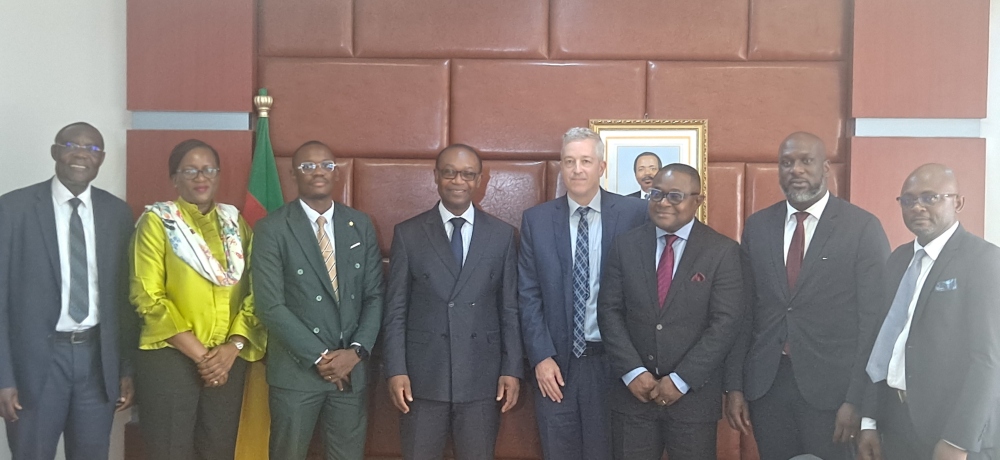
Minister Achille Bassilekin III on Monday, March 23, 2026 in Yaounde met with a delegation of the World Bank and the International Finance Corporation, IFC.
n a significant move poised to reshape the economic landscape of Cameroon, the Minister of Small and Medium-size Enterprises, Social Economy and Handicraft, Achille Bassilekin III, on Monday, March 23, 2026, held a high-level strategic meeting with a joint delegation from the World Bank and the International Finance Corporation (IFC) in Yaounde.
The gathering centered on a singular, critical objective: the formulation of a robust framework to drastically improve access to financing for Small and Medium-size Enterprises (SMEs) and micro-enterprises across the nation.
Deepening Trust
The meeting signaled a deepening of the partnership between Cameroon and the Bretton Woods institutions, specifically targeting the bottleneck of credit availability that has long stifled the growth of the private sector. Speaking to the media after the talks, Michael Colett, the World Bank Director for the West and Central Africa Division, articulated the institution's commitment to this new phase of collaboration.
"We had the pleasure of discussing with the Minister... the plans of the World Bank to promote access to financing for SMEs in Cameroon," Colett stated. He emphasized that the World Bank is actively working in concert with the Cameroonian government to devise a comprehensive plan aimed at increasing the flow of capital to the sector. "We share the government’s ambition to strengthen the role of the private market in securing more financing for SMEs so that they can build investments," Colett added, underscoring a shift toward leveraging private sector mechanisms rather than relying solely on public funding.
Inclusive Intervention
Reinforcing this commitment, Ange Claver Kouassi, the International Finance Corporation Country Officer for Cameroon and the Central African Republic, highlighted the inclusive nature of the proposed intervention. "The World Bank and International Finance Cooperation, IFC delegation was happy to meet with the Minister... This is evidence of our desire to contribute to the funding of SMEs and even micro-enterprises, based on the guidelines the Cameroon government is developing," Kouassi remarked. He noted that the World Bank Group is bringing its "wealth of experience" to bear on the initiative, ensuring that it aligns with Cameroon’s broader Strategic Development Programme.
Not Yet Disclosed
While the specific financial envelope for the project was not disclosed, officials confirmed that the discussions were still in the initial phase. The amount to be granted by the World Bank for this purpose will be made public in due course by the appropriate authorities following the conclusion of these preliminary planning stages. The general consensus, however, pointed toward the creation of specialized financial tools designed to enable business people to raise funds more efficiently, thereby increasing the sheer number of businesses that can access credit.
Unlocking SME Potential
The focus on SMEs is not merely a matter of economic preference, but a strategic necessity for Cameroon’s structural transformation. In Cameroon, as in many developing economies, SMEs constitute the backbone of the private sector, accounting for a vast majority of businesses and employing a significant portion of the workforce. However, despite their numerical dominance and potential to drive innovation, these entities have historically operated below capacity, hamstrung by a chronic lack of financing.
Traditional banking institutions in the region have often maintained stringent collateral requirements that the average small business owner cannot meet. This "credit gap" forces many promising enterprises to remain micro in scale, unable to purchase the equipment, hire the personnel, or expand the markets necessary to become true engines of growth. The meeting between Minister Bassilekin III and the World Bank/IFC delegation represented a direct attempt to bridge this chasm.
Changing Business Environment
By targeting the "access to financing" pillar, the government and its partners are addressing the primary constraint on private sector development. The plan, as described by the delegates, is not simply about handing out loans, but about "putting in place tools" that fundamentally change how business people interact with the financial system.
This suggests a move toward financial engineering - potentially including partial credit guarantees, risk-sharing facilities, and the development of credit bureaus - that can de-risk lending for commercial banks and encourage them to open their coffers to smaller borrowers.
Collaborative Framework
The dialogue in Yaounde highlighted a synergistic approach where international expertise meets national policy. Minister Achille Bassilekin III’s ministry has been tasked with the daunting challenge of formalizing and revitalizing the informal sector, which includes a vast array of handicrafts and social economy enterprises. The involvement of the World Bank and the IFC provides the technical and financial muscle required to tackle such a multifaceted problem.
Not Top-down Imposition
Ange Claver Kouassi’s comments regarding the "guidelines the Cameroon government is developing" are particularly pertinent. It suggests that this is not a top-down imposition by foreign donors, but a responsive programme designed to support the specific legislative and regulatory framework being put in place by Cameroon. The World Bank’s role, therefore, is to validate these guidelines with international best practices and provide the funding necessary to operationalize them.
Michael Colett’s emphasis on "strengthening the role of the private market" further clarifies the intended methodology. Rather than creating a parallel State-owned lending apparatus that might be unsustainable in the long term, the goal is to fix the market itself. This involves working with existing financial institutions to incentivize them to serve the SME sector. If successful, this could lead to a systemic change where SMEs are viewed as viable clients rather than high-risk liabilities, fostering a culture of investment and entrepreneurship that is self-sustaining.
Social Economy, Handicraft
A distinct aspect of Monday’s meeting was the explicit inclusion of the "Social Economy and Handicraft" sector in the financing discussions. Traditionally, financiers have struggled to categorize and value the assets of social economy enterprises - cooperatives, mutual benefit societies, and associations - which often prioritize social impact over pure profit maximization. Similarly, the handicraft sector, rich in cultural heritage and employment potential, often lacks the standardized accounting and business plans required by traditional lenders.
Can’t Be Decoupled
The commitment by the IFC and World Bank to extend funding mechanisms to these sectors is a progressive step. It acknowledges that economic development in Cameroon cannot be decoupled from its social fabric. By designing financial products that understand the unique cash flows and asset bases of cooperatives and artisans, the programme can unlock capital for some of the most vulnerable, yet enterprising segments of the population. This aligns with the United Nations’ Sustainable Development Goals (SDGs), particularly regarding decent work and economic growth, and industry, innovation, and infrastructure.
From Discussion To Disbursement
While the atmosphere in Yaounde was described as positive and ambitious, the path forward requires careful navigation. The delegates were clear that the discussions are currently in the "initial phase." This period is crucial for the diagnostic work required to design the intervention effectively. The World Bank and IFC must assess the specific bottlenecks in the Cameroonian market, while the government must finalize the regulatory guidelines that will underpin the programme.
Fulfillment Of Certain Benchmarks
The anticipation regarding the "amount to be granted" is palpable within the business community. However, as Ange Claver Kouassi noted, this figure will be released "in due course by the appropriate authorities." This delay is standard in development finance, as the disbursement amounts are often contingent upon the successful completion of specific policy reforms or the fulfillment of certain benchmarks by the recipient government. It also ensures that the funding is commensurate with the identified needs and the capacity of the financial sector to absorb the funds effectively.
Once the plan is finalized and the funds are mobilized, the focus will shift to implementation. This will involve a rigorous selection process for financial intermediaries, the rollout of the new financial tools, and a monitoring and evaluation system to track the impact on SMEs. The success of the initiative will ultimately be measured not by the amount of money pledged, but by the number of businesses that are able to expand, hire new employees, and contribute to the national GDP.
Aligning With Strategic Development Programme
The meeting also served to reaffirm the alignment of international support with Cameroon’s long-term vision. Ange Claver Kouassi explicitly mentioned the "attainment of Cameroon’s Strategic Development Programme." This national strategy outlines the country's roadmap for becoming an emerg...
Cet article complet est réservé aux abonnés
Déjà abonné ? Identifiez-vous >
Accédez en illimité à Cameroon Tribune Digital à partir de 26250 FCFA
Je M'abonne1 minute suffit pour vous abonner à Cameroon Tribune Digital !

- Votre numéro spécial cameroon-tribune en version numérique
- Des encarts
- Des appels d'offres exclusives
- D'avant-première (accès 24h avant la publication)
- Des éditions consultables sur tous supports (smartphone, tablettes, PC)






Commentaires