

Beyond The Diagnosis: New Research Recommends “Martial Plan” For Cameroonian Goats, Sheep
- Par Kimeng Hilton
- 29 Mar 2026 19:09
- 0 Likes
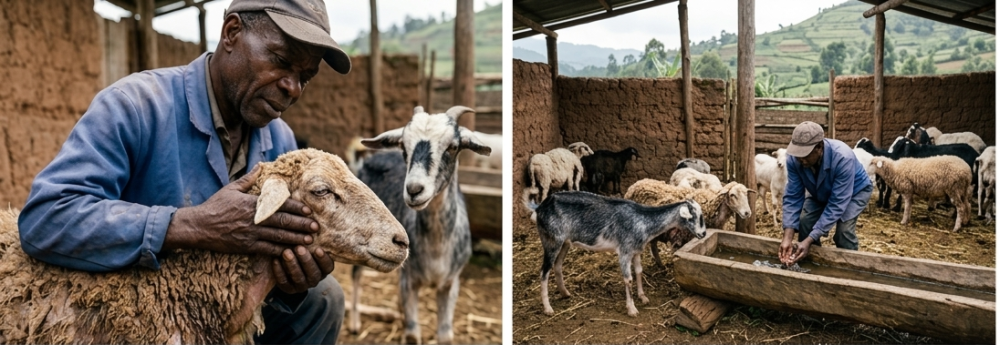
Dr Prudentia Yensi Lawan on March 18, 2026 defended a PhD in Reproductive Physiology and Animal Health in the University of Bamenda. Having researched on Cysticercus tenuicollis, a parasitic infection affecting goats and sheep in the North West Region.
While the discovery of a parasitic "wealth drain" in the North West Region of Cameroon has sent shockwaves through the agricultural sector, the true value of Dr. Prudentia Yensi Lawan’s PhD research lies in its solutions. Having earned the rare grade of “Excellent” in the University of Bamenda, Cameroon on March 18, 2026 during her PhD defence, Dr. Lawan (DVM) has therefore transitioned from the laboratory to the field with a clear-eyed strategy to dismantle the cycle of Cysticercus tenuicollis. It is a parasitic infection that originates in dogs, but ends up affecting goats and sheep.
Hidden Economic Crisis
Dr. Lawan’s year-long study in the North West Region - a primary hub for sheep and goat production - quantified a staggering financial drain. The research estimates annual losses of 9,457,490 FCFA ($17,023 USD) within the Bamenda municipality. Alarmingly, 90% of these losses are "indirect," resulting from decreased animal productivity, infertility, and stunted growth, which often go unnoticed by farmers until it is too late.
The Rescue Roadmap
Dr Lawan defended the Doctor of Philosophy (PhD) thesis in Reproductive Physiology and Animal Health on the topic, "Cysticercus tenuicollis in small ruminants in the North West Region of Cameroon: Prevalence, Haemato-biochemical Changes and Economic Significance."
The multi-fronted roadmap Dr Lawan proposes to rescue the goat and sheep industry in the North West Region from this multi-million Franc crisis provides, amongst others, for:
Breaking The Transmission Loop
The study identifies a fatal flaw in current farming practices: the feeding of raw, infected internal organs (offal) to dogs. This completes the parasite's life cycle, as dogs host the adult tapeworm that produces the eggs sheep and goats later ingest.
Dr. Lawan calls for the construction of regulated slaughterhouses equipped with professional waste disposal systems. By ensuring that infected livers and lungs are incinerated or buried rather than fed to stray or domestic dogs, the "biological bridge" for the parasite is burned.
Nationwide Surveillance
Currently, Cysticercus tenuicollis is a "neglected" disease, often overshadowed by more visible epidemics. However, Dr. Lawan’s data proves it is a primary driver of food insecurity. The research urges the Ministry of Livestock, Fisheries and Animal Industries (MINEPIA) to officially include this parasite in the National Livestock Health Surveillance System. This would trigger routine monitoring, mandatory reporting at slaughterhouses, and a centralized database to track and contain outbreaks before they hit the 65% prevalence rates seen in the North West.
“One Health" Educational Campaign
The study highlights that many farmers and butchers are unaware of the link between their dogs, their livestock, and their own health. A community-led "One Health" framework is proposed. This involves training programmes for farmers on implementing synchronized deworming schedules for both livestock and domestic dogs.
Reducing communal grazing during the humid wet season when parasite eggs are most viable. And educating the public on how related cysticercosis can lead to severe neurological conditions in humans, making the issue a public health priority, not just a veterinary one.
Economic Recovery Mitigation
With indirect losses - such as infertility and stunted growth - accounting for 90% of the financial damage, the solution isn't just treating sick animals; it’s protecting the "living savings accounts" of rural fami...
Cet article complet est réservé aux abonnés
Déjà abonné ? Identifiez-vous >
Accédez en illimité à Cameroon Tribune Digital à partir de 26250 FCFA
Je M'abonne1 minute suffit pour vous abonner à Cameroon Tribune Digital !

- Votre numéro spécial cameroon-tribune en version numérique
- Des encarts
- Des appels d'offres exclusives
- D'avant-première (accès 24h avant la publication)
- Des éditions consultables sur tous supports (smartphone, tablettes, PC)










Commentaires