

New Dawn For Child Protection: African Academia Establish First Continental Advocacy Network
- Par Kimeng Hilton
- 05 May 2026 20:09
- 0 Likes
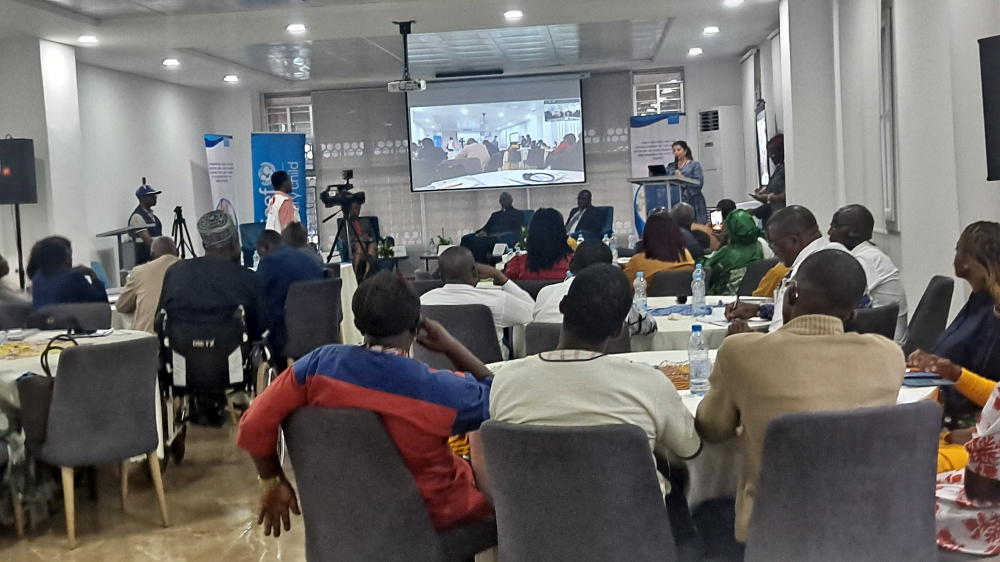
The African Network of Universities for Children’s Rights was set up in Yaounde on May 5, 2026 after a two-day meeting called by UNICEF and partners.
Vice Chancellors, rectors, researchers, and child rights experts from across Africa gathered in the Cameroonian capital, Yaounde on May 5, 2026 finalized the establishment of the African Network of Universities for Children’s Rights, ANUCR. The two-day summit, which concluded today, marks the formal birth of a structured, continental alliance aimed at transforming higher education institutions into active catalysts for social justice.
Changing The Child’s World
The closing ceremony was punctuated by a sense of urgency and hope. As Nadine Perrault, United Nations Children’s Fund, UNICEF Representative in Cameroon, remarked during her keynote address, the ambition is no longer just to study the world of the child. But to change it. "We can affirm that this ambition has taken shape. It has taken a structure and a name," she declared.
Bridging 'Commitment Gap'
The central theme of the Yaounde meeting was the persistent and troubling "gap" between Africa’s solid normative frameworks - such as the African Charter on the Rights and Welfare of the Child - and the daily reality of millions of children. Despite high-level legal commitments, issues like child marriage, lack of access to education, and violence, remain pervasive.
Prof. Ibrahim Ndiaye of Mali, the pioneer Chair of the newly formed network, emphasized that the academic world has been too quiet for too long. “Africa currently has solid normative frameworks... and yet, for too many children, these rights remain theoretical,” Ndiaye noted. He argued that the network must operate within this "theoretical space" to provide research that directly informs public policy and influences national laws.
Academia Who Transform
The network’s strategy is built on the concept of Transformational Academia. This approach demands that universities move beyond the mere production of papers to the production of impact. This includes generating data that governments can use to draft more effective child protection laws.
Serving as a trusted partner to the African Committee of Experts on the Rights and Welfare of the Child (ACERWC) to monitor how well countries are meeting their obligations. And centralizing data on emerging issues like digital safety for children and the impact of climate change on youth.
Anchors, Catalysts
The ANUCR is designed to be a "fully continental" entity, avoiding the concentration of power in any one region. Perrault stressed that for the network to be truly African, it must reflect the continent's linguistic and cultural diversity.
"Each university present here has a role to play: that of an anchor point, a relay, a catalyst in its region and its country," she said. This decentralization ensures that child rights are not treated as a monolithic Western import but are grounded in the diverse realities of Africa - from the Sahel to the Great Lakes.
Child Rights Centres
A cornerstone of this architecture is the Child Rights Center (CRC). These centers are intended to be the "operational tools" of the network. The summit produced a strong resolution calling for the institutionalization and full recognition of these centers within university structures.
Prof. Herbert Robinson, Vice-Chancellor of the University of The Gambia, highlighted his institution's proactive stance. Following the establishment of their own Child Rights Center in December 2025, the University of The Gambia has already graduated its first cohort of "Child Rights Ambassadors."
"One of the key recommendations is to try and establish as many Child Rights Centers as possible," Prof. Robinson explained. "We are working with UNICEF Gambia to be able to host the second meeting of this network... we are gearing up and ready to receive our fellow Vice-Chancellors."
Reclaiming African Heritage
A profound element of the discussions involved looking backward to move forward. Prof. Ibrahim Ndiaye pointed to Mali’s ancient history, specifically the Manden Charter of the 13th Century, as evidence that Africa has long possessed the mechanisms for protecting the vulnerable.
By rooting modern research in "ancient wisdom," the network aims to combat what Ndiaye calls "social disintegration" caused by colonization and the modern digital divide. The network plans to encourage the creation of African-centric content - digital tales and theater - to provide children with a cultural identity that safeguards their dignity.
Concrete Resolutions, The Road Ahead
The meeting concluded with a series of high-stakes resolutions that transition the network from a concept to a functioning body: The "real work," according to the attendees, begins tomorrow. The next gathering in The Gambia will focus on the technical details of the common research agenda and the strengthening of data evidence systems.
Shared Responsibility
The success of the ANUCR hinges on a three-way partnership. For universities, it requires a "strong institutional commitment" to move beyond the classroom. For UNICEF, it involves continued facilitation and networking. Most importantly, for African governments, it requires the "ownership of the results produced."
Principle To Practice
As the delegates depart Yaoundé, they do so with a mandate to move children's rights from "principle to practice." The establishment of this network suggests that the era of treating child rights as a side-project in African higher education is over. In its place is a new vision: the university as a "beacon for society," where science meets ethics to ensure that no child’s rights remain merely theoretical.
"With this network," Perrault concluded, "we are building a tool to move children’s rights from principle to practice, on a large scale, across the...
Cet article complet est réservé aux abonnés
Déjà abonné ? Identifiez-vous >
Accédez en illimité à Cameroon Tribune Digital à partir de 26250 FCFA
Je M'abonne1 minute suffit pour vous abonner à Cameroon Tribune Digital !

- Votre numéro spécial cameroon-tribune en version numérique
- Des encarts
- Des appels d'offres exclusives
- D'avant-première (accès 24h avant la publication)
- Des éditions consultables sur tous supports (smartphone, tablettes, PC)








Commentaires