

World Biodiversity Day: Stepping Up Efforts To Save Manyangue Na Elombo Campo Marine Park
- Par Kimeng Hilton
- 22 May 2026 22:02
- 0 Likes
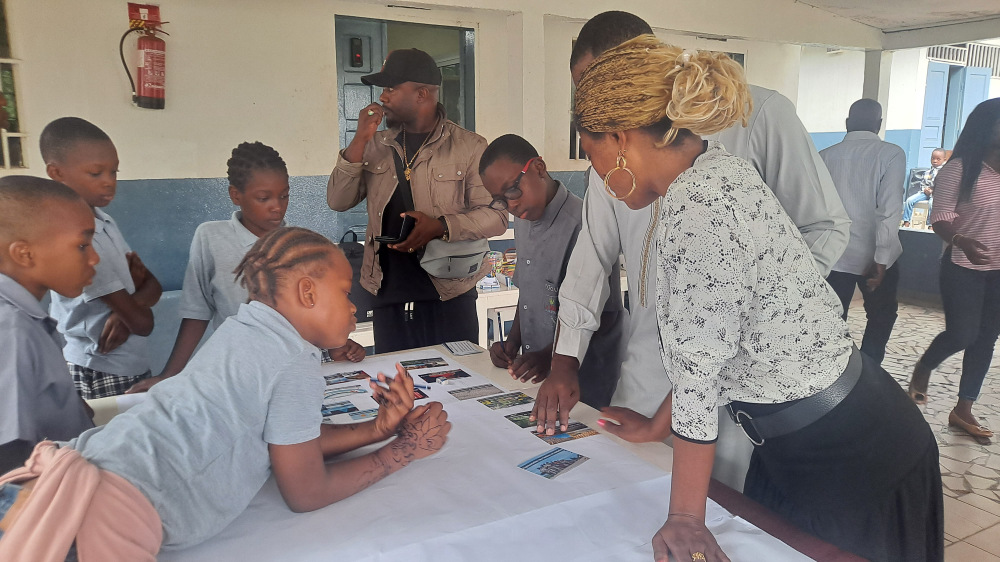
The day was marked in Yaounde on May 22, 2026 with school children making environmental protection drawings.
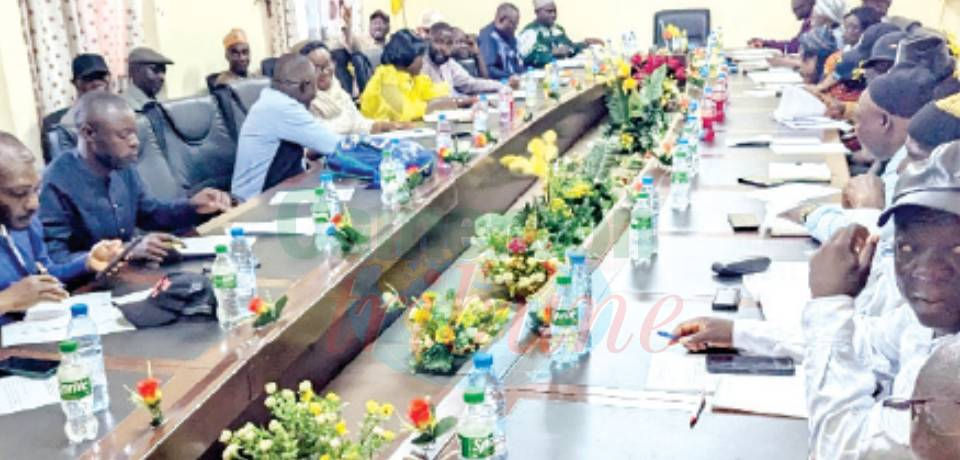
While Cameroonians are intimately familiar with their vast terrestrial forests, the nation's rich marine frontier remains largely invisible to the public eye. At a World Biodiversity Day event on Friday, May 22, 2026, hosted by the NGO SOUTENABLE in Yaounde, conservationists exposed a sobering reality: Cameroon's marine ecosystems are suffering from severe anthropogenic "diseases." And civil society organizations are effectively stepping in where state infrastructure is insufficient.
Cultivating The Next Generation
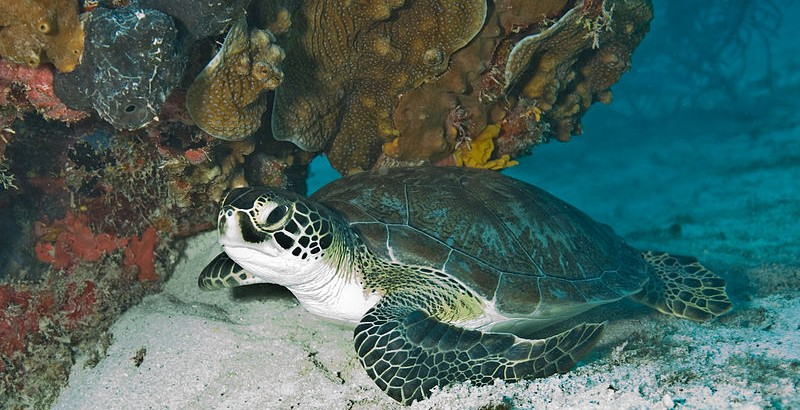
The event closed with a powerful reminder of the stakes, courtesy of the younger generation. Children from the La Marfée Nursery and Primary School, Tongolo, Yaounde, demonstrated an impressive mastery of marine biology, pointing out rare species like the hippocampus (sea horse) alongside the iconic sea turtle.
Mrs. Awono Eugénie, General Pedagogic Coordinator at the school, highlighted the role of children as vital ambassadors for ecological change. "At home, the child will be an agent who will serve to raise awareness," Mrs. Eugénie asserted. "They will sensitize their parents not to destroy marine turtles. Why? Because they ensure that the fish multiply... and the sea absorbs the carbon dioxide we emit, giving us oxygen in return."
By bridging advanced technology, defensive marine infrastructure, and early childhood education, Cameroon’s environmental leaders are determined to prove that while the ocean's diseases are man-made, its cure will be as well
Park Patrolled By Citizens
The center of Cameroon's marine conservation battle is the Manyangue Na Elombo Campo Marine Park, located 60 to 80 kilometers south of Kribi in Cameroon’s South Region. Established by state decree in June 2021, the massive reserve spans 110,300 hectares, boasting a marine width of 33 kilometers. However, while the state has appointed an official conservator and a skeletal team, scientific research, daily monitoring, community governance, and habitat restoration, is partly undertaken by civil society groups.
The park is facing an existential crisis. Industrial trawlers illegally breach the park's boundaries, dropping heavy nets to the seafloor that tear away ancient gorgonians and coral reefs. Destroying the foundational nurseries of commercial fish species. Simultaneously, artisanal poachers deploy unauthorized "Waka-Waka" nets: giant, indiscriminate meshes that scrape the ocean floor, disrupting the delicate benthic ecosystems.
Artificial Reefs, "Mining" The Deep
To combat this habitat destruction, the Aquatic Environmental Management Association AQUAMEN association, has deployed a biomimetic solution: manufacturing and submerging concrete artificial reefs. These heavy, rough-textured blocks are engineered with specialized holes to mimic natural rock formations destroyed by commercial dragging.
The blocks serve a dual purpose. They provide a hard, stable surface for microscopic marine life to anchor to, quickly re-establishing food webs and drawing fish populations back to degraded areas. Positioned strategically, these concrete structures act as maritime defensive barriers. If illegal industrial trawlers attempt to poach inside protected zones, the heavy blocks snag and destroy their million-Franc commercial nets.
While conservationists half-jokingly refer to "mining the area with reefs," the strategy functions as a passive, physical enforcement mechanism that protects the park when physical patrol boats are absent.
Collapse Of An Emblematic Giant
The crisis is most visible on Manyangue Na Elombo Campo Marine Park’s golden beaches, the most critical nesting ground for endangered marine turtles on the Cameroonian coast. Unlike the dark volcanic sands of Limbe or Douala-Edéa, which hinder egg incubation, Manyangue's unique sand profiles offer a sanctuary for four of the world's 16 sea turtle species. Most notably the Olive Ridley and Leatherback turtles.
However, historical data reveals a devastating demographic collapse. To save the remaining populations, conservation teams have built guarded, artificial beach hatcheries. Staff intercept newly laid eggs on high-risk beaches, relocate them to protected enclosures to safeguard them from human poachers and predators. And safely release the hatchlings into the Atlantic Ocean upon hatching.
AI On The High Seas
Looking to the future, conservationists are preparing to launch "Blue Data," an online digital platform designed to serve as an open-access repository for Cameroon’s marine metrics.
By continuously feeding local catch logs, turtle nesting counts, and pollution markers into the platform, the system leverages integrated AI to run ecological forecasting models. It will generate automated alerts identifying early traces of heavy metal or hydrocarbon pollution, map coastal erosion accelerations. And predict local fish stock collapses a decade in advance, giving policymakers concrete data to adjus...
Cet article complet est réservé aux abonnés
Déjà abonné ? Identifiez-vous >
Accédez en illimité à Cameroon Tribune Digital à partir de 26250 FCFA
Je M'abonne1 minute suffit pour vous abonner à Cameroon Tribune Digital !

- Votre numéro spécial cameroon-tribune en version numérique
- Des encarts
- Des appels d'offres exclusives
- D'avant-première (accès 24h avant la publication)
- Des éditions consultables sur tous supports (smartphone, tablettes, PC)







Commentaires