

“I Must Be The Loudest!” How Unchecked Decibels Are Destroying Cameroonian Lives, The Economy
- Par Kimeng Hilton
- 28 May 2026 12:01
- 0 Likes
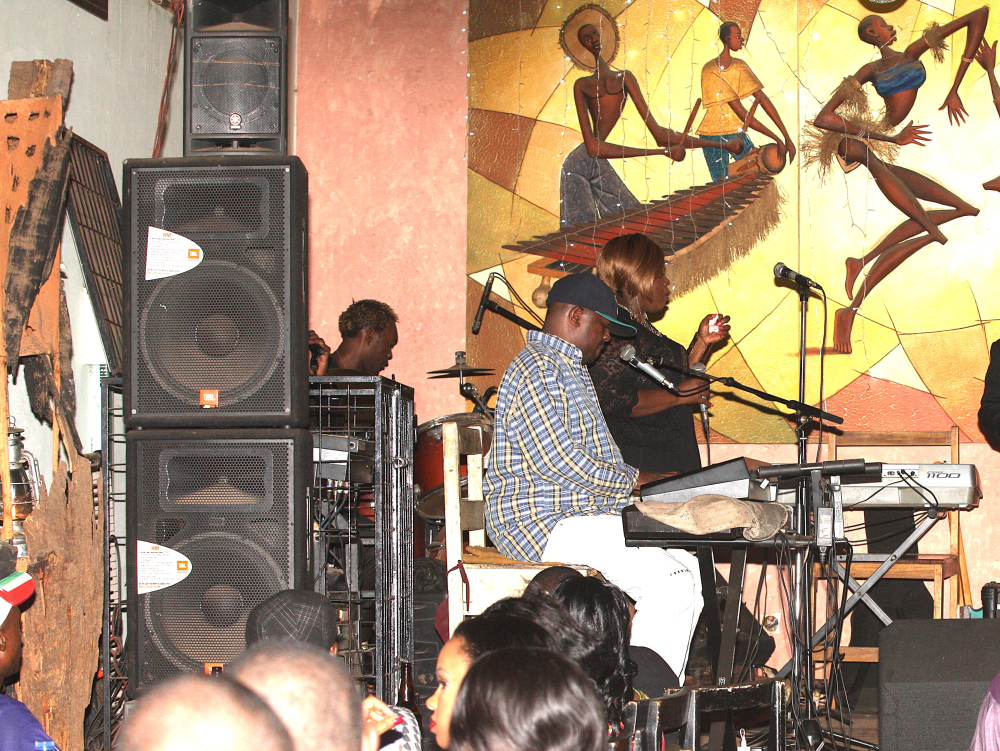
Though boasting an arsenal of robust environmental laws, the authorities are yet to silence the streets.
The dawn in the Cameroonian capital, Yaounde, does not break; it shatters. Long before the mist clears from the crests of the seven hills, the air is torn asunder. It begins with the low, mechanical rumble of a diesel generator waking up in a server room or a roadside workshop. Its rhythmic iron coughing piercing the residual peace of the night. Soon, the iron shutters of commercial spaces screech open, and with them comes the deluge.
Litany Of Screaming Walls
Step into any Cameroonian open space - whether the red-dirt tracks of a rural village or the choked asphalt arteries of an urban metropolis - and you are immediately submerged in a relentless, competitive cacophony. The soundscape is not a backdrop; it is an aggressive, living entity. On one corner, a street hawker carries a tray of cheap electronics while hoisting a megaphone.
Its plastic throat screaming advertisements for protective phone gear or uncertified panaceas. His voice battles the bassline of an adjacent snack bar, where giant, wooden speakers bleed distorted local rhythms onto the pavement. Their cones vibrating with such intensity that the very air feels thick, liquid, and unbreathable.
Unbearable Siege Of Noise
To live in a Cameroonian city today is to endure an unprecedented, unbearable siege of noise. It is an environment where tranquility is treated not as a fundamental human right, but as an administrative oversight. Every actor in this auditory theater operates under a singular, unwritten manifesto: “I must be louder than my neighbour to exist.” The street vendor, the preacher, the bar owner, and the promotional van driver, all compete in a race to the acoustic ceiling. Each declaring through sheer decibel power that they are the master of the public space.
Institutional Oversight
Yet, underneath this vibrant, chaotic "atmosphere" - long celebrated as a sign of cultural vitality and economic hustle - lies a darker, institutional oversight. Cameroon is a country where the laws are robust, the decrees are precise, and the framework is sophisticated. Yet, its enforcement mechanisms remain profoundly paralyzed. Leaving millions of citizens to navigate a permanent state of acoustic violence that erodes their health, decimates their economic productivity, and reshapes the very geography of their neighborhoods.
Deafness By Appointment
While the public space is defined by its chaotic, unregulated noise, the corporate and industrial environments of Cameroon harbor a more insidious, calculated form of auditory trauma. According to environmental and occupational health standards, noise exposure assessment in the workplace is not a luxury option. It is a mandatory legal procedure across Cameroon and the broader Central African Economic and Monetary Community (CEMAC) zone, says Atia Mono Jean Bienvenu, an environmental expert who has been studying the phenomenon.
The primary objective is stark: to measure the precise acoustic loads borne by employees and verify whether they cross the thresholds that lead to permanent, irreversible occupational deafness.
Auditory Ruin
The human ear is an incredibly sensitive organ meant to process delicate pressure waves, but not to withstand continuous industrial bombardment. Environmental experts point out that continuous exposure to noise levels above 85 dB(A) over a standard 8-hour workday causes irreversible damage to the delicate hair cells of the inner ear. Once these cells are destroyed, they do not regenerate.
The risk profile accelerates dramatically when exposed to acute spikes. Any sound leaping beyond 120 dB(A), even for a fleeting moment, places an employee at immediate risk of acoustic trauma. A sudden tearing of the auditory mechanism that can induce immediate hearing loss, chronic tinnitus, and physical pain, Atia notes.
The Invisible Hotspots
When people think of hazardous noise, they often visualize logging concessions in the East Region or heavy industrial complexes in Douala’s Bassa zone. However, workplace noise assessments reveal that some of the most consistent hazards exist within service institutions, such as Microfinance Institutions (MFIs).
Under the regulatory gaze of the Central African Banking Commission (COBAC), noise assessment is increasingly integrated into operational risk management for financial institutions. A thorough pre-diagnosis and identification phase routinely flags several high-risk zones within seemingly quiet office buildings, Atia lists them:
Cooling Fans
Continuous high-frequency cooling fans running 24/7 are often poorly maintained and situated near office windows to combat frequent grid outages. The constant clatter of automatic money counters combines with outdated, vibrating air conditioning units. Meanwhile, fleet management spaces where heavy tools are used without proper acoustic dampening are also a source of harm to hearing.
To diagnose these spaces, experts rely on a simple yet telling diagnostic question when interviewing employees: "Where do you have to shout to make yourself heard?." If an employee must raise their voice to communicate at arm's length, the local environment is almost certainly violating safe auditory limits.
Technical Audit
To turn subjective employee discomfort into legally binding data, Atia Mono says environmental engineers employ two primary types of instrumentation: The Sound Level Meter, which measures instantaneous sound pressure levels in dB(A), offering a real-time snapshot of a specific workstation's acoustic output. It is ideal for stationary hazards, such as an employee stationed permanently next to a generator.
The Personal Noise Dosimeter for mobile or highly variable workstations - such as a teller moving between the vault, the counter, and the back office. The employee wears a compact dosimeter throughout their shift. This device continuously logs acoustic exposure to calculate the LAeq,8h, which is the average noise exposure level normalized precisely to an 8-hour workday.
Once the data is gathered, it is cross-referenced against the strict exposure action matrices aligned with the International Labour Organization (ILO) standards:
Secure Or Mandatory Intervention?
Below 80 dB(A), the environment is deemed secure. No operational action is required, and simple staff information campaigns are considered sufficient. Between 80 and 85 dB(A), the workplace enters a warning phase. The employer is legally obligated to initiate medical surveillance and provide personal hearing protection equipment.
Above 85 dB(A), the threshold of mandatory intervention is crossed. Noise reduction at the source becomes a legal requirement, alongside compulsory Personal Protective Equipment (PPE) usage and formal employee training. Above 87 dB(A), this represents the absolute regulatory limit. No employee is permitted to work in this environment, even with the highest-grade PPE, unless immediate engineering controls are implemented to lower the source noise.
Robust Laws, Reigning Impunity
According to Environmental Engineer Atia Mono, the crisis of noise pollution in Cameroon does not stem from a legal vacuum. On the contrary, the country possesses a highly sophisticated, hierarchical legal framework designed to safeguard public tranquility and environmental health. The tragedy is found in the deep canyon separating statutory text from daily social practice.
The Constitutional Pillar
The foundational bedrock of environmental protection is Law No. 96/12 of August 5, 1996, which serves as the framework law on environmental management. This law elevated noise from a minor civil annoyance to a formally recognized environmental pollutant. The core of this legislation is found in Article 60, which displays a brilliant understanding of public nuisance by establishing a dual-definition framework:
The medical criterion - noise emissions are explicitly penalized if they are found likely to harm human health. And the social criterion - noise is equally actionable if it causes an excessive nuisance to the neighborhood, regardless of whether measurable medical damage can be immediate proven.
Furthermore, Article 9a enshrines the Principle of Prevention, mandating that any urban, economic, or residential activity must be proactively designed and executed to minimize its acoustic footprint before a single decibel is emitted. Alongside this, Article 9c outlines the "Polluter-Pays" Principle, establishing that those who saturate the public soundscape must bear the financial and legal costs of remediation.
The Quantitative Teeth
While the 1996 framework law established the moral and legal philosophy, Decree No. 2011/2583/PM of August 23, 2011, provided the mandatory numerical parameters. This decree empowered the Ministry of Environment, Nature Protection and Sustainable Development (MINEPDED) to set clear thresholds in decibels (dB) and introduced a critical structural reform: the formal zoning of urban areas.
Under this technical text, Cameroonian law distinguishes between residential, commercial, and industrial zones, applying separate tolerance caps for daytime and nighttime windows. This domestic framework directly mirrors international reference points, including the World Health Organization (WHO) standards and the standards set by the National Standards Agency (ANOR) via text NC 522-2003:
The WHO explicitly states that for a human being to experience truly restful sleep that allows the central nervous system to recover, the background ambient noise in a bedroom should not exceed 30 dB. Yet, in the crowded, popular neighborhoods of Douala or Yaounde, ambient nighttime noise regularly doubles or triples this safety ceiling, turning peaceful sleep into an elusive luxury.
Decentralization, The Powerless Mayor
On paper, the front-line defense against this environmental threat is local government. Since the promulgation of the 2004 decentralization laws and the 2019 General Code on Decentralized Local Government Entities (CTDs), the municipal Mayor is legally designated as the primary custodian of public tranquility.
Mayors hold immense municipal police power. They have the direct authority to issue municipal orders regulating the positioning and volume of outdoor loudspeakers. Setting strict operational opening hours for drinking establishments, and limiting the noise profiles of urban construction projects.
Judicial Imperative
When administrative dialogue fails, the judiciary holds a formidable enforcement weapon: Article 369 of the Cameroon Penal Code. This article explicitly criminalizes "nighttime disturbance" (tapage nocturne), providing a clear, unambiguous mandate for the National Police and the National Gendarmerie to intervene. By seizing offending equipment, and arresting repeat polluters.
Why, then, does the noise continue to grow? Older residents speak wistfully of an era when Divisional Officers (DOs) routinely marched into neighborhoods to shut down unruly bars and seize sound equipment based on a single citizen complaint. Today, that administrative willpower has largely vanished.
The systemic lack of state-certified measuring devices within town hall structures creates an immediate enforcement bottleneck. Without a certified sound level meter to prove a technical violation of the 2011 decree, municipal agents cannot build legally binding infractions. Judicial expertise becomes an expensive, drawn-out affair that discourages everyday victims. This systemic paralysis fosters deep impunity for commercial polluters, who view occasional municipal warnings as a minor cost of doing business.
Mapping The Major Noise Emitters
To understand how this crisis operates in reality, one must turn to recent spatial epidemiological data. A landmark 2024 academic study titled "Sound environment and noise mapping in Cameroon: Application in the fifth district of the city of Yaoundé" provides an unvarnished breakdown of exactly who is polluting the national soundscape. (Source: Gilles Tounsi & Aloys Yanou (2024).
While 41% of surveyed urban households report being in a zone free from direct acoustic disturbance, the remaining 59% live under continuous pressure from three main sources:
Drinking Establishments
Bars, snack bars, and open-air drinking spots represent the largest single source of urban noise complaints (23%). Over the last two decades, these establishments have undergone an aggressive evolutionary shift. What used to be neighborhood gathering points playing background music have transformed into open-air, uninsulated nightclubs.
They mount high-wattage speakers outside their doors, directed at the street, operating on the commercial logic that high volume acts as a consumer magnet. These establishments operate late into the night, pumping heavy bass through flimsy brick walls directly into the bedrooms of sleeping families nearby.
Road Traffic Intersections
Dense, unregulated urban transport accounts for 13% of the noise propagation network. The noise mapping project focused on road traffic intersections within the Yaoundé V municipality reveal a permanent cloud of high-decibel exposure. This traffic noise is a cocktail of ageing, unbuffered exhaust systems, constant horn honking from thousands of taxi drivers and motorcycle riders, and mobile promotional vans.
Advertising vans drive slowly through high-density intersections, equipped with giant speakers blasting corporate jingles, concert promotions, or product rollouts. Because they are mobile, they take advantage of jurisdictional gray areas, moving across municipal lines before local police can act.
Churches
Accounting for a significant 10% of the acoustic crisis, revivalist or independent churches and some orthodox denominations have expanded rapidly into the heart of dense residential neighborhoods. Resident...
Cet article complet est réservé aux abonnés
Déjà abonné ? Identifiez-vous >
Accédez en illimité à Cameroon Tribune Digital à partir de 26250 FCFA
Je M'abonne1 minute suffit pour vous abonner à Cameroon Tribune Digital !

- Votre numéro spécial cameroon-tribune en version numérique
- Des encarts
- Des appels d'offres exclusives
- D'avant-première (accès 24h avant la publication)
- Des éditions consultables sur tous supports (smartphone, tablettes, PC)









Commentaires