

Chasing The Tickets: Why Nigeria’s Political Class Is Changing Camps Early
- Par Kimeng Hilton
- 04 Jun 2026 13:19
- 0 Likes
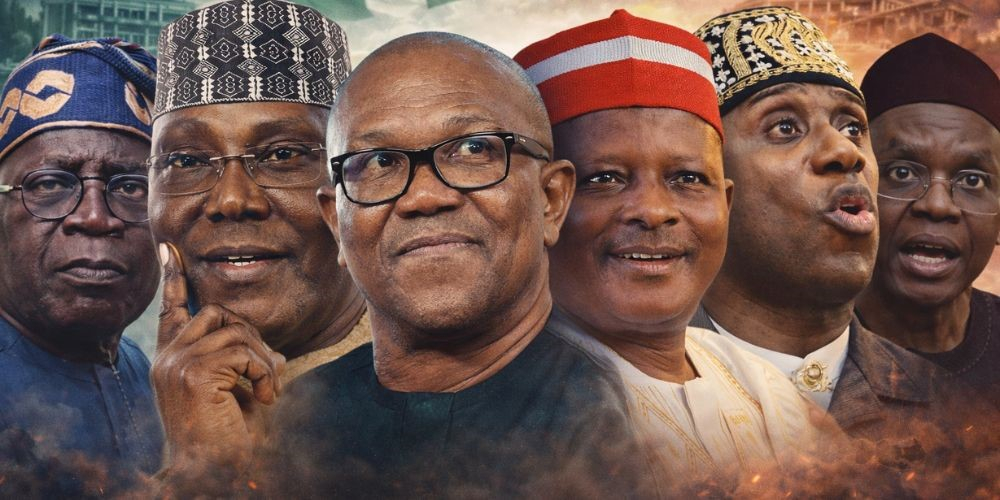
Party defections are already fueling early election battles as Nigeria prepares for general elections in 2027.
With the presidential election fast approaching, Nigeria’s political machine has shifted into high gear. While the ballot boxes will not open until early next year, the Independent National Electoral Commission, INEC has already compressed its timelines following the passage of the new Electoral Act. Across the federation, prominent political actors are locked in a relentless wave of defections and strategic cross-carpeting, completely disrupting the country's traditional voting blocs.
Migrations, Alliance Talks
Nigerian dailies are tracking what Vanguard describes as an intensifying "2027 power battle," characterized by heavyweights shuffling across party lines to secure stable platforms. Commentators in The Punch and Daily Trust note that the ruling All Progressives Congress, APC is actively expanding its footprint by pulling in disgruntled opposition figures.
Concurrently, a massive fracture within opposition lines has stolen the front pages. Factional infighting within the People’s Democratic Party, PDP, alongside stalled coalition talks between frontline figures like Peter Obi and Rabiu Kwankwaso, has triggered widespread anxiety. The Guardian reports that distinct political blocs are already floating alternative, high-stakes tickets. Including a heavily discussed coalition pushing an Amaechi/el-Rufai platform - as the opposition frantically scrambles to present a unified front against the ruling party.
Political analysts speaking to Trust TV emphasize that this early phase of musical chairs is less about governance ideology and entirely about survival, as politicians flee internal party crises to lock down guaranteed tickets ahead of the primary season.
INEC Compresses Timeline
Institutionally, the framework for the election has faced major structural adjustments. Following a legislative overhaul that introduced the Electoral Act, INEC Chairman, Professor Joash Amupitan, issued a revised statutory timetable moving the Presidential and National Assembly votes.
With official campaign windows legally opening this coming August, the commission is working double-time to restore public confidence. Speaking on Independent Television (ITV) Radio, civil society advocates warned that the legitimacy of the upcoming poll rests entirely on INEC’s capability to resolve the severe technology and transmission glitches that marred previous outings.
The electoral body insists that extensive stress-testing of the Bimodal Voter Accreditation System, BVAS and the INEC Result Viewing Portal, IReV is underway to ensure real-time accountability when Nigerians head to the polls in 2027.
As the political class continuous its game of musical chairs, Trust TV notes, civil society groups are already calling for stricter enforcement of internal party democracy. To ensure that the fluid movement of politicians does not compromise the stability of the upcoming electoral process.
Concurrently, a massive fracture within opposition lines has stolen the fro...
Cet article complet est réservé aux abonnés
Déjà abonné ? Identifiez-vous >
Accédez en illimité à Cameroon Tribune Digital à partir de 26250 FCFA
Je M'abonne1 minute suffit pour vous abonner à Cameroon Tribune Digital !

- Votre numéro spécial cameroon-tribune en version numérique
- Des encarts
- Des appels d'offres exclusives
- D'avant-première (accès 24h avant la publication)
- Des éditions consultables sur tous supports (smartphone, tablettes, PC)







Commentaires