

Can SOCADEL Survive Eneo’s Ghost? Board Tackles Supplier Trust, Debt Dilemmas
- Par Kimeng Hilton
- 06 Jun 2026 09:40
- 0 Likes
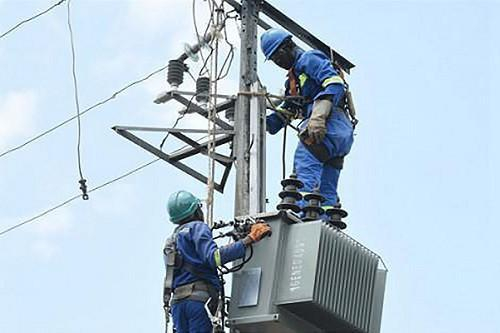
A recent board meeting has staked 74 Billion FCFA on urgent infrastructure rebuild from a budget of 630 Billion FCFA. As well as appointed interim senior management staff.
In its first definitive legislative action since the sweeping nationalization of Cameroon’s energy sector, the newly created Société Camerounaise d’Électricité, SOCADEL has unveiled a massive 630 billion FCFA ($1.04 billion USD) fiscal budget for 2026. This aggressive financial deployment follows the landmark May 4, 2026 presidential decree that dissolved the private equity-managed utility Eneo. And absorbed its grid network back into absolute State custody.
Ambitious Operational Roadmap
Chaired by SOCADEL Board Chair, Antoine Ntsimi, members met in Yaounde on May 28, 2026 to sign off on an operational roadmap aimed at lifting the country out of chronic, systemic power deficits. While navigating intense structural turbulence. The decisions of the Board were made public in a press statement on June 5, 2026 signed by SOCADEL Board Chair, Antoine Ntsimi.
The Financial Rescue Plan
The 630 billion FCFA budget is mathematically split to balance historical operational hemorrhages alongside the desperate need for capital expenditure. According to the Board’s communique, a staggering 375 billion FCFA has been allocated exclusively for logistics and bulk energy purchases. This highlights the crippling reliance on thermal generation that has long afflicted the country's energy landscape.
Infrastructure Rebuild
Concurrently, 74.6 billion FCFA has been ring-fenced purely for asset investment. This capital infusion arrives at a critical juncture: SOCADEL inherits an estimated 800 billion FCFA legacy debt from Eneo. Combined with an active technical deficit that leaks nearly 13 billion FCFA in unrecovered operational revenue every month due to billing inefficiencies and an antiquated transmission network.
By establishing this clear capital partition, the Board intends to launch an incremental debt-settlement schedule with external contractors and energy suppliers. The goal is clear: restore bleeding lines of corporate trust and stabilize grid infrastructure from the ground up.
Emergency Relief For Deficit Regions
Acknowledging severe socioeconomic unrest caused by rolling blackouts outside Yaounde, the Board approved an immediate operational escalation package. This includes a targeted budget expansion for regional thermal stations to keep the lights on across Northern Cameroon networks. And an immediate mandate given to general management to systematically clear the energy gaps crippling commercial activity in the East Region.
Governance Restructuring, Management Overhauls
To insulate this massive cash influx from bureaucratic inertia, SOCADEL’s Board enacted sweeping top-tier human resource adjustments, placing key divisions under temporary 3-month interim regimes to assess capability. Thus, the following senior staff were appointed: Finance Division, Mrs. Brigitte Konso epouse Yanda; Human Resources, Mr. Christian Ekambi Koba; Corporate Security and Safeguarding, Mr. Léonard Aser Mbong. And Innovation and Information Systems, headed by Mr. Christian Nola Ze.
This structural overhaul addresses one of the primary concerns flagged by international institutional critics. Who fear that shifting a complex utility from private hands into public administration could compromise fiscal transparency and technical execution.
The Macro-Economic Stakes
While the communique strikes an optimistic tone of alignment with presidential directives, the task facing SOCADEL is monumentally complex. Recent assessments by international financial bodies warn that the nationalization scheme risks translating volatile industrial liabilities directly onto the state budget. Especially since current consumer utility tariffs sit substantially below actual production costs.
Financial Balancing Act
By granting the Director General an explicit mandate to negotiate debt refinancing and seek external lines of credit under the Board’s strict supervision, Cameroon is attempting a fragile balancing act. Keeping energy affordable for its citizens while proving to global lenders that its newly sovereign power monolith can run as a lean, self-sustaining financial machine.
By establishing this clear capital partition, the Board intends to launch an incr...
Cet article complet est réservé aux abonnés
Déjà abonné ? Identifiez-vous >
Accédez en illimité à Cameroon Tribune Digital à partir de 26250 FCFA
Je M'abonne1 minute suffit pour vous abonner à Cameroon Tribune Digital !

- Votre numéro spécial cameroon-tribune en version numérique
- Des encarts
- Des appels d'offres exclusives
- D'avant-première (accès 24h avant la publication)
- Des éditions consultables sur tous supports (smartphone, tablettes, PC)





Commentaires