

School Manuals: Prioritising Local Production
- Par Eldickson Agbortogo
- 19 Aug 2026 09:25
- Likes
A few days from now, the 2026-2027 academic year for primary and secon dary schools will kick off throughout the national territory. In every village, town, or city, parents are crisscrossing different bookshops to purchase the required text books for their children. In Cameroon, school textbooks and didactic materials are produced through a regulated national process involving public and private publishers, educational experts, and a central evaluation body. The government sets official curricula, authorizes local or foreign publishing houses to draft manuscripts, and approves a final list of books through specialized national councils. Those whose textbooks are validated by the National Council for the Approval of Textbooks and Didactic Manuals (CNAMSMD) are notified and expected to get to work so that at least a month before the academic year, the required textbooks are already in the markets. To support local industries, the government provides tax cuts and customs exemptions on raw materials (like paper and prin ting ink) imported for textbook produc tion and also mandates that at least 50 per cent of the school programme's books should be manufactured locally in Cameroon in order to combat high prices. Despite these mea sures, experience has shown that most of the publishing houses, whether private, in digenous, or international, whose textbooks are approved, usually turn their backs on local printing industries. Instead of prioritising local production houses, they largely solicit foreign printing houses. These acts, which have for years been denounced by the ma jority of stakeholders, are highly detrimental because; it drains the country’s financial re sources, as publishers usually make payments through banks for the services rendered by their foreign partners; it denies local direct or indirect employment, especially to the youth, most of whom are in search of jobs in order to either prepare for back-to-school or make ends meet; and there is much delay in making some of the books available on time in the market due to cumbersome trans portation and shipping procedures. Thus, for a minimum cycle of six years that the approved school manuals are legally bound to remain in use before the curriculum or selection can be altered, it is unfair that the different publishers should seek foreign services when the necessary expertise and technological know-how, such as the for matting of files into eBooks, interactive web platforms, and PDFs; printing using high-vo lume offset or digital presses; and the binding of pages using durable methods like glue or stitching to withstand heavy student use, can be done in Cameroon. It is true that some publishers have complained about the fact that many schools, especially those in the private sector, do not respect Article 53 of the December 16, 2021 law on the orga nisation and promotion of the textbook pu blishing sector, which stipulates that "manuals and textbooks not registered on the official lis...
Cet article complet est réservé aux abonnés
Déjà abonné ? Identifiez-vous >
Accédez en illimité à Cameroon Tribune Digital à partir de 26250 FCFA
Je M'abonne1 minute suffit pour vous abonner à Cameroon Tribune Digital !
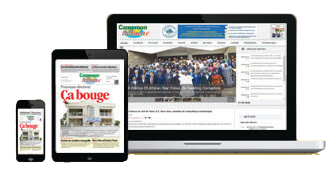
- Votre numéro spécial cameroon-tribune en version numérique
- Des encarts
- Des appels d'offres exclusives
- D'avant-première (accès 24h avant la publication)
- Des éditions consultables sur tous supports (smartphone, tablettes, PC)





Commentaires