

Mining Reforms: Cameroon Reviews Code, Drafts Extractive AML, Civil Society Laws
- Par Kimeng Hilton
- 29 Nov 2026 05:43
- 0 Likes
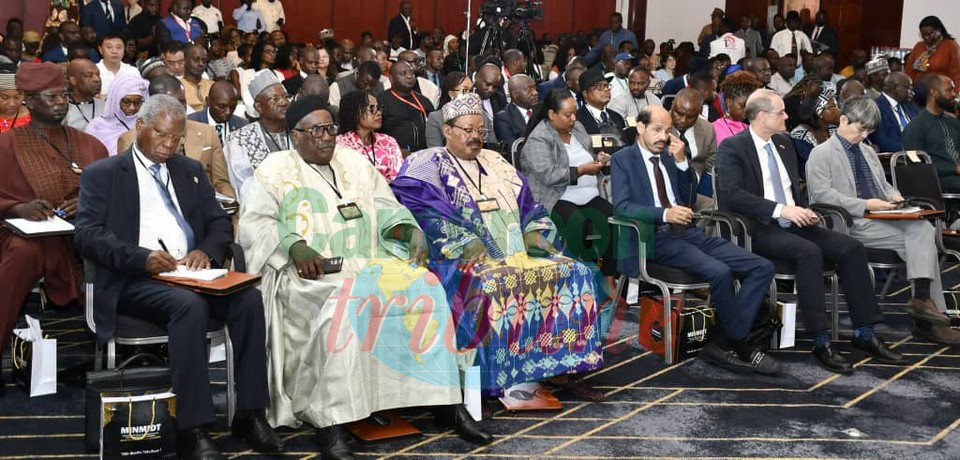
The Interim Minister of Mines, Industry and Technological Development, Prof. Fuh Calistus Gentry on November 27, 2026 in Yaounde presented innovations in the sector.
Cameroon is accelerating its transformation into an industrial mining hub, while cracking down on illicit extraction, Interim Minister of Mines, Industry and Technological Development, MINMIDT, Prof. Fuh Calistus Gentry, announced on Friday November 27, 2026 in Yaounde. It was during an Open Day on the theme, "Mining Sector: An Overview."
Why The Open Day?
Addressing diplomats, international organisations, consular chambers, government and parliamentary officials, business executives, and other guests, Prof. Fuh outlined Cameroon's geological endowment, local processing priorities, industrial mining pipeline, revenue projections. And sweeping regulatory reforms in artisanal and semi-mechanised gold mining.
Geological Potential
Highlighting Cameroon's geological diversity across the Congo Craton, Cameroon Volcanic Line, Pan-African Mobile Belt, and sedimentary basins, Prof. Fuh pointed to deposits spanning iron ore, gold, bauxite, pozzolana, platinum group elements, rutile (such as Akonolinga), limestone, and petroleum. Alongside rare earths and critical minerals.
Early Exploration Efforts
He noted that historical and multilateral exploration efforts are now complemented by a new partnership with the United States to help secure global supply chains for critical minerals. These exploration efforts include those by Gesellschaft Sud-Kamerun, Gesellschaft Nordwest-Kamerun, the French Geological Survey, BRGM, the UNDP, and the World Bank's PRECASEM project.
Local Processing, Energy Backing
Stressing that lasting prosperity requires moving beyond raw material exports, the Minister said the Government under President Paul Biya is prioritising local processing across three sectors: mineral products, agro-industry, and forest products. To power this shift, Cameroon is pursuing a diversified energy mix that includes short- and medium-term gas projects (such as recent SNH production-sharing contracts and the YOYO-YOLANDA gas project), hydropower, solar infrastructure, and long-term consideration of nuclear energy.
Industrial Projects
Prof. Fuh stated that industrial mining reforms enabled Cameroon to join the ranks of mining nations in 2025 as five major projects entered production. They were the Bipindi Grand-Zambi iron ore project; Kribi-Lobé iron ore project; Minim-Martap industrial bauxite project; Bidzar industrial marble project, and the Colomine gold project.
Value Chains
Between 2026 and 2027, the Government plans to bring additional major projects online. Including the Mbalam, Nkout, and Ngovayang iron ore projects and the Mborguéné and Bibemi industrial gold projects. Followed in the medium term by rare earth and critical mineral developments.
Digital Cadastre
Meanwhile, industrial policy is structured around four key value chains: Iron ore to iron concentrate, billets, and steel; bauxite to alumina and aluminium; limestone to clinker and cement, and clay, feldspar, and tiles.
To improve transparency and investor access, MINMIDT has launched an online Mining Cadastre hosted in Cameroon. Which allows global investors to check granted titles, boundaries, status, and available areas. While conducting industrial mapping and positioning itself to train other African countries on cadastre capabilities.
Artisanal Gold Crackdown
Declaring that 2026 marks the end of illegal operations in Cameroon's artisanal mining sector, Prof. Fuh contrasted Cameroon's reforms with global gold smuggling challenges in several developing mining markets. Under the restructured framework, state responsibilities are as follows:
Institutional Roles
MINMIDT: Sole policy and regulatory authority; grants mining titles, enforces compliance, co-signs gold export certificates, and signs crude oil lifting authorisations in hydrocarbons without engaging in buying or reselling gold.
SONAMINES: Acts on behalf of the State as the sole body authorised to verify post-extraction production on site, buy and market gold for the State, and collect the State's share plus export duty at source.
Customs (DGD): Conducts final border and checkpoint compliance matching exported volumes against SONAMINES certifications and MINMIDT countersignatures.
Taxation (DGI) and Finance: DGI assesses and secures registration duties and ordinary taxes, while in-kind mining taxes collected at source by SONAMINES are tracked and consolidated into Public Treasury accounts managed by the Ministry of Finance.
Kimberley Process Secretariat (SNPPK): Ensures international supply-chain traceability of precious minerals to protect the Cameroon label and meet global standards.
Security Forces (Gendarmerie, Army, Police): Partner with the MINMIDT Task Force to secure sites, protect inspectors, fight cross-border criminal infiltration, and close clandestine sites.
Field Inspections, Fines
According to Prof. Fuh, a monitoring committee's first operational phase identified more than 200 unauthorised mining companies, prosecuted 137 companies over unpaid fines, revoked 74 exploration permits tied to widespread illegali...
Cet article complet est réservé aux abonnés
Déjà abonné ? Identifiez-vous >
Accédez en illimité à Cameroon Tribune Digital à partir de 26250 FCFA
Je M'abonne1 minute suffit pour vous abonner à Cameroon Tribune Digital !

- Votre numéro spécial cameroon-tribune en version numérique
- Des encarts
- Des appels d'offres exclusives
- D'avant-première (accès 24h avant la publication)
- Des éditions consultables sur tous supports (smartphone, tablettes, PC)







Commentaires