
After International Partners Leave: Empowering Cameroon’s Civil Society To Stand Alone
- Par Kimeng Hilton
- 20 Jan 2026 22:28
- 0 Likes
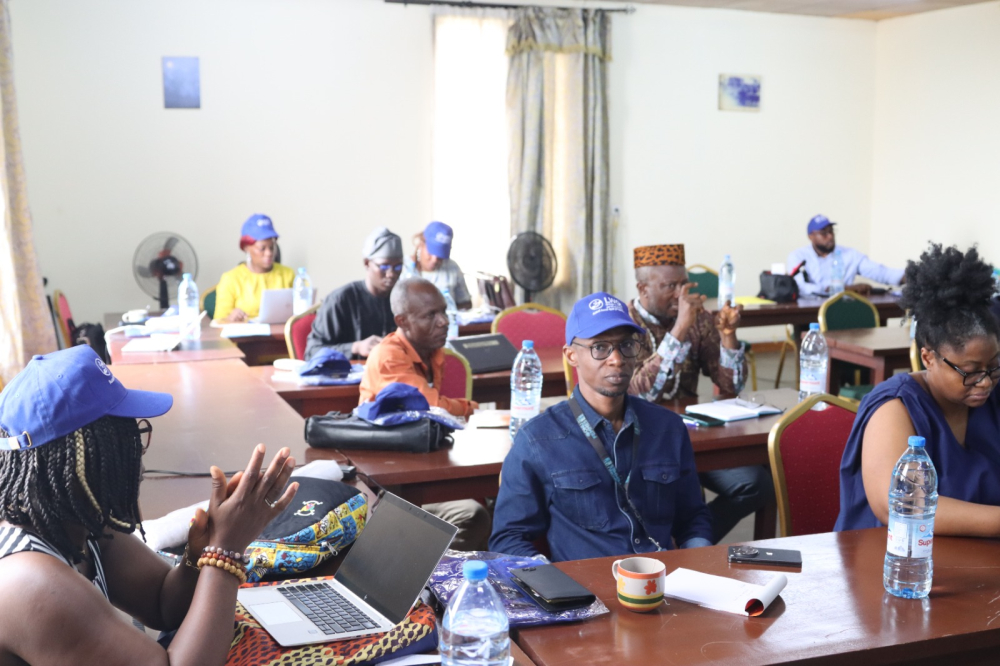
UN Women Cameroon country office and Norwegian Capacity, NORCAP, held a planning retreat in Yaounde on January 20, 2026.
The air of Yaounde hung heavy over the conference room on January 20, 2026. But the atmosphere inside was electric with a sense of urgency that transcended the tropical heat. Fifteen individuals, representing the geographical and cultural tapestry of Cameroon, sat gathered around a large table in the Cameroonian capital, Yaounde. On Tuesday, January 20, 2026. They were not there to receive aid; they were there to redesign the very architecture of how it is delivered.
Direct Access To Funding
This was no ordinary meeting. It was a one-day strategic retreat convened by the United Nations Programme for Gender Equality and the Empowerment of Women, UN Women Cameroon country office. In partnership with Norwegian Capacity, NORCAP. Their mission was deceptively simple, yet profoundly complex.
To review the 2026 action plan for the Local Working Group on Localization. And more importantly, to forge new mechanisms that would allow these civil society organizations, CSOs to access funding directly, rather than waiting for crumbs to fall from the international table.
Hard Road To Autonomy
Among the facilitators was Serifou Daouda, a NORCAP Officer serving with UN Women. His presence symbolized the crux of the gathering - the marriage of global expertise and local ambition. NORCAP, a specialist capacity provider hosted by the Norwegian Refugee Council, NRC, acts as a reservoir of expert rosters deployed to strengthen local resilience. For Daouda, the retreat was the culmination of months of assessment and the beginning of a hard road toward autonomy.
"We work on the Localisation Agenda," Daouda explained, his voice steady and measured. "It consists of strengthening the participation of local actors in everything related to humanitarian response, development, and peace building."
What Is It?
The concept of "localization" has become a buzzword in international development, a term thrown around in high-level summits in Geneva and New York. But in this room in Yaounde, amidst representatives from the Far North, East, North West, and Centre Regions, it was being stripped of its jargon and transformed into a gritty, actionable strategy. It was about moving from a model of dependency to one of sustainability.
The Necessity For Change
To understand the weight of this gathering, one must first understand the context of Cameroon today. The country is currently navigating a perfect storm of humanitarian crises. In the Far North, the insurgency by Boko Haram has displaced thousands, shattering communities and destroying livelihoods.
In the East and Adamawa Regions, the influx of refugees from the Central African Republic has strained local resources. And in the North West and South West Regions, an ongoing socio-political crisis has created a protracted displacement emergency, leaving basic services in tatters.
Grip On Finance Purses
For years, the response to these crises has been driven by international agencies - the "United Nations and other international agencies" that Daouda refers to. They hold the purse strings, they design the frameworks, and they often hire local NGOs as sub-contractors to implement projects at the grassroots level. It is a hierarchical system that ensures accountability to donors, but often creates a ceiling for the growth of local actors.
"If we don't help them to strengthen their capacity, if we don't help them to have better visibility, it will be difficult for the NGOs to get funding," Daouda argued, leaning forward to emphasize his point. "It is not necessary for international organisations every time to go looking for funding only to give small percentages to local NGOs," Daouda lamented.
Mastery Of Terrain
The frustration in the room was palpable but constructive. The CSOs represented – LUKEMEF from the West Region, CHOI from the Centre, ALDEPA, CODAS, and RENEFUCA, among others - are the leading lights of Cameroonian civil society. They know the terrain, they speak the languages, and they live with the consequences of failed aid projects. Yet, they have often been relegated to the role of implementation partners rather than decision-makers.
Addressing The Power Imbalance
The retreat in Yaounde was designed to address this power imbalance. It was a space to discuss how these organizations could approach funders themselves, how they could write winning proposals, and how they could manage the complex compliance requirements that often lock them out of direct funding. "We looked at ways to help them go to funders themselves and then help their communities," Daouda said. "Because they live with their communities."
Measuring The Pulse Of Localization
Central to the discussions in Yaounde was a document that has been months in the making: the Barometer study on localisation. Financed by UN Women and carried out in partnership with NORCAP in 2025, the Barometer is an assessment of the state of localization implementation in Cameroon. It serves as a mirror, reflecting the harsh realities of the aid sector in the country.
Serifou Daouda described the study with clinical precision. "What has been done? At what level are we? What are the positive aspects? What did not work? What needs to be corrected? This is Barometer study on localisation."
Taking Local Reality Into Cognizance
The report, which was released just prior to the retreat, likely contained a mix of encouraging progress and uncomfortable truths. In the humanitarian sector, such assessments often reveal that while policies at the global level advocate for local leadership, the practical reality on the ground remains dominated by international workflows.
The retreat participants used the Barometer’s recommendations as the bedrock for their 2026 planning. This was not a theoretical exercise; it was a calibration exercise. They had to re-prioritize their activities, looking at the calendar of 2026 and retaining only those initiatives that aligned with the "greatest priority activities according to the current context."
"We enriched the Action Plan for 2026 of the Local Working Group on Localisation with the recommendations of the Barometer," Daouda stated. This "enrichment" process was the heart of the day's work. It involved taking the raw data of the Barometer and translating it into a roadmap that could navigate the treacherous waters of the coming year.
The Philosophy Of Autonomy
The underlying philosophy driving the partnership between UN Women, NORCAP, and Cameroon’s CSOs is rooted in a stark realism about the future of humanitarian aid. Serifou Daouda did not shy away from the difficult truths in his address to the participants.
"It is very important today to help the civil society by enhancing their capacity," he told the room. "International development partners cannot continue to give money, given the context that everyone knows today. We will be forced to withdraw at some point," he predicted.
The Stark, Bitter Truth
This statement is a bombshell in the aid world. The assumption is often that international aid is a permanent fixture, a safety net that will always be there. But Daouda was pointing to a future where geopolitical shifts, donor fatigue, and economic downturns may force international agencies to scale back their presence in Cameroon.
"And we know that we are going to live with crises," he continued. "Crises will continue, problems and diseases will continue, but humanity will remain."
Crux Of The Argument
This is the crux of the localization argument. Crises are long-term, but aid cycles are short-term. If the international community leaves, who picks up the mantle? "First of all, the community itself," Daouda answered. "And who is the community? The community is the civil society organisations that are there."
Therefore, the retreat was not just about planning for 2026; it was about securing the future of humanitarian response in Cameroon for the next decade and beyond. It was about "autonomizing" the CSOs sustainably.
"We remain international partners. And at some point, we will leave," Daouda reiterated. "So that was really the heart of the activity. To strengthen capacity, visibility and autonomy of civil society organisations."
Fortifying The Leadership
While the retreat in Yaoundé focused on the broader strategy and funding mechanisms for 15 partner organizations, the intricate work of governance and leadership took place months earlier in a different climate, both politically and meteorologically.
On November 26, 2025, the strategic spotlight shifted to Buea, the capital of the South West Region. Buea, nestled at the foot of Mount Cameroon, has been a flashpoint in the ongoing socio-political crisis. Holding a retreat there was a statement in itself - a commitment to bringing the conversation to the places most affected by the crises.
The Bridge Between, Revived Leadership
The event was titled the "Strategic Retreat For The New Leadership Of The Localization Working Group In Cameroon." It was a smaller, more technical gathering than the one in Yaounde, but equally vital. The Localization Working Group, GTL plays a pivotal role in the Cameroonian humanitarian architecture. It is the bridge between the international community and local actors, facilitating coordination, promoting accountability, and developing strategies for the implementation of localization principles.
However, a working group is only as strong as its leadership. Following the renewal of its leadership team - comprising organizations like CHOI, LUKMEF, and HELP CHILDREN - and in light of ongoing reforms in the humanitarian coordination system, the GTL needed a reset.
Context Of Gathering
The context and justification for the Buea retreat were clearly outlined in the internal documents. "Cameroon has been facing multiple humanitarian crises affecting several regions of the country," the document read. "In this context, the localization of humanitarian aid has become a strategic priority, recognized by international commitments and national efforts."
But recognition is not enough. The GTL needed to organize to ensure that the "reforms in the humanitarian coordination system" did not leave local actors behind. The retreat was necessary to "clearly define" the roles of the new team, set strategic priorities for 2026, and establish internal governance mechanisms.
Inside The Buea Retreat
The logistics of the Buea retreat revealed the intricate dance of partnership that defines this localization agenda. The facilitation was led by the Central Coordination of CHOI, demonstrating the growing capacity of local organizations to steer high-level strategic discussions.
The participants included a tight-knit group of 11 individuals: the Lead, three Co-leads, a Secretariat representative, members of CHOI, Central Coordination, representatives of the Technical Secretariat, the Facilitating Agency, and various technical monitoring bodies like CHINGO.
Rigorous Agenda, Frank Discussions
The agenda was rigorous. It wasn't merely a brainstorming session; it was a "dynamic and participatory approach" designed to produce tangible results. The day was structured to move from the "Context and justification" straight into "Clarification of GTL roles and governance."
One of the biggest challenges in any collective of independent organizations is ambiguity. Who decides what? Who is responsible for reporting? Who speaks to the donors? The Buea retreat tackled this head-on with sessions dedicated to defining "Mandate, Organizational structure, Roles, responsibilities, and leadership values."
The Nitty Gritties
They utilized SWOT analyses - identifying Strengths, Weaknesses, Opportunities, and Threats - to diagnose the current health of the GTL. They engaged in "Strategic thinking workshops" to analyze the humanitarian context and align on a shared vision.
"Develop a shared strategic vision and operational roadmap for the new GTL management team in order to strengthen governance, coordination, effectiveness, and the impact of localization initiatives in Cameroon," read the overall objective.
Buea Retreat Outcome
By the end of the day, the team had produced a "Strategic retreat report," a "GTL strategic vision document," an "Operational roadmap," and a "Table of roles and responsibilities." These were not just pieces of paper; they were the blueprints for how the humanitarian community in Cameroon would function in the years to come.
The Logistics Of Solidarity
The details of how the Buea retreat was funded and organized offer a microcosm of the partnership model NORCAP and UN Women are trying to promote. It was a collaborative effort that played to the strengths of each actor.
LUKMEF, a prominent human rights and development organization, took charge of the venue and work equipment. They provided the space—the "Reservation and provision of the room"—and the tools of the trade: "flipchart, markers, projector, etc."
NORCAP, as the international partner with access to different funding streams, covered the operational costs that allow such meetings to happen. They provided "Coffee breaks and lunches," "Support materials and work kits," and the critical "DSA" (Daily Subsistence Allowance) for participants. Crucially, they also covered "Transport" and "Air ticket" costs, ensuring that participants from across the country could actually get to Buea.
Division Of Labour
This division of labor is the ideal of the localization agenda: International partners provide the financial backing and access to global networks, while local partners provide the venue, the local knowledge, and the facilitation. It is a relationship of equals, rather than a donor-beneficiary dynamic.
Defining The 2026 Roadmap
Both the Yaounde and Buea retreats converged on the same goal: the 2026 Roadmap. In Yaounde, the focus was on the substance of the activities. The CSOs discussed the "re-prioritisation of activities, of the localisation work of Cameroon." They asked themselves: given the findings of the Barometer, what are the most important things we can do this year?
Is it training in financial management? Is it advocacy with the government to create a more enabling environment for NGOs? Is it improving coordination mechanisms to reduce duplication of efforts?
Buea Expectations
In Buea, the focus was on the process. How will the GTL manage these activities? Who will monitor them? How will they communicate progress? The "Expected Results" listed in the Buea retreat documents paint a picture of a highly organized structure. They expected a "Strategic document defining the vision, priorities, and orientations of the GTL." They wanted a "Plan for resource mobilization and collaboration with partners in the humanitarian and private sectors."
Crucially, they wanted a system of accountability. "A select committee will monitor the implementation of the roadmap," the notes promised. "Quarterly meetings will be scheduled to assess progress."
Overcoming Bureaucracy
Th...
Cet article complet est réservé aux abonnés
Déjà abonné ? Identifiez-vous >
Accédez en illimité à Cameroon Tribune Digital à partir de 26250 FCFA
Je M'abonne1 minute suffit pour vous abonner à Cameroon Tribune Digital !
- Votre numéro spécial cameroon-tribune en version numérique
- Des encarts
- Des appels d'offres exclusives
- D'avant-première (accès 24h avant la publication)
- Des éditions consultables sur tous supports (smartphone, tablettes, PC)





Commentaires