
Gateway To $40 Trillion Market: Cameroonian Entrepreneurs Eye The Caribbean
- Par Kimeng Hilton
- 19 Feb 2026 21:11
- 0 Likes
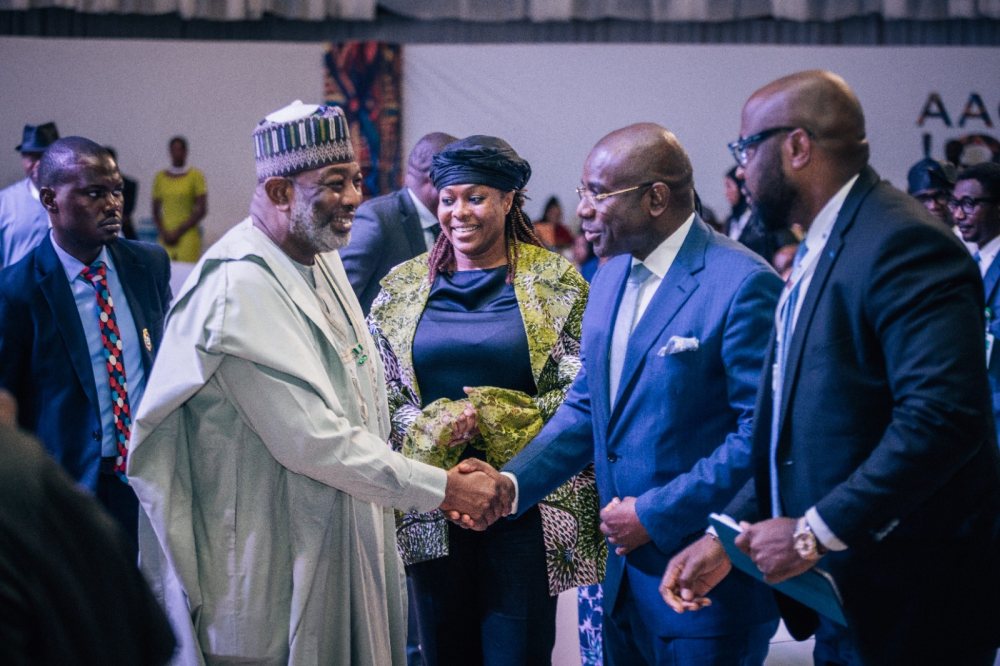
All is set for the Afri-Caribbean Investment Summit, AACIS’26, holding in Abuja, Nigeria from March 23-28, 2026.
In the heart of Central Africa, where the dense rainforests give way to the sprawling savannahs, lies a nation that has historically served as the continent's gravitational centre. Cameroon, often referred to as "Africa in miniature" due to its diverse geographical and cultural tapestry, stands at a precipice.
To the south and east lies the vast, resource-rich expanse of the Congo Basin; to the west, the turbulent waters of the Atlantic Ocean. For decades, this nation has functioned as the pivot of the Economic and Monetary Community of Central Africa (CEMAC), a linguistic and economic bridge between French and English-speaking Africa.
Past Immediate Neighbour
But today, the ambition of Cameroonian enterprise is looking past the immediate neighborhood. It is looking west, past the coastline, past the familiar trade routes of Europe, toward a diaspora that shares a lineage of history and resilience. This gaze is fixed on the Caribbean.
The vehicle for this monumental shift is the Afri-Caribbean Investment Summit (AACIS’26), scheduled to take place from March 23-28, 2026 in Abuja, Nigeria. Organized by the venerable strategic firm, Aquarian Consult Limited, the summit is not merely a conference; it is a clarion call for Cameroonian businesses to cross the Mungo River - a symbolic divide within the country - and the Atlantic Ocean to unite with a market representing a combined $40 trillion opportunity.
The Architect Of South-South Cooperation
To understand the magnitude of this gathering, one must first understand the architect behind it. Aquarian Consult Limited is not a newcomer to the nuances of African economic diplomacy. Headquartered in Abuja and led by Aisha Maina, a luminary in private-sector diplomacy and a sitting member of Nigeria’s Presidential Economic Coordination Council, the firm has spent 17 years deciphering the complex code of cross-border trade.
Aisha Maina’s leadership is defined by a philosophy of action over rhetoric. In a landscape often cluttered with talk shops, Aquarian Consult has distinguished itself by engineering tangible commercial corridors. Their legacy is written in the deals they facilitate and the capital they mobilize. The firm specializes in the holy trinity of African development: human capital evolution, enterprise strategy, and trade facilitation.
Aquarian Consult
However, it is their recent foray into the Transatlantic sphere that has captured the imagination of the continent. In 2025, Aquarian Consult achieved what many thought impossible for a private entity. They personally funded and spearheaded a 120-person delegation to St. Kitts and Nevis. This was not just a diplomatic visit; it was a logistical masterstroke that saw a Nigerian carrier, Air Peace, touch down on Caribbean soil for the first time in history.
That flight did more than transport passengers; it symbolized the severing of the old, circuitous routes that once forced African and Caribbean leaders to connect through London or Paris. It was a direct line of communication, a physical manifestation of the "South-South" cooperation that Aquarian Consult champions.
This feat was not an isolated event but part of a broader strategy. The firm has already facilitated major investment vehicles, such as the $40 million Afreximbank-backed deep-water port project in the Caribbean. These are the building blocks of a new economic order, and AACIS’26 is the summit where these blocks will be assembled into a fortress of prosperity.
The Symbolism Of The Mungo And The Atlantic
Why is this summit so critical for Cameroon? The answer lies in the country’s unique identity. Cameroon is a bilingual nation, a fusion of Francophone and Anglophone heritage. This internal duality mirrors the very mission of AACIS’26: bridging gaps. The Mungo River, which divides the Anglophone and Francophone regions of Cameroon, has long been a metaphor for the country's internal challenges. Yet, it also represents the potential for unity.
By "crossing the Mungo," Cameroonian businesses are not only overcoming internal linguistic and cultural barriers but are also projecting that capacity for unity onto the global stage. The Caribbean, with its blend of African, European, Asian, and Indigenous influences, presents a market that is culturally familiar yet economically distinct.
Not Just A Tourist Destination
For a Cameroonian entrepreneur, the Caribbean is not just a tourist destination; it is a mirror of potential - a region where the African diaspora holds significant economic sway and political influence.
The "Grand Ambitions" of the Cameroonian nation require a stage larger than the CEMAC zone. While Central Africa offers immense resources, the consumption power and investment liquidity found in the partnership between the African Continental Free Trade Area (AfCFTA) and the Caribbean Community (CARICOM) are unrivaled. AACIS’26 offers the passport to this $40 trillion combined market.
De-risking The Future: The Institutional Pillars
One of the primary hurdles for African businesses looking to expand internationally is the perceived risk. Currency fluctuations, regulatory opacity, and a lack of credit history often stifle growth before it begins. Recognizing this, Aquarian Consult has structured AACIS’26 not just as a networking event, but as a fortress of financial security.
The summit is backed by a coalition of heavyweights designed to de-risk international expansion for Cameroonian delegates.
African Export-Import Bank
Foremost among them is the African Export-Import Bank (Afreximbank). For Cameroonian businesses, Afreximbank is more than a bank; it is a lifeline. Through the summit, entrepreneurs will gain access to specialized trade finance instruments and export credit guarantees that protect against the volatility of cross-border commerce. Furthermore, the introduction of the MANSA digital platform is a game-changer. In the past, verifying the credibility of a business partner in another continent was a nightmare of due diligence. MANSA simplifies this, providing a transparent, digital repository for customer information, thereby lowering the barrier to entry for smaller Cameroonian enterprises.
Investment Promotion
Then there is the Nigerian Investment Promotion Commission (NIPC). For many Cameroonian businesses, Nigeria serves as the launch pad - a massive market of over 200 million people that shares a border. The NIPC is poised to offer facilitation for "Pioneer Status" incentives, which include generous tax holidays for qualifying industries. This regulatory support, combined with fast-tracked business registration, provides a soft landing for Cameroonian firms looking to establish a presence in West Africa before leaping across the Atlantic.
On the other side of the ocean lies the Caribbean Development Bank (CDB). This institution brings technical assistance and financial backing for infrastructure and sustainable energy projects. For a Cameroonian construction firm or a renewable energy startup, the CDB represents the financing needed to undertake large-scale projects in the Caribbean, transforming the islands from net importers to partners in development.
The Mechanics Of The Transatlantic Bridge
The 2026 edition of the summit is meticulously structured to move beyond plenary speeches and toward tangible transactional outcomes. The centerpiece of this strategy is the "Investor Deal Room." Imagine a high-stakes environment where vetted Cameroonian projects in infrastructure, energy, and technology are not just pitched but dissected by sovereign wealth funds and private equity firms.
For a Cameroonian with a blueprint for a deep-water port in Limbe or a tech solution for agricultural logistics in Yaoundé, the Deal Room is where the blueprint becomes a building. It is a space where the disconnect between African project owners and global capital is bridged.
As Leaders Parley
The summit also acknowledges that different sectors require different ecosystems. Therefore, the agenda features Sector-Specific Summits. The Agriculture and Food Security Summit (March 23–24) is particularly poignant. Cameroon, with its vast arable land, is poised to become the breadbasket of the region. The Caribbean, largely net importers of food, presents a ready market. The summit aims to reduce this import dependence through joint agro-processing ventures.
Instead of exporting raw cocoa beans, Cameroonian firms can explore partnerships to process chocolate in the Caribbean, leveraging established brands there while utilizing Cameroonian raw materials.
Also About Health
Similarly, the Afri-Caribbean Health Summit (March 26) addresses a critical vulnerability exposed by the global pandemic: pharmaceutical sovereignty. By fostering joint ventures between Cameroonian manufacturers and Caribbean health agencies, the sum...
Cet article complet est réservé aux abonnés
Déjà abonné ? Identifiez-vous >
Accédez en illimité à Cameroon Tribune Digital à partir de 26250 FCFA
Je M'abonne1 minute suffit pour vous abonner à Cameroon Tribune Digital !

- Votre numéro spécial cameroon-tribune en version numérique
- Des encarts
- Des appels d'offres exclusives
- D'avant-première (accès 24h avant la publication)
- Des éditions consultables sur tous supports (smartphone, tablettes, PC)







Commentaires