

Central Africa’s Trade Awakening: EU Unveils €26 Million Strategy to Unlock Regional Integration
- Par Kimeng Hilton
- 17 Mar 2026 21:06
- 0 Likes
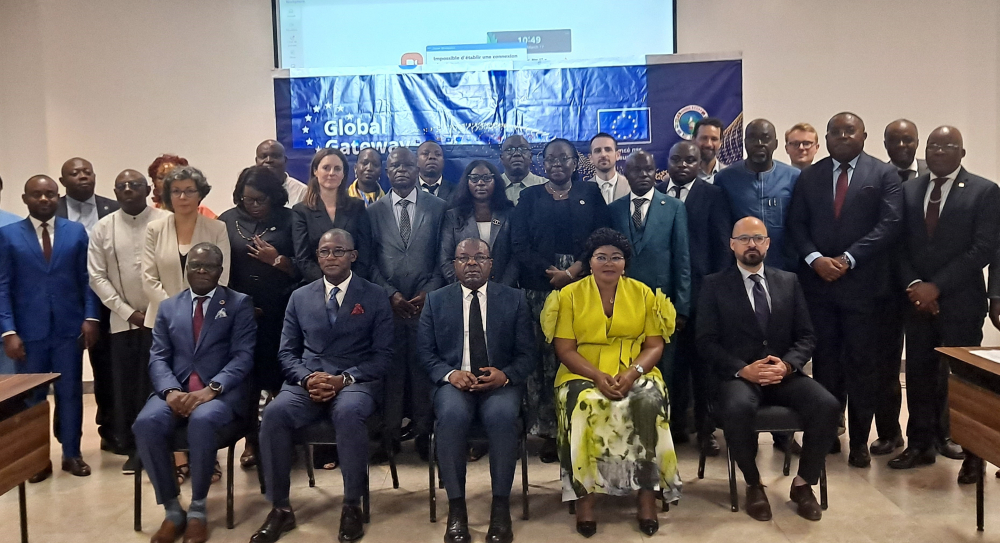
Stakeholders began meeting in the Cameroonian capital, Yaounde on March 17, 2026 to discuss its implementation.
On March 17, 2026, the first meeting of the Steering Committee of the Programme for Trade Competitiveness and Market Access in Africa – Central Africa Component (ATCMA-ECCAS) convened. The gathering was not merely a bureaucratic formality; it was a signal flare aimed at the heart of one of the world’s most paradoxical regions.
Immense Potentials
Central Africa is a land of immense wealth, brimming with the raw materials that power the global economy, yet it remains a region where economic potential has consistently lagged behind reality. It is a region defined by what economists call a "resource curse" - rich in natural endowments but poor in economic integration and industrial capacity.
The statistics are stark and frequently cited in development circles: the Economic Community of Central African States (ECCAS) currently records the lowest level of intraregional trade on the entire African continent. But against this backdrop of underdevelopment, a new coalition of international partners, regional bodies, and national governments is attempting to rewrite the narrative.
With a substantial financial commitment of 26 million Euros from the European Union and the technical muscle of the United Nations Industrial Development Organization (UNIDO) and the International Trade Centre (ITC), the ATCMA-ECCAS program is designed to drag Central Africa from the margins of the global economy into the center of the continental value chain.
Europe’s Strategic Offer
The opening ceremony set the tone for the day’s deliberations. Standing at the podium, Sebastien Dibling, the Head of Cooperation in the EU Delegation to Cameroon, articulated the vision behind the European Union’s involvement. This was not just aid; it was strategic partnership under the banner of the "Global Gateway" initiative.
Launched in 2021, the Global Gateway is the European Union’s answer to the changing tides of global geopolitics and economics. It aims to mobilize up to 300 billion Euros in public and private investments to support smart, clean, and secure infrastructure links around the world. In Africa, this initiative takes on a special significance, serving as the vehicle for the Africa-Europe Investment Package.
Dibling restated the EU’s unwavering commitment to working with Africa through this initiative. "Regional integration will be improved through economic corridors, which are spaces for enhancing economic development," Dibling told the assembled delegates, including ministers, ambassadors, and technical experts. His words touched on the core philosophy of the program: that connectivity is the lifeblood of modern commerce.
Tragically Underdeveloped
He noted that while the Central Africa sub-region boasts the "essentials for economic development," these assets have remained tragically underdeveloped. The EU’s strategy, therefore, is not just about funding projects but about building "economic corridors"—thoroughfares of trade and investment that connect producers to markets and ports to hinterlands.
"Economic integration leverages economic development," Dibling emphasized, highlighting the symbiotic relationship between open borders and economic growth. He pointed out that efforts at integration in the region are currently driven by two major regional blocs: the Economic and Monetary Community of Central Africa (CEMAC) and the Economic Community of Central African States (ECCAS). The EU, he added, attaches "great importance to the initiative to enhance economic integration in Africa as a whole, and in Central Africa in particular."
This acknowledgment is crucial. For decades, the overlapping memberships and sometimes competing mandates of ECCAS and CEMAC have complicated the integration process. The EU’s support suggests a desire to harmonize these efforts, backing the institutions that are tasked with tearing down the non-tariff barriers and bureaucratic red tape that have stifled cross-border commerce.
Challenges, Potentials
The need for such a program is driven by a harsh reality. Despite its strategic location and abundant natural resources, Central Africa continues to face significant obstacles regarding trade competitiveness and market access.
As the meeting progressed, the scale of the challenge became clear. Market fragmentation is a primary culprit. The region is a patchwork of nations, often with disparate legal frameworks, customs procedures, and infrastructure standards. A truck moving goods from Douala to Bangui or Libreville might face dozens of checkpoints, varying tariffs, and poor road conditions, rendering the journey prohibitively expensive and time-consuming.
Furthermore, the complexity of trade procedures further hinders the region's ability to participate fully in continental and global value chains. But perhaps the most insidious barrier is the "quality gap." A major constraint lies in the widespread difficulty Central African enterprises face in meeting the rigorous quality standards required to access lucrative international markets, particularly the European Union.
The Place Of Small Businesses
Small and medium-sized enterprises (SMEs), which form the backbone of the region's economy, are disproportionately affected. They often lack the technical capacities, modern machinery, and institutional support necessary to comply with international market needs and regulations. Without the ability to certify that their products meet EU sanitary and phytosanitary standards, for example, a Cameroonian agro-processor or a Gabonese timber exporter is locked out of the global marketplace, relegated to selling raw materials at rock-bottom prices.
His Excellency Armando Kote Echouaca, the representative of the ECCAS Chair and Ambassador of Equatorial Guinea to Cameroon, read a speech on behalf of his country’s Minister Delegate for Commerce that revisited these stark challenges. He spoke of the disconnect between the region's "potentials" and its "performance."
"We must imbibe competitive strategies and assure a functional common market to drive sub-regional integration," Ambassador Echouca urged. His statement was a call to action for the private sector and policymakers alike to move beyond rhetoric and implement the structural changes needed to make the common market a reality.
The Engine Of Change
If the challenges are systemic, the solutions must be structural, and the consensus in Yaoundé was that the private sector must be the engine of this transformation.
Jacob Kotcho, representing the Economic Community of Central African States (ECCAS), was emphatic about this shift in focus. "We want to give the private sector a pivotal role in the implementation of trade competitiveness and market access in Central Africa," Kotcho declared.
This is a significant departure from older models of development where state-led initiatives often crowded out private enterprise. Kotcho commended Cameroon for accepting to host the inaugural steering committee meeting, a gesture he framed as a symbol of the country's commitment to the regional cause. He also took a moment to acknowledge the supporting cast of international partners, including UNIDO, the European Delegation, and the International Trade Centre (ITC), whose technical expertise makes the program possible.
Robust Support
Kotcho provided a timeline that grounded the lofty speeches in reality. He announced that the 26 million Euro program to support regional integration in Central Africa officially began its operations in February 2025. The holding of the first steering committee meeting in Yaoundé, therefore, marked the "effective take-off" of the program.
Crucially, Kotcho recalled a milestone that offers a glimmer of hope: all CEMAC and ECCAS member States have signed and ratified the Africa Continental Free Trade Area (AfCFTA). This is a remarkable achievement in a continent where ratification of such treaties can often be stalled by domestic protectionist interests.
"The expectations of the Programme for Trade Competitiveness and Market Access in Africa - Central Africa Component are high," Kotcho noted. The ratification of AfCFTA provides the legal framework for trade, but programs like ATCMA are required to provide the practical tools for businesses to actually utilize that framework.
The Host’s Perspective
As the host nation, Cameroon’s voice carried particular weight. Mrs. Metou Brusil Miranda, the Secretary General in the Cameroon Ministry of Commerce, brought a perspective focused on resilience and sovereignty.
In her speech, she lauded the initiative of the African Union to boost exchanges with the European Union. However, she pivoted quickly to the lessons of the recent past. The global economy has been rocked by a series of crises—the COVID-19 pandemic, supply chain disruptions, and geopolitical conflicts that have sent shockwaves through global trade.
Mrs. Metou argued that Central Africa should learn a lesson from the interruptions caused to world trade by these different crises. The solution, she posited, lies in "producing more to reduce its dependence on the outside world."
Heavily Dependent
For decades, Central African economies have been heavily dependent on imports for everything from finished manufactured goods to basic foodstuffs, even while they export the raw materials to create those very goods. This structural imbalance makes the region vulnerable to external shocks. When supply chains in Europe or Asia seize up, the shelves in Douala and Brazzaville go empty.
“The Programme for Trade Competitiveness and Market Access in Africa - Central Africa Component therefore comes at an appropriate time,” she stated. Her emphasis on the timeliness of the intervention resonated in the room. With the AfCFTA operational and the global economy seeking new supply chains, the window of opportunity for Central Africa to industrialize is open.
“It is time to reverse the trend,” Metou stressed. Her words served as a mantra for the meeting: a move away from the extraction-export model toward a production-integration model.
The Technical Architecture: UNIDO and ITC Synergy
The “How”
While the politicians set the vision, the technocrats explained the mechanics. Raymond Tavares, the UNIDO Country Representative for Cameroon, delivered a speech that detailed the "how" of the program.
Tavares began by saluting the "regional leadership" of ECCAS and thanking the EU for its strategic support. He framed the ATCMA program as a response to the "entry into force of the African Continental Free Trade Area (AfCFTA)," which he noted opens up considerable opportunities to strengthen intra-African trade, stimulate structural transformation, and create productive jobs.
"However, for these opportunities to be fully realized, it is essential to strengthen industrial competitiveness and the capacity of regional value chains to meet the requirements of regional and international markets," Tavares cautioned. This is the crux of the matter: trade agreements do not create trade; competitive industries do.
The Role Of Industrialization
Tavares outlined the role of industrialization in this equation. "Experience shows that sustainable trade rests on a solid productive base," he said. He argued that the industrialization of value chains is the essential lever to achieve four key goals:
Increase local value added: Moving from selling raw logs to selling furniture; from selling raw cocoa to selling chocolate. Strengthen economic resilience: An economy that produces its own goods is less vulnerable to global price shocks.
Create decent jobs, particularly for youth and women: Industrialization creates the stable, formal employment that the region's booming youth population desperately needs.
Better integrate Central African enterprises into regional and international markets: Making sure SMEs are not left behind but are active participants in the global economy.
Emphasis On Partnership
A highlight of Tavares’s speech was the emphasis on the partnership between UNIDO and ITC. He described the two agencies as "strongly complementary." "ITC brings recognized expertise in export development, market intelligence, and trade facilitation," Tavares explained. "UNIDO, for its part, contributes its expertise in industrial development, the improvement of quality infrastructure, and the modernization of value chains."
This division of labor is critical. You cannot export what you cannot produce competitively (UNIDO’s domain), and you cannot sell what you cannot market or clear through customs (ITC’s domain). "By combining these approaches, we can act simultaneously on productive supply and market access, which is essential for generating sustainable impacts," Tavares concluded.
He also reminded the audience of UNIDO’s historical engagement in Central Africa, citing continuous EU support through previous projects like PIQAC, PRMN, and PICS. These initiatives have laid important foundations, particularly in the field of quality and enterprise competitiveness. The new program, he assured, will "consolidate and amplify" these efforts.
Governance, Ownership
The meeting itself was a testament to the importance of governance in development. The Regional Steering Committee (COPIL) constitutes the strategic governance body of the ATCMA – ECCAS program. It serves as a regional platform for dialogue between the EU, ITC, the ECCAS Commission, Member States, the private sector, and CEMAC.
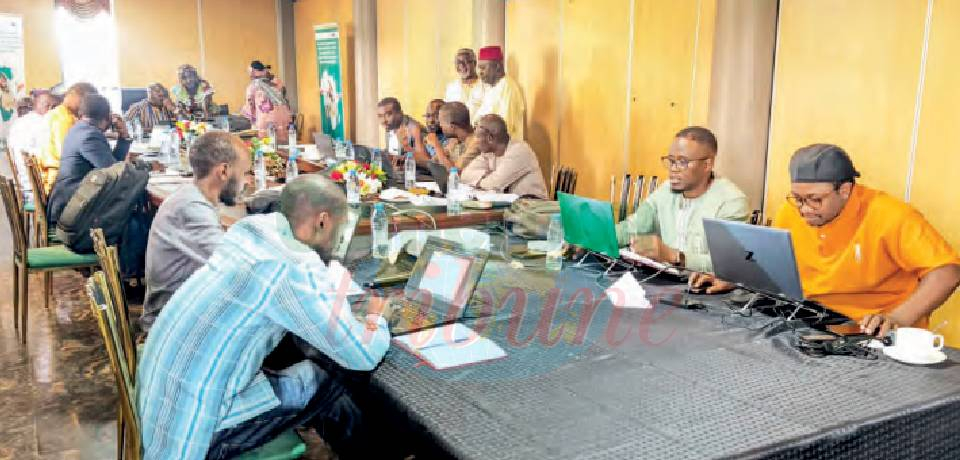
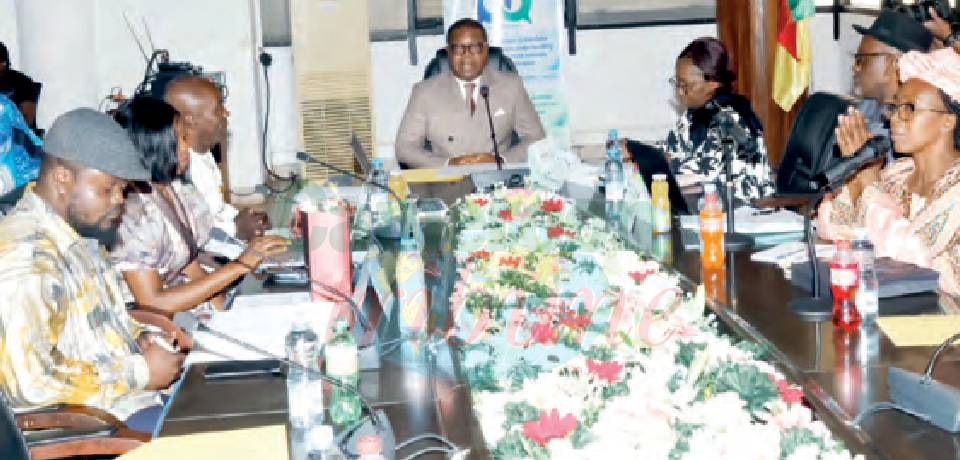
Nearly fifty participants gathered in Yao...
Cet article complet est réservé aux abonnés
Déjà abonné ? Identifiez-vous >
Accédez en illimité à Cameroon Tribune Digital à partir de 26250 FCFA
Je M'abonne1 minute suffit pour vous abonner à Cameroon Tribune Digital !

- Votre numéro spécial cameroon-tribune en version numérique
- Des encarts
- Des appels d'offres exclusives
- D'avant-première (accès 24h avant la publication)
- Des éditions consultables sur tous supports (smartphone, tablettes, PC)





Commentaires