

Hantavirus Alert: Cameroon Activates Surveillance After Cruise Ship Outbreak
- Par Kimeng Hilton
- 09 May 2026 19:07
- 0 Likes
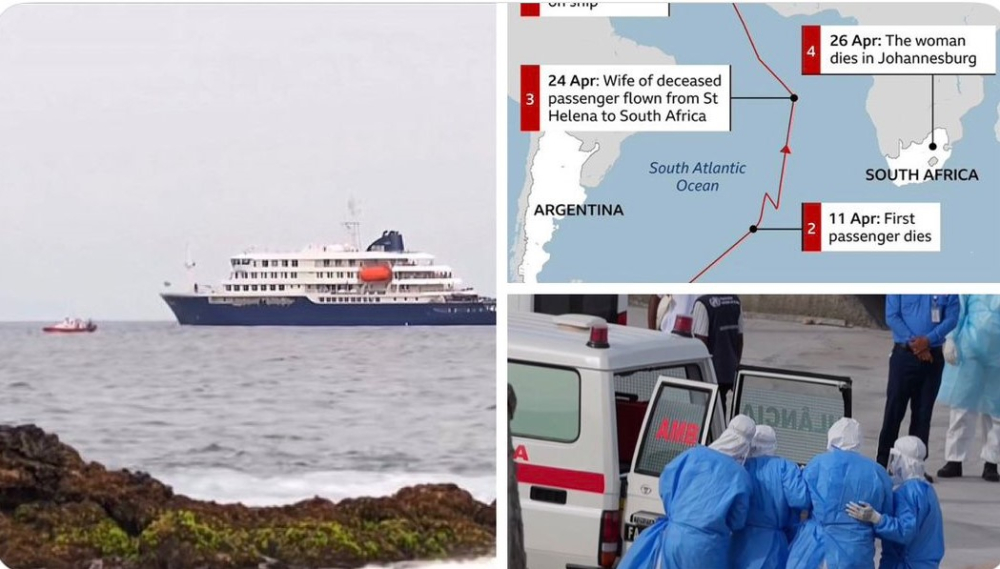
The Minister of Public Health, Dr. Malachie Manaouda, on May 9, 2026 issued a statement following the deaths of three people after sojourning on the MV Hondius in South America.
Cameroon’s Minister of Public Health, Dr. Malachie Manaouda, has this Saturday May 9, 2026, officially announced that the government is closely monitoring a recent Hantavirus outbreak reported on an international cruise ship.
The situation involves a vessel - identified in global health reports as the MV Hondius - carrying approximately 150 passengers and crew. While the outbreak is occurring thousands of miles away in South America, the Minister emphasized that Cameroon is taking proactive steps to prevent any potential importation of the virus.
The Current Situation
According to the Minister's statement, the infection has gained international attention due to two specific factors: The virus has an incubation period of approximately eight weeks, meaning infected individuals may not show symptoms for a significant amount of time. Secondly, this outbreak marks a rare instance where human-to-human transmission of the virus (specifically the Andes strain) has been established.
Response, Prevention
Working alongside the World Health Organization (WHO), Cameroon has activated heightened surveillance and anticipation measures. These protocols are designed to identify and isolate any potential risks at the country's borders, particularly regarding international travelers. Minister Manaouda reassured the public that the WHO currently assesses the global risk of an epidemic as low. However, he stressed the importance of remaining alert.
"During COVID-19, we learned that anticipating is always better than enduring," Dr. Manaouda stated, noting that the health protection of the population remains the top priority under the leadership of President Paul Biya.
Advice To The Public
The Ministry is therefore urging citizens to maintain standard hygiene practices and avoid sharing unverified or non-scientific information regarding the virus. Travelers are encouraged to monitor their health and report any symptoms to medical authorities immediately. Health officials will continue to provide updates as the international situation evolves, the Minister promised.
The Alert
Dr Manaouda’s concern stems from a cluster of respiratory illnesses reported aboard the MV Hondius, an expedition cruise ship that departed Ushuaia, Argentina, in early April 2026. With 147 passengers and crew members representing over 23 nationalities, the vessel became the epicenter of what the World Health Organization (WHO) and Africa Centre for Disease Control, CDC are calling a "significant epidemiological event."
The Incident
The timeline of the outbreak began in early April 2026 when an adult male passenger - who had recently traveled through Argentina and Chile - developed a fever and gastrointestinal distress. Within five days, his condition plummeted into severe respiratory failure, and he tragically passed away while the ship was still at sea.
By early May 2026, the situation escalated. Seven additional cases were identified, resulting in three total deaths. What makes this specific outbreak unique and of concern to Health Ministers like Dr. Manaouda is the strain of the Andes virus (ANDV). Unlike most hantaviruses, which are strictly zoonotic (transmitted only from animals to humans), the Andes strain has a documented history of limited human-to-human transmission, particularly among close contacts in confined spaces.
Incubation, Transmission
Hantaviruses are a family of viruses spread mainly by rodents. In the Americas, they manifest as Hantavirus Pulmonary Syndrome (HPS), a severe, sometimes fatal, respiratory disease. As noted by Minister Manaouda, the incubation period is unusually long- ranging from one to eight weeks. This "stealth period" makes port surveillance difficult. A traveler could contract the virus in South America or on a ship and not show symptoms until long after they have returned to their home country.
Mode Of Spread
Traditionally, humans are infected by inhaling dust contaminated with rodent urine, droppings, or saliva. However, the cluster on the MV Hondius suggests that in the tight quarters of a cruise ship, the virus may have bridged the gap between humans. Initial symptoms include fatigue, fever, and muscle aches, often accompanied by headaches, dizziness, and abdominal pain. If it progresses to HPS, the lungs fill with fluid, making breat...
Cet article complet est réservé aux abonnés
Déjà abonné ? Identifiez-vous >
Accédez en illimité à Cameroon Tribune Digital à partir de 26250 FCFA
Je M'abonne1 minute suffit pour vous abonner à Cameroon Tribune Digital !

- Votre numéro spécial cameroon-tribune en version numérique
- Des encarts
- Des appels d'offres exclusives
- D'avant-première (accès 24h avant la publication)
- Des éditions consultables sur tous supports (smartphone, tablettes, PC)










Commentaires