

From Landlocked Nations To Island States: Diverse Voices Unite For Global Trade Justice At Cameroon Gathering
- Par Kimeng Hilton
- 27 Mar 2026 04:45
- 0 Likes
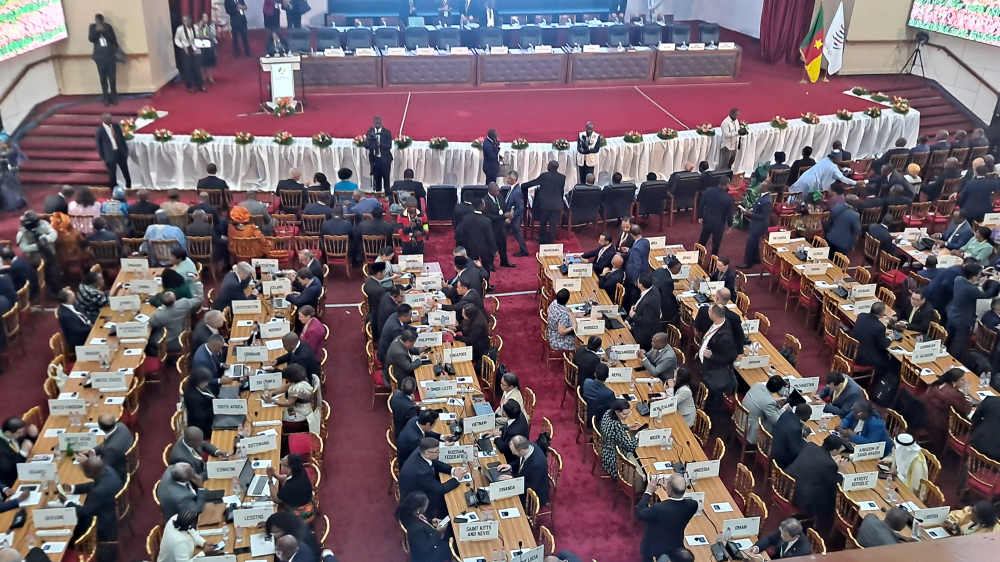
Participants at the 14th Ministerial Conference of the World Trade Organization, which opened in Yaounde, Cameroon on March 26, 2026, raised their expectations as to the outcomes.
In a significant display of African leadership on the global stage, Cameroon is currently hosting a major World Trade Organization (WTO) Ministerial Conference, bringing together over 4,000 delegates and representatives from more than 200 states and institutions. The summit, which opened in the capital on March 26, 2026 with an exceptional ceremony, has set the stage for a critical dialogue on the future of the multilateral trading system. With a distinct focus on bridging the economic divide between developed and developing nations.
Milestone For Africa
The conference marks a pivotal moment for Cameroon, placing the Central African nation at the epicentre of international diplomacy and trade negotiations. Described as a milestone for the continent, the event is not merely a procedural meeting, but an urgent call to action to address the systemic imbalances inherent in global trade rules. As the world grapples with evolving economic challenges and emerging threats to multilateralism, the consensus among delegates is clear: the current system requires comprehensive reform to better serve the interests of the Global South.
Cameroon’s Moment On The World Stage
For the host nation, the conference is a testament to rising capability and diplomatic foresight. Felix Mbayu, Minister Delegate to the Cameroon Minister for External Relations, expressed immense pride in the near seamless organization of the event, noting that the country showcased "the best of Cameroon" during the opening proceedings.
"We are proud that we could host such an important meeting, having 4,000 guests and representatives from 200 States and institutions," Mbayu stated. He highlighted that the first day proceeded successfully, attributing this achievement to the "foresight of the Head of State, His Excellency President Paul Biya," who accepted the responsibility of hosting the gathering.
Avenue For Consensus
Mbayu emphasized that Cameroon is positioning itself as a builder of consensus. "Cameroon is a place where we build consensus," he remarked, underscoring the nation's role in navigating difficult international issues. He also acknowledged the sacrifices of the local population, who have navigated the logistical inconveniences of hosting such a massive influx of visitors, noting that the event ultimately puts the country "on the world stage."
Expected Significant Dividends
The strategic importance of the conference for Cameroon’s domestic development was further elucidated by Salomon Eheth, the Permanent Representative of Cameroon to the United Nations Office in Geneva. Eheth pointed to the specific focus on "Investment Facilitation" as a cornerstone of the agenda. For a country in the process of development, the WTO’s role in creating rules to encourage international trade is paramount. Eheth expressed optimism that the initiative would yield significant dividends, bringing in much-needed investments and partnerships that are crucial for Cameroon’s developmental trajectory.
Plea For Systemic Reforms, Equity
While the host nation basks in the logistical success of the summit, the substantive discussions are dominated by a push for structural changes to the global trading architecture. Sunday Oguche, representing the Permanent Mission of Industry, Trade and Investment of Nigeria to the WTO, voiced a strong expectation for a "development-centred outcome."
Oguche argued that the current framework of WTO rules is often ill-suited to Africa’s developmental needs. "There are a lot of imbalances in the rules," he asserted. The Nigerian delegation is advocating for a reform process that will "rebalance these trade rules" to create a fairer and more equitable system. Central to this demand is the concept of "policy space" - the freedom for developing nations to implement their own industrialization strategies without facing undue constraints from international trade bodies.
"We hope that through the reform process that will be launched in this ministerial, we will be able to rebalance these trade rules," Oguche explained. He emphasized that developing countries need the latitude to drive their own industrialization and diversification in line with their specific national goals, rather than adhering to a one-size-fits-all mandate that may stifle local growth.
Defending The Multilateral System
The urgency of these discussions is heightened by the rapidly changing global landscape. Martin Chungong, Secretary-General of the Inter-Parliamentary Union, described the conference as a milestone, noting that it is taking place at a time when the world is facing "new challenges" to the rules-based multilateral trading system.
Chungong praised the inclusive nature of the conference, highlighting that it is not limited to government trade ministers. It is a multi-stakeholder commitment involving parliamentarians, the business community, and civil society. "It is important that the global community come together to reflect on these challenges and see how they can address them," Chungong said. He expressed confidence that the outcome of the meeting would be beneficial to Africa as a whole, and specifically to Cameroon, reinforcing the importance of the host nation's role in facilitatin...
Cet article complet est réservé aux abonnés
Déjà abonné ? Identifiez-vous >
Accédez en illimité à Cameroon Tribune Digital à partir de 26250 FCFA
Je M'abonne1 minute suffit pour vous abonner à Cameroon Tribune Digital !

- Votre numéro spécial cameroon-tribune en version numérique
- Des encarts
- Des appels d'offres exclusives
- D'avant-première (accès 24h avant la publication)
- Des éditions consultables sur tous supports (smartphone, tablettes, PC)









Commentaires