

The Cost Of Development: New Report Exposes The Deadly Toll Of Large-Scale Land Investments
- Par Kimeng Hilton
- 02 Apr 2026 16:42
- 0 Likes
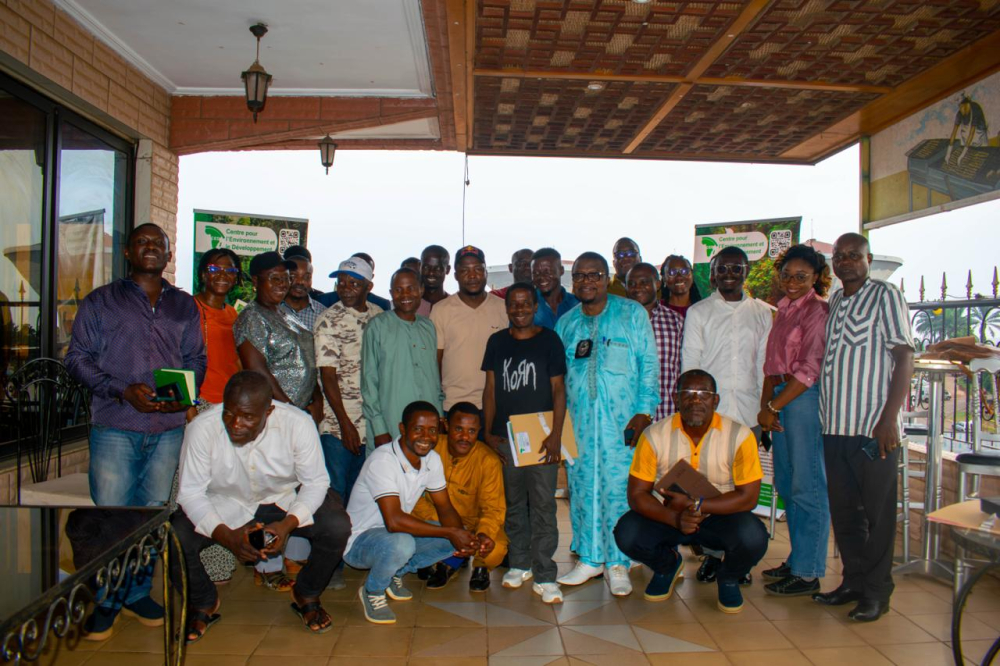
The Centre for Environment and Development (CED) held a conversation with journalists and victims of environmental crimes in Yaounde from March 31-April 1, 2026.
As large-scale land investments reshape the geography of Cameroon, a coalition of environmental experts and local victims is sounding the alarm on a surge of "environmental crimes." Following a landmark capacity-building workshop held from March 31-April 1, 2026 in the capital, Yaounde, advocates are demanding a radical shift in how the State handles resource exploitation to prevent irreversible damage to human health and territorial integrity.
Defining The Crime
At the heart of the current crisis is the concept of "environmental crime" - a term often dismissed as hyperbolic, but which Samuel Nguifo, Secretary General of the Centre for Environment and Development (CED), defines as any human activity that harms the environment or public health in violation of the law.
Nguifo warns that these crimes are often the result of "apparently simple actions" that carry massive, cumulative consequences. Whether it is a single plastic bottle blocking a drainage canal or a massive agro-industrial firm leaching pesticides into a local river, the end result is the same. A compromised food chain and a breakdown of the ecosystems upon which millions of Cameroonians depend.
Toll Of "High-Impact" Investment
Data compiled from victims across the Coast (Océan Division in the South Region), East Region (Garoua-Boulaï, Batouri), and Adamawa Region (Mbéré, Djerem, Faro et Déo Divisions) reveals a systemic crisis. These regions, hubs for mining, logging, and agro-industry, are witnessing what participants called a "structural territorial dispossession." The manifestations of these environmental crimes are not merely abstract legal violations; they are matters of life and death.
Documented cases of diarrhea, cancers, and infertility have been linked to industrial waste and the use of mercury and cyanide in mining. Abandoned mining excavations have become death traps for both humans and livestock. The disappearance of Non-Timber Forest Products (NTFPs), wildlife, and fish has crippled the traditional livelihoods of indigenous peoples.
Five Pillars of Reform
To address these crimes, the CED and its partners have outlined a structured advocacy agenda designed to restore the rule of law to Cameroon’s interior. The recommendations focus on shifting the burden of proof and cost from the victims to the perpetrators. Such as moving beyond the 1974 land laws to recognize the ancestral claims of communities and indigenous peoples.
Establishing a strict regulatory framework where companies are legally and financially responsible for site rehabilitation and health damages. Ensuring that no land investment proceeds without the explicit, documented agreement of the local population....
Cet article complet est réservé aux abonnés
Déjà abonné ? Identifiez-vous >
Accédez en illimité à Cameroon Tribune Digital à partir de 26250 FCFA
Je M'abonne1 minute suffit pour vous abonner à Cameroon Tribune Digital !

- Votre numéro spécial cameroon-tribune en version numérique
- Des encarts
- Des appels d'offres exclusives
- D'avant-première (accès 24h avant la publication)
- Des éditions consultables sur tous supports (smartphone, tablettes, PC)










Commentaires