

Fiscal Decentralization: Municipalities Granted Powers To Audit, Track Local Taxes
- Par Kimeng Hilton
- 21 May 2026 23:15
- 0 Likes
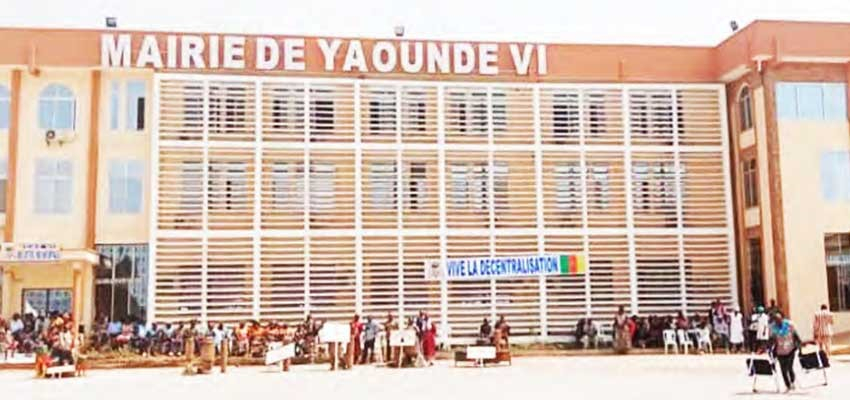
Under the new decision signed by the Minister of Finance and the Minister of Decentralization and Local Development, Mayors can create Local Tax Monitoring Units.
For decades, Cameroon’s decentralization process has faced a quiet, agonizing paradox: local councils were handed the political responsibility to develop their regions, but the financial keys remained firmly locked inside central ministries in Yaoundé. That structural bottleneck just shattered.
New Mandate
On May 15, 2026, a joint decree signed by Louis Paul Motaze (Minister of Finance) and Georges Elanga Obam (Minister of Decentralization and Local Development) mandated the immediate creation of Local Tax Monitoring Units (LTMUs) across all Decentralized Local Authorities (DLAs). This is not just another bureaucratic committee. It is a fundamental shift in how money moves, who tracks it, and who holds the power to audit.
What Changes?
Previously, a local Mayor or City Council executive had very little visibility into how much tax was actually collected in their jurisdiction. They were largely passive recipients of whatever allocations the State financial services passed down. Under Article 3 of the new joint decree, the new LTMUs are legally transformed into financial investigators for local councils. They have been granted six core powers that fundamentally disrupt old dynamics:
The unit is legally empowered to demand and collect data on forecasts vs. actual results (issuance, collection, and availability) from State financial services. For the first time, local authorities will actively participate in joint tax audit operations alongside State agents.
LTMUs must generate a monthly report for the Head of the Local Executive. If revenue drops or a specific tax underperforms, the Mayor will know exactly why - and who to blame -within 30 days. The units will directly conduct local taxpayer identification and assist in cadastral (land registry) surveys to locate hidden properties and businesses.
The Legal Architecture
The decree is a direct follow-up to Law No. 2024/020 of December 23, 2024, which overhauled local taxation. To ensure this new decree takes precedence over older, more restrictive administrative habits, Article 15 explicitly repeals parts of two major pieces of legislation:
Decree No. 00136 (August 24, 2009): Which previously restricted standard tables for municipal jobs.
Decree No. 00000016 (July 05, 2021): Which governed the old, highly centralized operation of regional and municipal revenues. By sweeping away these old provisions, the government is effectively removing the legal excuses used by centralized finance officials to keep local authorities in the dark.
Power Dynamics, Potential Friction
While the decree frames this as a harmonious collaboration between MINFI and MINDDEVEL, policy analysts in Yaoundé note that implementing this will likely trigger significant institutional friction.
The Clash Of The Tiers
Historically, State tax inspectors and local tax collectors have operated in silos, occasionally clashing over jurisdiction. By forcing State financial services to hand over data to a municipal unit, the decree strips away the monopoly on data that central authorities enjoyed.
State Supervision
The State has not given up complete control. Article 5(2) states that any municipal deliberation creating an LTMU is "subject to the prior approval of the State representative" (the Governor or the Prefect). This means that while councils have more power, the central government retains a veto switch through its administrative oversight.
The Road Ahead
The Prime Minister's office granted its official visa (No. 001100) to this framework on May 4, 2026, signaling total alignment at the highest levels of government. The pressure is now squarely on City Councils and Municipalities to draft their internal deliberations, get them approved by SDOs, and stand up these units. In an economy where local infrastructure - from roads to markets - is desperate for funding, the success of these Local Tax Monitoring Units will likely dictate the success of Cameroon’s entire decentralization experiment over the next decade.
The Legal Architecture
Déjà abonné ?
Identifiez-vous >
Cet article complet est réservé aux abonnés
Accédez en illimité à Cameroon Tribune Digital à partir de 26250 FCFA
Je M'abonne
1 minute suffit pour vous abonner à Cameroon Tribune Digital !



Reactions
De la meme catégorie



En kiosque




Commentaires