

Manyangue Na Elombo Campo Marine Park: How Locals Are Turning Conservation Into Income-making
- Par Kimeng Hilton
- 22 May 2026 21:47
- 0 Likes
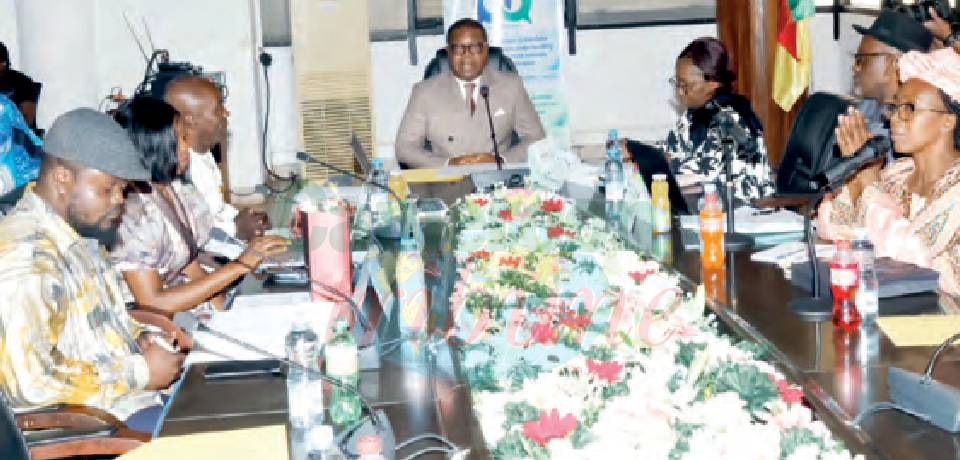
Officials from an association working in the park in Ocean Division of South Region on May 22, 2026 in Yaounde shared their experiences with school children. To mark World Diversity Day.
For decades, environmental conservation was often viewed as a luxury or, worse, a restriction on the livelihoods of coastal communities. However, at a public lecture organized by the charity, SOUTENABLE in Yaounde to mark International Day for Biological Diversity on May 22, 2026, experts turned that old narrative on its head. The core message was clear: protecting Cameroon’s marine ecosystems is not about favoring animals over people. It is an economic imperative for human survival and financial stability.
Wealth Hidden In Water
"We don’t do biodiversity conservation because we love animals too much," explained Eddy Nnanga, Programme Manager of the Aquatic Environmental Management Association (AQUAMEN), based in Kribi in Ocean Division of the South Region. "The most important species to protect on Earth is Homo sapiens sapiens - the human being. All we do is preserve the resources that we will use today, but also tomorrow."
Nnanga challenged the stereotype of the impoverished artisanal fisherman, noting that well-managed aquatic systems can generate significant capital, rivaling state salaries. The "Blue Economy" - economic activities derived from oceans and seas that maintain ecosystem health - encompasses sustainable fishing, ecotourism, biotechnology, renewable energy, and research. Currently, financial institutions and banks rarely fund water-based ventures, leaving a massive economic vacuum that civil society groups are rushing to fill with market-ready innovations.
Smoked Fish, Saved Trees
A major economic bottleneck on Cameroon's coast is fish processing. Traditionally, women smoke fish using massive amounts of wood cut illegally from coastal mangroves. Mangroves serve as critical marine nurseries; cutting them destroys the very habitats fish need to reproduce, driving down catches and tanking the local economy. Furthermore, the constant smoke inflicts severe respiratory illnesses on the women processors.
To break this cycle, AQUAMEN introduced the "Blue Box" - a hybrid fish-smoking device equipped with solar panels. Traditional methods take three days to smoke 45 kilograms of fish. The Blue Box accomplishes this in just 18 hours, doubling production capacity over a 36-hour window.
Alternative Heat
By shifting heat production to solar energy and using only trace amounts of coconut husks or oil for flavor, the device completely bypasses the need to destroy protective mangroves. The closed system channels hazardous smoke away through exhaust pipes, protecting the health of workers while yielding a cleaner, premium-grade smoked fish that commands higher market prices.
The concept has already captured the market. In pilot surveys conducted around the Manyangue Na Elombo Campo Marine Park, over 300 local women entrepreneurs have signed up to adopt the technology. By pairing aquaculture enclosures with Blue Box smoking stations, local communities can establish fully localized, high-yield, high-margin seafood hubs.
The Blue Forge
The economic strategy extends to waste management through another initiative dubbed the "Blue Forge." This modernized craftsmanship framework upcycles plastic pollution clogging coastal beaches into durable, marketable construction materials.
Like the Blue Box, the Blue Forge utilizes custom-designed molds and elevated chimneys to protect artisans from toxic fumes. By converting environmental waste into localized industrial inputs, coastal youths can transform an ecological hazard into a distinct real estate supply chain.
Reconciling Cash, Conservation
Ndounteng Ndjamo Rodric Xavier, Coordinator of Tube Awu and President of the CAMNET network, emphasized that localized economic alternatives are the only viable buffer against systemic eco-crises.
"Many local communities find themselves involved in conflicts with the disappearance of these species basically because they want to earn enough to eat, to send their children to school, and to take care of them," Ndounteng noted. "The blue economy is the miracle solution that manages to reconcile all this: protecting the environment while ensuring communities continue to ea...
Cet article complet est réservé aux abonnés
Déjà abonné ? Identifiez-vous >
Accédez en illimité à Cameroon Tribune Digital à partir de 26250 FCFA
Je M'abonne1 minute suffit pour vous abonner à Cameroon Tribune Digital !

- Votre numéro spécial cameroon-tribune en version numérique
- Des encarts
- Des appels d'offres exclusives
- D'avant-première (accès 24h avant la publication)
- Des éditions consultables sur tous supports (smartphone, tablettes, PC)








Commentaires