
Research, Regulation, Universal Coverage: Cameroon’s Roadmap For Traditional Medicine Innovation
- Par Kimeng Hilton
- 05 Sep 2026 10:53
- 0 Likes
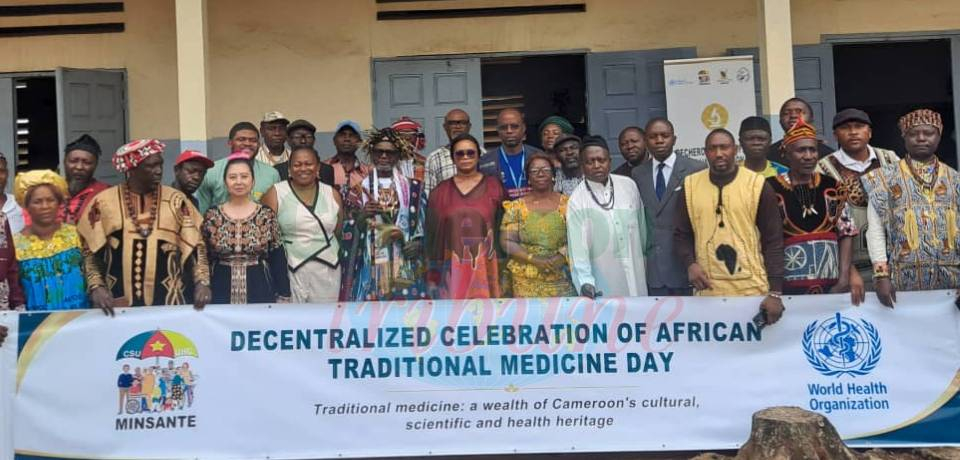
Health authorities in the Centre Region on September 4, 2026 marked this year’s African Traditional Medicine Day in Yaounde.
The Centre Regional Delegation of Public Health, in collaboration with the World Health Organization, WHO Cameroon Country Office, officially marked the 24th African Traditional Medicine Day on September 4, 2026, in Yaounde. The event gathered health authorities, researchers, civil society representatives, and traditional health practitioners. To advance the formal integration of traditional medicine into Cameroon’s healthcare delivery framework.
New Regulatory Framework
Held on the theme, "Reflection on research and development efforts in traditional medicine for the implementation of universal health coverage in the African Region," the celebration highlighted structural reforms following the enactment of Law No. 2024/018 of December 23, 2024. Which governs the practice and organization of traditional medicine in Cameroon.
Its Key Role
Opening the formal ceremonies on behalf of the Regional Delegate of Public Health for the Centre Region, the representative underscored the importance of evaluating the sector's contribution to national healthcare:
"It was important for us to review all the activities carried out as part of this celebration in order to evaluate its added value. Your numerous and essential contributions clearly demonstrate the key role that you play in Cameroon's healthcare system... On behalf of the Regional Delegate, I wish us a high-quality workshop and declare the celebration of African Traditional Medicine Day open," she concluded.
Event Presentations
The regional event featured technical presentations, policy discussions, and awareness sessions aimed at bridging traditional practices with evidence-based medicine. The Technical Regional Group of the Expanded Programme on Immunization, GTR-PEV and the WHO led an orientation session. To sensitize traditional practitioners on Vaccine-Preventable Disease Surveillance, VPDS, reporting mechanisms, and early referral protocols.
Integrating Traditional Medicine
In addition, Dr. Ewane Olivier, Focal Point Traditional Medicine, WHO, presented on the intersection of traditional medicine and Universal Health Coverage, UHC. Emphasizing that with nearly 80% of sub-Saharan people utilizing traditional medicine, achieving accessible and cost-effective health coverage requires regulating and validating indigenous healthcare.
Research, Universal Health Coverage
Building on this vision, Dr. Gideon Peliegho presented his thesis research, which outlines operational pathways for incorporating traditional health practitioners into Cameroon's national health system within the broader UHC rollout. Dr. Peliegho emphasized the broader regional alignment and statutory progress:
"Integrating traditional medicine fully within our health system is going to enhance a complete touch on universal health coverage. Because we cannot be talking universal health coverage - which is accessibility, reduced cost, and quality - without taking into consideration a part of the health sector that covers more than 80% of the sub-Saharan population. On December 23, 2024, the Head of State, His Excellency President Paul Biya, went ahead to promulgate the law on the exercise and practice of traditional medicine in Cameroon," Dr Peliegho recalled.
The 2024 Law: Priorities, Next StepsThe promulgation of Law No. 2024/018 established a formal legal status for traditional health practitioners. Providing for the creation of a National Council of Traditional Health Practitioners. A code of ethics, and referral pathways between traditional and conventional care. Speaking during the proceedings, health officials and practitioners outlined the immediate administrative and regulatory priorities required to make this framework operational.
Awaiting Implementation Statutes
Addressing the current legal status, Dr. Tonfack Joelle, Focal Point for Traditional Medicine in the Centre Regional Delegation of Public Health, clarified where the country stands: "Traditional medicine in Cameroon was not sufficiently regulated until recent years. Now, we can be proud of ourselves regarding the law that was passed to frame traditional medicine.
“For now, the implementation texts related to traditional medicine are in the process of being drafted. We invite all actors in traditional medicine to know that they are included in the Cameroonian healthcare system. And to work hand in glove with conventional medicine, because what interests us all is the well-being and health of the population," Dr Tonfack pointed out.
Greater Product Safety
On the scientific side, Dr. Peliegho noted that partnerships with the Institute of Medical Research and Medicinal Plants Studies, IMPM under the Ministry of Scientific Research and Innovation, have significantly upgraded product safety. Assuring the public of modern standards:
"It is high time for the population to trust our traditional medicines. Traditional medicine in the 21st Century is not like yesteryears. Today, we have profited from mechanisms put in place by the government to train traditional health practitioners and drill them on pharmaceutical practices. So that issues of dosage and quality are assured. Most products we dish out are Category 2 Improved Traditional Medicines, thanks to the IMPM," Dr Peliegho acknowledged.
Cameroon’s Progress
Adding his voice to the significance of national recognition, Dr. Fai Fominyen Ngu Edward, long-time practitioner and President of the Association of Cameroon Traditional Medicine Practitioners, expressed his pride:...
Cet article complet est réservé aux abonnés
Déjà abonné ? Identifiez-vous >
Accédez en illimité à Cameroon Tribune Digital à partir de 26250 FCFA
Je M'abonne1 minute suffit pour vous abonner à Cameroon Tribune Digital !
- Votre numéro spécial cameroon-tribune en version numérique
- Des encarts
- Des appels d'offres exclusives
- D'avant-première (accès 24h avant la publication)
- Des éditions consultables sur tous supports (smartphone, tablettes, PC)






Commentaires