

“Cameroon Has Potentials In Locally Produced Construction Materials”
- Par Eulalia AMABO
- 10 Sep 2026 13:28
- 0 Likes
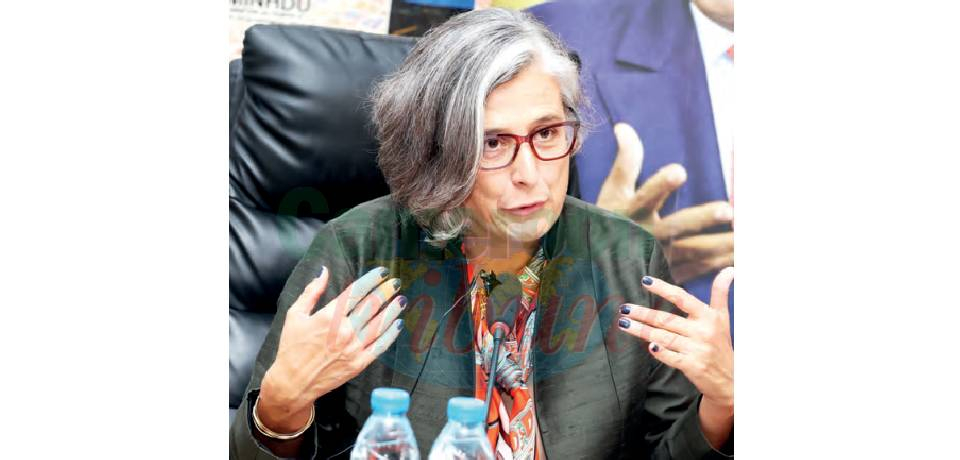
Anaclaudia Rossbach, Executive Director of the United Nations Human Settlement Program.
What is the main purpose of your visit to Cameroon and what is your main message? Actually, it is my first ever visit to Cameroon. We have a program here in Cameroon and we have been col laborating for over 20 years. We also launched the plan on smart cities and we inaugurated the World Habitat Day, which is a week-long initiative by the Minister of Housing and Urban Development to discuss the pressing issues related to cities and urbani zation in Cameroon. So basically I came here to learn about Cameroon, what is the context, what are the pressing issues to discuss, what is the next level of our collaboration, to launch this week-long discussion and the plan for smart cities. You attended the official launch of the Cameroon National Plan of Action for Smart Cities, and in your opinion how important is this initiative for the Came roonian government and for the UN system? First of all, we are in a world that is being transformed through techno logies. So we have Artificial Intelli gence, for example, that is growing and this puts us at crossroads. Either we use technology to speed up pro cesses, accelerate the implementation of the global agendas like the climate agenda, particularly SDG 11 which has to do with sustainable cities and safe cities. Technology keeps evol ving. And so we need to use techno logy not to keep people outside im portant data. Technology can amplify the divide between people who have access to internet, who is part of the data set or can bridge the divide, promoting inclusion, more accessible information, and accelerate processes. So this is the overall discussions that we are having within the United Na tions. I was recently in an Artificial Intelligence conversation around hu man development in China and tech nology is advancing very fast. So it is important that we have guidance. My point is, we need guidance to a make sure that technology is not the driver of a decision making process, but rather supports decision-making processes. And this is at the core of the National Plan of Action for Smart Cities. Each time they talk about human settlement, one prominent fea ture is housing, and it remains a huge challenge in Africa. Part of your Global Cities Report for 2026 indicates that roughly one billion people lack homes in the informal sector and slums across the continent. How can Cameroon overcome its own housing deficit, which is about 2.2 million? The one billion figure is a global figure of people living in informal settlements. But when we look at Africa, we see that 50 per cent of half of the population in cities live in informal settlements. I think the si tuation in Cameroon is very close to that. So what we recommend is a two-pronged approach. Firstly, let us look at these informal settlements, at the investments that people made, to see what kind of improvements can be done to increase security of tenure, to make sure there is access to services, that they are integrated in the master plans, and are part of the data. And the second is really in vesting in housing policies because at the end of the day, we need to in crease the supply of affordable hou sing. This is not only for Cameroon. We have three billion people lacking access to adequate housing world wide. And the affordability crisis is a global one. Everywhere, people have difficulties in buying or renting a house. Sometimes, they have diffi culties in staying in their house be cause the maintenance became too expensive. So how do you think Cameroon can solve its own housing diffi culties? We need all forces. We need all ca pacities in place. We need communi ties that are organised and we need the private sector too. We need the government to come up with the po licies, the regulations and the subsi dies. Throughout my mission here, we have identified a couple of bot tlenecks, for example we spoke about land, the importance unblocking land and planning for housing. We have to plan where these houses, current needs and the future ones are going to be built. We spoke about bottle necks in terms of the value chain but at the same time the potential that Cameroon has with the locally produced construction materials. I vi sited the State owned Local Materials Promotion Authority (MIPROMALO) and I was very impressed by the re search and work that is being done. I think it is a unique experience in Africa in terms of putting heads to gether to see how you can improve the production of locally generated materials especially now with the crisis in the Middle East which gene rating inflation on construction ma terials. And the materials are climate friendly. We spoke about finance too. So basically this is the formula all over the world; the land-the mate rials-the value chain and the money. If these three elements are lined up, then it is great and you can increase the supply of housing. How can Cameroon transform i...
Cet article complet est réservé aux abonnés
Déjà abonné ? Identifiez-vous >
Accédez en illimité à Cameroon Tribune Digital à partir de 26250 FCFA
Je M'abonne1 minute suffit pour vous abonner à Cameroon Tribune Digital !

- Votre numéro spécial cameroon-tribune en version numérique
- Des encarts
- Des appels d'offres exclusives
- D'avant-première (accès 24h avant la publication)
- Des éditions consultables sur tous supports (smartphone, tablettes, PC)


Reactions
De la meme catégorie

Wum: Senior Police Superintendent Killed, Five Staff Kidnapped
- 10 Sep 2026 13:37
- 0 likes




Commentaires