

2026-2027 School Year: ASMIBA-PVSH Charts Bold Inclusion Strategy For Youth
- Par Kimeng Hilton
- 14 Sep 2026 14:53
- 0 Likes
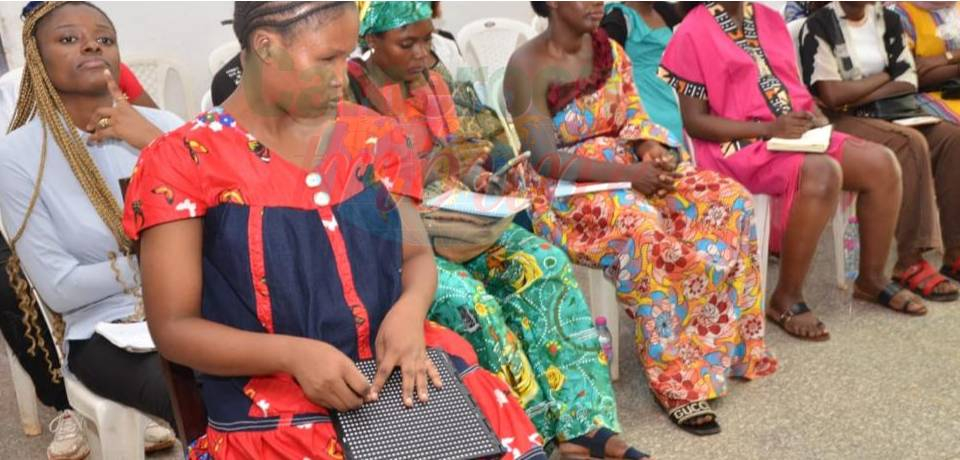
The Association of Activists and Fighters for Vulnerable People and Persons with Disabilities is deploying adaptive tech and mentorship in schools to assure proper inclusion.
As millions of Cameroonian children and teenagers returned to classrooms on September 7, 2026 for the start of the 2026–2027 academic year, a major civil society movement is stepping up to ensure that students with disabilities are not left behind.
Speaking to Cameroon Tribune Online in Yaounde on September 14, 2026, Tombi A Sanam Olivier, President of the Association of Activists and Fighters for Vulnerable People and Persons with Disabilities, ASMIBA-PVSH - and a political science researcher - outlined an ambitious strategic vision for the upcoming school year. The agenda balances a bold push for inclusive education. With a nationwide expansion of the group's sexual and reproductive health partnership with the United Nations Population Fund, UNFPA.
Redefining Inclusive Education
For ASMIBA-PVSH, the annual school resumption season is far more than a routine administrative milestone - it is a critical battleground for fundamental human rights. In Cameroon, where physical and attitudinal barriers frequently obstruct access to education, children living with physical, sensory, or cognitive impairments remain disproportionately out of school.
Beyond Administrative Formality
"Inclusive education cannot be reduced to a simple administrative formality or a mere line on a registration form," emphasized Olivier. "True inclusion demands that we fundamentally reimagine our learning environments. It requires accessible school infrastructure, specialized pedagogical tools, early diagnostic mechanisms for learning obstacles, and educators who are properly trained to support diverse learning needs," he insisted.
Specialized Field Units
Over the course of the 2026–2027 academic year, ASMIBA-PVSH plans to deploy specialized field units in primary, secondary, and vocational institutions across the country. The initiative focuses on four primary operational lines: Conducting grassroots sessions with parents, teachers, and school administrators to dismantle deep-seated social taboos surrounding childhood disability.
Pairing young students living with disabilities with professional mentors to build confidence and guide them toward higher education or specialized trade pathways. Expanding access to adaptive technologies, audio learning materials, and digital resources designed to equalize the playing field for visually and hearing-impaired learners. And partnering with local businesses and technical colleges to ensure youth with disabilities acquire marketable skills for long-term economic independence.
Lessons From Past
The current school resumption campaign builds directly on momentum generated by ASMIBA-PVSH’s high-profile project executed in collaboration with the United Nations Population Fund, UNFPA. Implemented across three diverse geographic zones - the Centre, West, and East Regions - the initial phase targeted some of the country’s most vulnerable young demographics.
Vulnerable Young Demographics
The initiative focused on four core pillars: Educating vulnerable youth on body autonomy, hygiene, and accessible healthcare resources. Demystifying family planning options and addressing socio-cultural myths. Raising awareness about legal frameworks that criminalize domestic abuse and sexual exploitation. And building leadership skills among marginalized youth to foster active citizenship.
When Given Opportunity
Reflecting on the phase-one outcomes, Olivier praised the performance of young community leaders while pointing out the vast systemic gaps that remain. "The objectives were fully achieved. We proved beyond doubt that when young people are given trust, financial resources, and institutional support, they deliver remarkable results," Olivier stated.
"However, our field presence revealed a concerning reality: the sheer volume of unmet need is overwhelming. Vast geographic pockets remain untouched, and ignorance surrounding basic health and legal rights remains dangerously high," he added.
Double Burden
The President noted that young women and girls with disabilities face a double burden of discrimination. Many remain completely unaware of statutory laws protecting them against sexual violence. Lack access to tailored reproductive healthcare services, and face persist...
Cet article complet est réservé aux abonnés
Déjà abonné ? Identifiez-vous >
Accédez en illimité à Cameroon Tribune Digital à partir de 26250 FCFA
Je M'abonne1 minute suffit pour vous abonner à Cameroon Tribune Digital !
- Votre numéro spécial cameroon-tribune en version numérique
- Des encarts
- Des appels d'offres exclusives
- D'avant-première (accès 24h avant la publication)
- Des éditions consultables sur tous supports (smartphone, tablettes, PC)




Commentaires