

Beyond Dispensing: ONPC Pushes For Expanded Clinical Roles For Pharmacists
- Par Kimeng Hilton
- 26 Sep 2026 16:58
- 0 Likes
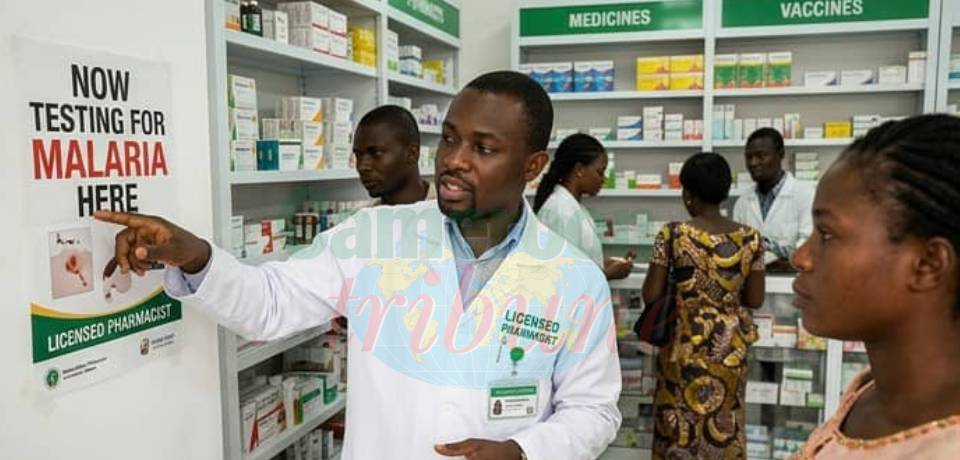
As World Pharmacists Day is celebrated on September 25, 2026, the National Order of Pharmacists of Cameroon has demanded a greater involvement in healthcare delivery.
On World Pharmacists Day on September 25, 2026, the President of the National Order of Pharmacists of Cameroon, ONPC, Dr. Nana Franck, has raised critical concerns regarding the structural constraints facing the country's pharmaceutical practice. Speaking to Cameroon Tribune Online on the profession’s dual burden, Dr. Nana highlighted that licensed practitioners must constantly contend with illicit drug distribution networks, including adulterated medicines and contraband. While fighting for a broader operational role within the national health system.
Rigid Restriction
According to Dr. Nana, a primary bottleneck in Cameroonian healthcare is the rigid restriction of pharmacists to simple medicine dispensation rather than primary healthcare delivery. He advocated for expanding the pharmacist's mission to include preventive care, vaccinations, and early pathology screenings. Noting that community pharmacies are often more accessible to local populations in urban centers like Yaoundé than traditional clinics.
Seven-Year Training
Addressing doubts regarding professional readiness, Dr. Nana pointed out that pharmacists complete seven years of university training - a rigorous duration equal to that of medical doctors. He argued that retaining pharmacists solely behind counters as sales agents underutilizes their extensive academic qualification. Stressing that continuous professional training equips practitioners to conduct pre-diagnostic orientation tests and help relieve overburdened hospitals.
Increased Role For Pharmacists
Progress is gradually taking shape following advocacy efforts by the ONPC. Dr. Nana disclosed that the Ministry of Public Health recently validated a framework allowing pharmacists to conduct rapid diagnostic screening tests for malaria at community pharmacies. An initiative set for rollout to strengthen early disease management.
200 Pharmacists Trained Annually
Despite these advancements, broader administrative and institutional reluctance remains a hurdle to fully integrating pharmacists into public health functions. With state and private universities across Douala, Yaoundé, Bangangté, Dschang, Bamenda, Buea, and Ebolowa graduating approximately 200 pharmacists annually, Dr. Nana warned that expanding clinical roles is essential to prevent pharmacist unemployment and maximize the state's investment in medical education.
Empowering Pharmacists
As the global healthcare community observes the 2026 International Day of Pharmacy (or World Pharmacists Day) today September 25, 2026 on the theme, "Empowering Pharmacists for Healthier Futures," the state of pharmaceutical practice in Cameroon presents a stark contrast. Between professional capability and systemic vulnerability. While licensed pharmacists remain the frontline defense against disease and drug-related harm, the profession in Cameroon continues to contend with severe structural pressures. Most notably the unchecked proliferation of illicit roadside medicine sellers.
Sharply Contrasting Sectors
The Cameroonian pharmaceutical market is currently split into two sharply contrasting sectors - the official regulated market and the illicit street network. On one side, licensed community pharmacies operating under the supervision of the National Order of Pharmacists of Cameroon, ONPC uphold rigorous standards. They ensure proper cold-chain preservation, guarantee product authenticity, and deliver expert clinical care to patients.
On the other side, an aggressive black market controls a significant portion of the country's drug trade. In these informal channels, medications are directly exposed to severe sun and tropical heat. Leading to rapid degradation and creating ideal conditions for the circulation of counterfeit, improperly stored, or expired drugs.
Crisis On The Pavement
In major urban hubs like Douala and Yaoundé, as well as rural communities across the country, informal roadside medicine stalls - popularly known as "pavement pharmacies" - operate in plain sight. Unqualified vendors display antibiotics, anti-malarials, analgesics, and even psychotropic drugs on open-air tables. Or in plastic basins under extreme tropical heat.
Because Of Poverty, Ignorance
Driven by widespread poverty, high out-of-pocket medical costs, and low public health literacy, millions of citizens purchase these improperly stored, frequently counterfeit, or expired medications because they appear cheaper than those in licensed pharmacies. Public health experts and licensed practitioners warn that these uncontrolled sales directly fuel drug toxicity, treatment failures. And the rapid rise of Antimicrobial Resistance, AMR across the region.
Official Warnings
The Pharmacy Council of Cameroon - known formally as the National Order of Pharmacists of Cameroon (Ordre National des Pharmaciens du Cameroun - ONPC) - has consistently raised the alarm over the threat posed by illegal drug distribution networks.
25% Illicit Market
According to figures highlighted by the leadership of the ONPC, illicit supply chains control over 25% of the national medicine market. With nearly 40% of these street-sold products entering the country via organized smuggling routes. Council officials have repeatedly emphasized that medicine is not a standard commercial commodity. But a regulated substance that becomes lethal when handled without professional oversight.
National Security, Public Health Threat
"A drug that is wrongly prescribed, improperly stored, or han...
Cet article complet est réservé aux abonnés
Déjà abonné ? Identifiez-vous >
Accédez en illimité à Cameroon Tribune Digital à partir de 26250 FCFA
Je M'abonne1 minute suffit pour vous abonner à Cameroon Tribune Digital !

- Votre numéro spécial cameroon-tribune en version numérique
- Des encarts
- Des appels d'offres exclusives
- D'avant-première (accès 24h avant la publication)
- Des éditions consultables sur tous supports (smartphone, tablettes, PC)








Commentaires