
Language, Education, Judiciary: Upholding Rich,Diverse Heritages!
- Par Ludovic AMARA (Stagiaire)
- 11 May 2017 14:07
- 0 Likes
Cameroon inherited much from her colonial masters and ensuring the mutual respect and promotion of the cultures greatly enhances the much-cherished national unity.
Cameroon by every imagination is a country unique. Her past distinguishes it from other countries within and without Africa. That what stands tall today as the Republic of Cameroon emanated from two different States, cultures, educational and judicial systems born of different colonial masters, make the country nearly unequalled. Article 1 (3) of the Constitution provides that, “The official languages of the Republic of Cameroon shall be English and French, both languages having equal value.” Besides, Cameroon also has over 250 national languages, representing different ethnic identities that cut across both divides.
This diversity in language, steaming from the English-speaking part hitherto administered by Britain and French-speaking part initially ruled by France, is what the parties brought into the union when the two decided to form a Federal Republic of Cameroon in 1961, then the United Republic of Cameroon in 1972 and later the Republic of Cameroon in 1984.
While a school of thought may validly question the basis of the union, especially at a time one party feels disillusioned, there is absolute need to bridge gaps and consolidate what the country inherited which is good and presents brighter prospects for the citizens. Speaking or at least mastering the two official languages is undeniably an added value which should jealously be upheld. Cameroonians who have stepped out of the national borders can testify of how good being bilingual is. With it, communication and circulation are greatly facilitated.
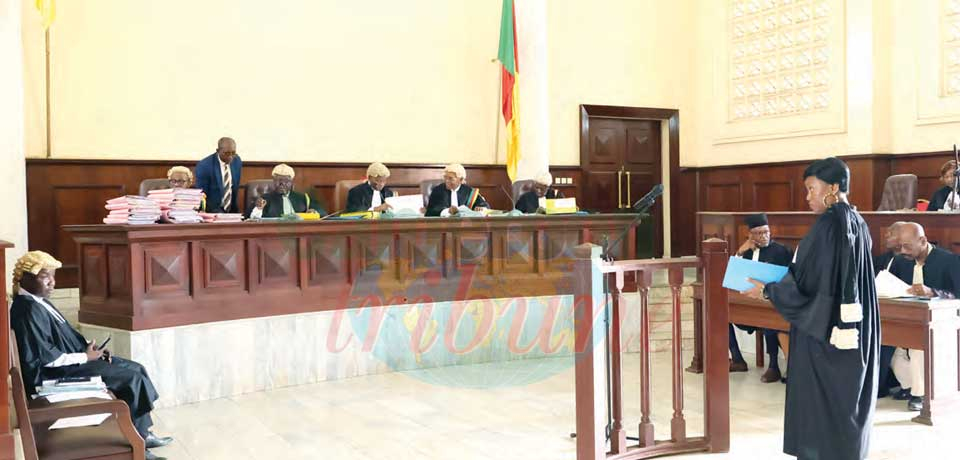
Very few countries in the world have the bi-jurial system like Cameroon wherein the Common and Civil Laws cohabit to render justice to all and sundry. Accepting each other and striving to mutually preserve and promote the cultures enhances togetherness as all would feel important and useful to the system. Ironing out the differences through institutional revamping like the Head of State has done, in response to grievances of Common Law Lawyers, speak of the desire of public authorities to ensure their comprehensive functioning.
The education systems of Cameroon are not the least of sound colonial heritages that the country imperatively needs to uphold to rise above national and international challenges. Having the General Certificate of Education Advanced Level and the Baccalaureate function side-by-side, as the graduation points into the higher education system, testifies to the richness of the country’s educational system and its propensity to prepare graduates for anywhere in the world. Proof is that Cameroonians have succeeded and continually succeed for international studies worldwide. Inasmuch as a school of thought agrees that Anglophone refers to a person whose parents hail from North West and South West Regions regardless of the culture and the language he speaks best and vice versa, the interwoven nature of the cultures presents them all as Cameroonians. Veritable assets for enhancing togetherness!
In fact, in Cameroon there are citizens with Anglophone sociological backgrounds who are culturally Francophone and vice versa owing to their upbringing and educational orientations. There are equally citizens of Anglophone sociological background who grasp both the French culture and language and citizens of Francophone sociological background who grasp both the English language and culture. These are true foundations for cohesion in Cameroon!
Marrying the past and present could constitute a formidable base for the prosperity of the country described variously as Africa in miniature given her geographical and cultural diversity. Upholding these rich and diverse heritages is therefore ideal for living together.
Réactions
Joël Oyono: « L’originalité de notre société se fonde sur ces héritages »
Chef d’entreprise.
« Il y a une urgence de revalorisation de nos héritages culturels. Cet exercice permettra de savoir que ce que certains veulent utiliser pour nous diviser, nous opposer les uns aux autres, est en réalité une richesse à préserver. Ainsi, dans notre quotidien, nous devons faire usage de l’anglais et du français, sans exception. Nous devons encourager les parents francophones qui envoient leurs enfants dans les écoles anglophones et vice-versa. Ceci permet de sauvegarder ces atouts et d’assurer le brassage des Camerounais. Notre société a besoin de cette harmonie et son originalité s’appuie sur ces héritages ».
Dr Tatah Peter Ntaimah : “Uphold Cameroon’s Colonial Heritage”
Anthropologist.
“In a multicultural society like Cameroon, self identification is only possible through the preservation of intangible cultural elements such as language, educational system, legal system, etc since such traits are not easily dissolvable. Today, the international community considers them as fundamental human rights. The advantage with these intangible cultural heritage is that its perpetuation is mandatory and almost unconscious are not easily dissolvable. What I mean is that it is difficult for someone to take away language from you. Monuments can eas...
Cet article complet est réservé aux abonnés
Déjà abonné ? Identifiez-vous >
Accédez en illimité à Cameroon Tribune Digital à partir de 26250 FCFA
Je M'abonne1 minute suffit pour vous abonner à Cameroon Tribune Digital !

- Votre numéro spécial cameroon-tribune en version numérique
- Des encarts
- Des appels d'offres exclusives
- D'avant-première (accès 24h avant la publication)
- Des éditions consultables sur tous supports (smartphone, tablettes, PC)





Commentaires