

“Patients Should Have Money, Be Mentally Ready”
- Par Brenda YUFEH
- 17 Aug 2026 12:08
- Likes
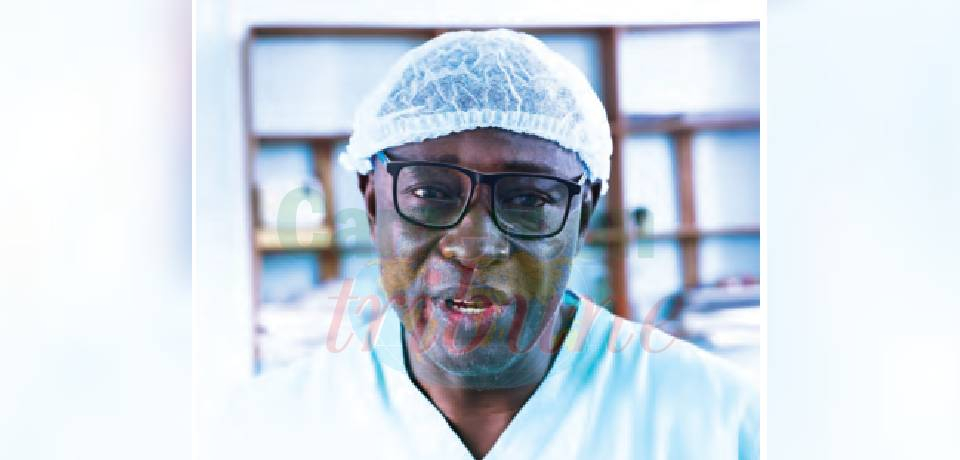
Dr Oben Sammy Orock, Plastic, Aesthetic and Reconstructive Surgeon, Yaounde.
Aesthetic surgery is such a risky domain. How do you manage the risk involved? I apply strict protocols, before and after the procedure, knowing pos sible complications and how to ma nage them. That is why I push back on people who see cosmetic surgery and only think “money.” People should get proper training. For me it is all about standards. This is a good opportunity to remind other experts that with demand for cos metic surgery going up so fast in the last two years, the training and safety side has to increase for all those in the domain. I have a check list of what to do before and after the surgery. The surgery can be beautiful, but it is only safe if you follow every protocol before, during and after. After surgery, special mea sures are taken to avoid negative outcomes. It is important to keep patients in the hospital, do not send them home or to a hotel for those who carry out the procedure abroad. Hotel recovery is dangerous, because of the critical monitoring that should take place the first five days after surgery. This is a human life. I am not joking about it. Have you ever faced complica tions during these procedures? Yes. Any surgeon who tells you they have never had complications is a liar. I have had complications. And I believe it is through those compli cations that I have become the sur geon I am today. I have had two cases of necrosis, where the skin on the lower abdomen died. That was because of the technique I was using. I had just come back from Europe and I was applying a Euro pean technique here in Africa. It did not work. But as a plastic surgeon, I always have a Plan A, B, and C. I managed those cases. I have also had two deaths, both from throm boembolic disease-problems with blood clotting. In such a situation, the patient will be doing very well, and then on the fourth day, every thing collapses. They start bleeding and everything just drop. We did everything we could, and two pa tients died just like that. I cried for about two weeks. I could not operate. Are people ever dissatisfied after a cosmetic surgery? Yes, it is very common. But we do not do revision surgery immediately. We wait three to six months for the swelling to settle and for the final shape to appear. This happens mostly with buttocks and breast surgery. Most cosmetic surgeries you see have been done two or three times to get the final and desired shape. I am almost known as the “correction surgeon.” I just corrected a woman who was opera ted on in Douala. And correcting a bad result costs the same, or even more, because revision surgery is more difficult. Nobody gets it perfect in one go. Do people always come with their partners for any cosmetic proce dure? Some women come for a consulta tion and I ask them, “Does your hus band know about this?” And they will say, “My husband does not want me to do it. But when he travels, I am going to go ahead and do it.” When a woman is determined to do something, she will do it. And in about nine out of ten of those cases, the husband comes back and is ex tremely pleased with the results. It is not that the husband does not like the surgery. It is fear. The fear of risk. Particularly in Africa, people believe we do not have standards. We do not have benchmarks. Some people think everything in Africa is bad. Nothing good comes here. When some people say they have done cosmetic surgery safely here in Africa, here in Cameroon, others say no, that cannot be true. People be lieve one needs to travel abroad. But in the past 14 years I have ope rated on people from Senegal, Bur kina Faso, Côte d’Ivoire, Equatorial Guinea, America, Canada, Germany, the Netherlands, Switzerland, Luxembourg, France. I even have a couple coming from France soon. So people are actually coming to Cameroon for cosmetic surgery. Have you ever rejected anybody who comes for a plastic surgery? Yes. There are three big criteria be fore I agree to carry out any cosmetic surgery on someone. The very first criteria for cosmetic surgery is motivation. The patient has to be highly motivated and wil ling to follow instructions, bear the pain and recovery process. Even if a patient is ready to pay billions, I do not operate on such a person, if he or she is not motivated in the pro cess. Patients too must have realistic expectations and view of results. A patient should not say “I want my eye to come out on my head” or that the “breast should be abnor mally big”. If I receive someone and he or she talks for 20 minutes and does not know what he wants, I send such a person to see a psy chologist. Any person who wants to carry out a plas...
Cet article complet est réservé aux abonnés
Déjà abonné ? Identifiez-vous >
Accédez en illimité à Cameroon Tribune Digital à partir de 26250 FCFA
Je M'abonne1 minute suffit pour vous abonner à Cameroon Tribune Digital !

- Votre numéro spécial cameroon-tribune en version numérique
- Des encarts
- Des appels d'offres exclusives
- D'avant-première (accès 24h avant la publication)
- Des éditions consultables sur tous supports (smartphone, tablettes, PC)










Commentaires