

Female Domestic Work : Practitioners Urge Greater Promotion, Recognition Of Services, Rights
- Par Kimeng Hilton
- 25 Sep 2025 17:22
- 0 Likes
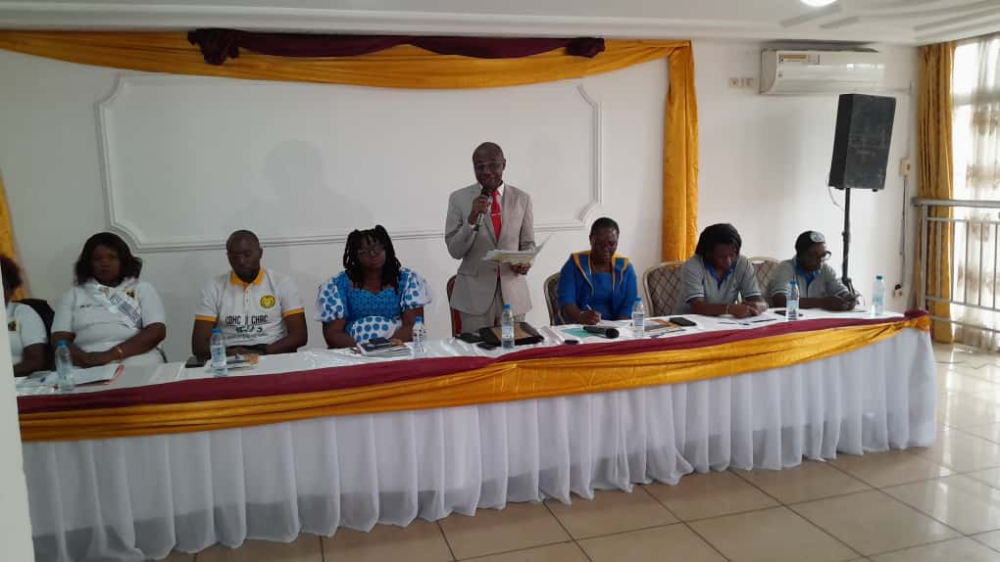
The civil society organization, Cameroon Association for the Development of Domestic Workers and Idle Women/Child Mothers, ASDAM, organized an awareness session in Yaounde on September 25, 2025.
The civil society organization, Association for the Development of Domestic Workers and Idle Women/Girl-child Mothers of Cameroon, ASDAM, with the support of the African Women’s Development Fund, AWDF, on Wednesday September 25, 2025 in Yaounde held a media briefing in Yaounde. On the theme, “The cry of Cameroonian women and child-mother domestic workers for the promotion of their work and rights.” The debriefing was part of a project to protect female domestic workers through the promotion of domestic work and the rights of domestic workers.
Domestic Workers?
According to the International Labour Organisation, ILO, domestic workers are men, mostly women and also children who work, caring for households and people therein. For many of them, abuse, violence and discrimination, are experienced in the workplace, out of the public eye. Domestic work remains undervalued and invisible despite its significant contribution to the economy and, in particular, to the overall family welfare.
Stakeholder Parley
“It is difficult to place a gendarme or policeman in every home to ensure the respect of the rights of domestic workers,” said Nguele Meyanga Elie Bernard, Centre Regional Delegate of Women’s Empowerment and the Family, MINPROFF. “But domestic workers must ensure their rights are respected as per the law and statutes.”
“In this light, there is need to organize a conference with stakeholders – employers of domestic labour, female and girl-child domestic workers, and the authorities. Such dialogue can yield much fruit with greater chances of their smooth implementation,” Nguele Meyanga noted.
Considerable Efforts…
“Much has been achieved in the domain of improving the conditions of women and girl-child domestic workers. For example, structures that manage the recruitment of domestic workers now exist. On the other hand, we have conscientised domestic workers. Many now have an idea of their rights, even if they cannot properly defend them. They also understand their duties and responsibilities. However, we still need to take this advocacy campaign to all 10 administrative regions of Cameroon, divisions and subdivisions,” said ASDAM President, Mrs. Claudine Lucie Mboudou Mballa.
Further Advocacy
“We will continue to engage with government and employers of domestic labour for them to appreciate domestic workers as human beings and normal workers – with rights, especially women and girl-child domestic workers. Domestic workers deserve decent jobs in order to also live well and take proper care of their children,” Mrs. Mballa underscored.
Overwhelming Female Presence
According to Lucie Mboudou Mballa, the domestic work sector, which contributes to Cameroon's economic growth and social balance, as well as to the development of many families, is predominantly characterized by the constant presence of women and child mothers. This presence is estimated at 65 per cent.
Difficult Working Conditions
It is thanks to this constant presence of women and girl-child mothers who are domestic workers that employers of domestic labor can go about their business outside the home in complete peace of mind, thus achieving permanent and increased tranquility and well-being, Mrs. Mboudou Mballa affirmed. These domestic workers contribute to the cohesion of homes, families, and communities. But in reality, women and girl-child mothers who are domestic workers, operate in very difficult conditions.
Unprotected, Undermined
They remain unprotected or invisible in labour policies, are not respected, do not enjoy all their rights, suffer many abuses, and are regularly marginalized, discriminated against, and even discredited. More than 80 per cent of them work informally, often without access to social protection or job security. In emergency situations, they are too often the first to lose their jobs - and the last to receive assistance, she noted.
Not “Real” Work!
Mrs. Claudine Lucie Mboudou Mballa argues that the services of women and girl-child domestic workers are not recognized as real work, despite the significant contribution they make to the Cameroonian economy. “They are not valued enough, and they are not protected. Their wellbeing and personal development are not taken into consideration. Moreover, their situation is precarious, and their working conditions are very poor - from the meagre wages not enough to pay their bills, to the long working hours that leave them no time to think about their own well-being,” she underscores.
Government Ministries, Please…
Not to mention the work overload that harms their health, the lack of safety at the workplace, the absence of social security, no paid leave, no maternity leave, no job security, etc. She therefore appeals to the Ministry of Women's Empowerment and the Family, MINPROFF, the Ministry of Social Affairs, MINAS, and other ministries to collaborate with the Ministry of Labour and Social Security, MINTSS. To lobby decision-makers to improve the conditions of domestic workers.
Pay Allowances
Beyond ratifying the International Labour Organisation, ILO Convention 189 on domestic workers and revising Decree N° 68-DF-253 of July 10, 1968 - Establishing the General Conditions of Employment for Domestic Workers and House Employees, Cameroon could take further steps. Mrs. Mballa notes. For example, by establishing a State-run enterprise that will operate formally and receive State funding to provide allowances for those working in the domestic sector. &ld...
Cet article complet est réservé aux abonnés
Déjà abonné ? Identifiez-vous >
Accédez en illimité à Cameroon Tribune Digital à partir de 26250 FCFA
Je M'abonne1 minute suffit pour vous abonner à Cameroon Tribune Digital !
- Votre numéro spécial cameroon-tribune en version numérique
- Des encarts
- Des appels d'offres exclusives
- D'avant-première (accès 24h avant la publication)
- Des éditions consultables sur tous supports (smartphone, tablettes, PC)






Commentaires