

Building The Architects Of Tomorrow: Dr. Gladys Asaah Charts Bold New Course For PAID-WA
- Par Kimeng Hilton
- 21 Jan 2026 18:27
- 0 Likes
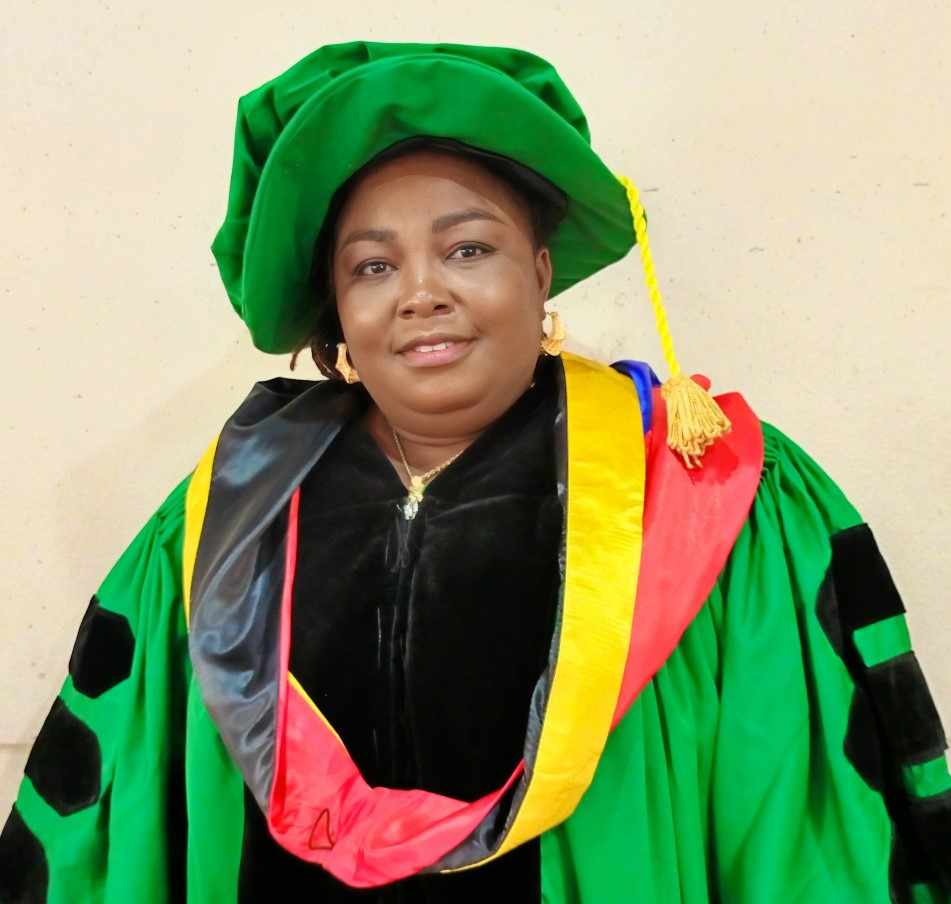
The Regional Director of the Pan-African Institute for Development speaks on the forthcoming joint convocation in Buea on January 30, 2026. And how her institute is redefining professional higher education training.
The air in Buea carries a specific weight - a humid, tangible mist that clings to the flanks of Mount Cameroon, the great "Mountain of Chariots" - breathing life into the verdant vegetation that surrounds the town. It is a setting that demands perseverance. To live and study here is to understand the climate of growth, where the heat of the Equatorial sun meets the chill of altitude. Creating an environment that is as challenging as it is fertile.
Sentinel Of Capacity Building
It is fitting, then, that the Pan-African Institute for Development, West Africa (PAID-WA), has made this rugged, inspiring terrain its home. For decades, the institute has stood as a sentinel of capacity building, churning out the technicians, the planners, and the foot soldiers of Africa’s development.
On January 30, 2026, the gates of PAID-WA will swing open to welcome a different kind of energy - a celebratory convergence of past, present, and future. The institute is set to hold a joint convocation ceremony for its 54th and 55th batches. It is not merely a graduation; it is a testament to survival, of resilience, and a bold marker in the evolution of an institution that refuses to remain static.
Dr. Gladys Njoukiang Asaah Speaks
In an exclusive interview with Cameroon Tribune newspaper, Dr. Gladys Njoukiang Asaah, the Regional Director of PAID-WA, peeled back the layers of this upcoming event. She painted a picture of an institution in transition, moving confidently from its roots as a trainer of frontline development workers to a fully-fledged university-level powerhouse, producing Masters and PhD-level thinkers.
This is the story of that transition, of the over 200 students who stand on the precipice of a new life. And of an institute that is reimagining what it means to be truly Pan-African in the 21st Century.
A Symphony Of Batches
To understand the significance of the January 30, 2026 ceremony, one must first understand the unique rhythm of PAID-WA. Unlike conventional universities that march to the rigid, annual beat of a single academic calendar, PAID-WA operates with a fluidity that mirrors the complex realities of professional development.
The decision to host a joint convocation for the 54th and 55th batches is a strategic masterstroke. "PAID-WA organizes joint convocation ceremonies primarily for academic, administrative, and logistical efficiency," Dr. Asaah explains. But behind the technical language of efficiency lies a deeper philosophy.
So Specialized, So Professional
This is a specialized professional institute. It operates with a web of partner universities and decentralized learning centres that stretch across the nation. Harmonizing these disparate threads takes time. The validation of results by the supervising State university - a necessary gatekeeper in academic integrity - requires a meticulousness that resists haste.
"This approach ensures that every convocation ceremony is well-prepared, dignified, inclusive, and compliant with national higher education regulations," Dr. Asaah notes. There is thus dignity in the wait. By combining the batches, PAID-WA creates a critical mass of achievement, a "big bang" of celebration that resonates louder than a yearly whisper might. It allows the institute to marshal its resources, ensuring that when the students finally don their gowns, the ceremony reflects the "Pan-African prestige" of the institute.
Over 200 Students Graduating
This year’s convocation concerns over 200 students. To the casual observer, this is a number; to the demographer of education, it is a significant dataset. These are not just students; they are a multi-tiered army of professionals.
"The graduating cohorts reflect PAID-WA’s multi-tier training mandate," Dr. Asaah says. The bulk of the graduating class is drawn from Bachelor’s and Master’s programmes, a clear signal of the institute’s upward academic mobility. They are followed by those earning Postgraduate Diplomas and professional Diplomas.
The precise numerical breakdown is safeguarded in the official graduation booklet, a document that serves as a census of the institute’s success. But the numbers tell a story of "healthy enrolment growth across all programmes." It is a growth that defies the global trends of educational stagnation seen in other sectors. Proof that there is a hunger in Cameroon for the kind of pragmatic, development-oriented education PAID-WA offers.
A Geography Of Hope
If the convocation were a map, it would cover the entire nation of Cameroon. One of the most profound aspects of PAID-WA’s mandate is its refusal to be an ivory tower isolated in the capital or a single metropolis.
The graduates of the 54th and 55th batches do not hail solely from the cool heights of Buea. They are the children of the soil, coming from Yaounde, Douala, Bamenda, and other authorized outreach centres operating under PAID-WA’s academic supervision. This decentralization is not a logistical accident; it is at the heart of the institute’s mission. "These centres are established to promote accessibility, decentralization of training, and national coverage," Dr. Asaah asserts.
Training Made Accessible
Imagine a civil servant in Bamenda, unable to leave his post to study in Buea. Through PAID-WA’s outreach, the mountain comes to Mohammed. A working mother in Douala can pursue a Master’s degree without uprooting her family. This is the democratization of knowledge.
"This wide geographical representation highlights PAID-WA’s commitment to bringing development-focused higher education closer to communities across Cameroon," Dr. Asaah adds.
It is a radical act of inclusion. By planting its flag in these various cities, PAID-WA ensures that the benefits of higher education are not concentrated in a single geographic locus. The development worker trained in Yaounde understands the pulse of the central government. And the student in Bamenda understands the nuances of the grassroots dynamics. When they gather in Buea in January 30, 2026, they are not just graduating; they are weaving a national tapestry of shared knowledge and experience.
The Post-COVID 19 Cohort
Every generation of students faces its own crucible. For the 54th and 55th batches, the crucible was global. "Yes, the 54th and 55th batches are particularly significant," Dr. Asaah says, her tone imbued with a maternal pride. "First, they represent post-COVID 19 recovery cohorts, whose academic journeys required exceptional resilience, adaptability, and commitment in the face of global and national disruptions."
We must pause to consider the weight of that statement. These students began or continued their journeys during the height of the COVID-19 pandemic. They studied through lockdowns, through the uncertainty of shifting regulations, and through the economic and social anxieties that plagued the world.
Herculean Task Comes To An End
In Cameroon, where digital infrastructure is still evolving and the socio-economic fabric was tested heavily, the act of pursuing a degree was a herculean task. Laboratories were closed; face-to-face mentorship became a luxury. Many students dropped out across the continent. But these batches? They endured.
Dr. Asaah describes PAID-WA’s student population as "diverse." It is not just diversity of origin, but diversity of experience. The graduating class is a mosaic of "fresh graduates, working professionals, civil servants, NGO practitioners, and development actors."
Potpourri Of Students
This mix is the secret sauce of PAID-WA. The fresh graduate brings theoretical curiosity; the civil servant brings the gritty reality of bureaucratic implementation; while the NGO practitioner brings the field experience of humanitarian response. In the PAID-WA classroom, these worlds collide. The result is a "practice-oriented institution" where theory is immediately stress-tested against reality.
These are not just students; they are survivors. They have navigated the disruption of a global pandemic and emerged with credentials in hand. The convocation of January 30, 2026 is as much a celebration of their tenacity as it is of their academic prowess.
The Great Transition
PAID-WA carries a legacy. It is remembered, with fondness and respect, as the trainer of low- and middle-level development workers - the technicians who would go out to the villages, organize cooperatives, and manage the micro-projects that underpin rural development. It was a noble, necessary mandate.
But the world has changed, and so has PAID-WA. The institute has undergone a metamorphosis, transitioning to training Bachelor’s and Master’s degree holders. It is a shift from "how to do" to "why we do," from implementation to strategy. How smooth has this transition been?
"The transition has been progressive, well-managed, and largely successful," Dr. Asaah reports. There is no small amount of administrative heavy-lifting hidden behind that word "progressive." It involved upgrading curricula to meet university standards, strengthening academic staffing with PhD holders, and improving the rigour of research supervision.
Aligning With Current Standards
This was not a change made in a vacuum. It was done in alignment with national higher education requirements. Crucially, this higher-level training is conducted under the watchful eye of the University of Yaoundé II.
"This partnership with the University of Yaounde II ensures that PAID-WA degrees are academically sound, nationally-recognized, and professionally relevant," Dr. Asaah emphasizes.
Academic validation by a State university is the gold standard in Cameroon. It means that a Master’s degree from PAID-WA carries the same weight, the same legal standing, and the same social currency as a degree from any public faculty. More so, this partnership acts as a bridge, allowing PAID-WA to maintain its specialized, flexible identity while anchoring itself firmly in the national academic mainstream.
The BMD Horizon
Today, the global academic community speaks the language of the BMD system - the Bachelor’s, Master’s, and PhD structure (LMD in its French acronym). It is the European standard, adopted across Africa to facilitate mobility and comparability of degrees.
Is PAID-WA ready to fully implement this system? "Yes, there is a clear and realistic possibility," Dr. Asaah declares. She reveals that the institute has already done the heavy lifting. "PAID-WA has already fully aligned its Bachelor’s and Master’s programmes with the BMD philosophy in terms of credit systems, learning outcomes, and programme structure."
Acknowledged Across The Board
The scaffolding is thus in place. The architecture of the degrees now matches international standards. The credits earned by a student in PAID-WA are transferable, theoretically, to a university in Paris, Nairobi, or New York.
But the horizon holds a more ambi...
Cet article complet est réservé aux abonnés
Déjà abonné ? Identifiez-vous >
Accédez en illimité à Cameroon Tribune Digital à partir de 26250 FCFA
Je M'abonne1 minute suffit pour vous abonner à Cameroon Tribune Digital !

- Votre numéro spécial cameroon-tribune en version numérique
- Des encarts
- Des appels d'offres exclusives
- D'avant-première (accès 24h avant la publication)
- Des éditions consultables sur tous supports (smartphone, tablettes, PC)







Commentaires