

Draft Information, Social Media Laws : Gambian Journalists, Civil Society Raise Concerns
- Par Kimeng Hilton
- 12 Apr 2026 15:22
- 0 Likes
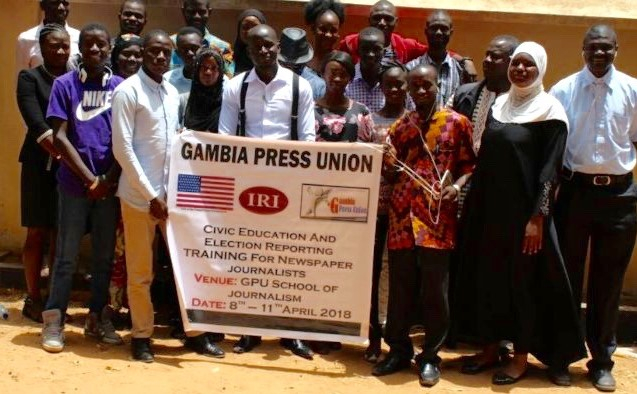
A coalition of 16 professional media associations and civil society organizations argues that the guidelines infringe on freedom to access to information.
In a decisive move that signals a deepening rift between the State and the fourth estate, a coalition of 16 professional media associations, civil society organizations (CSOs), and academic institutions have "totally rejected" a government proposal to register journalists and social media users.
Freedom Of Expression
The resolution, issued on April 8, 2026, at an emergency meeting hosted by the Gambia Press Union (GPU), marks one of the most significant confrontations over freedom of expression in the country since the democratic transition began nearly a decade ago. At the heart of the dispute is a set of new regulations proposed by the Ministry of Information and the Public Utilities Regulatory Authority (PURA). Stakeholders argue the new law will grant the government “unconstitutional” powers to decide who can and cannot speak in the public square.
Threat To The Digital Frontier
The proposed framework - comprising the Broadcasting and Online Content Regulations 2026 and the Journalists Registration Guidelines 2026 - aims to bring journalists, online media outlets, and even "influential social media users" under a State-controlled accreditation regime.
Under these rules, PURA would possess the authority to grant, suspend, or revoke the registration of individuals based on content moderation standards. Media leaders argue this is a thinly veiled attempt to institutionalize State censorship. "The proposed regulations on journalist and social media users’ registration and online media licensing fall outside PURA’s statutory powers," stated Modou S. Joof, Secretary General of the GPU. "Therefore, they constitute an unlawful exercise of administrative authority."
Stand Against "Legitimization"
The rejection is not merely verbal; it is a full-scale boycott of the legislative process. Isatou Keita, President of the GPU, made it clear that the fraternity would not participate in any upcoming government consultations.
"We cannot participate in these proposed consultations... since our participation would be seen to legitimize the proposed State-controlled system," Keita explained. She emphasized that the stakeholders have resolved that no journalist or social media user should register with PURA, viewing the move as a direct surrender of their constitutional right to seek, receive, and impart information.
Violating International Standards
The coalition’s resolution points to a significant contradiction between the government’s proposal and the Declaration of Principles on Freedom of Expression and Access to Information in Africa. Specifically, the stakeholders highlighted Principle 17, which dictates that any public regulatory authority over the internet or broadcasting must be independent and protected against political or commercial interference.
By placing these powers in the hands of PURA - a body stakeholders describe as "prone to political and executive influence" - the government is accused of undermining the independent Media Council of The Gambia (MCG). The MCG was established as a self-regulatory body to promote high journalistic standards without State meddlin...
Cet article complet est réservé aux abonnés
Déjà abonné ? Identifiez-vous >
Accédez en illimité à Cameroon Tribune Digital à partir de 26250 FCFA
Je M'abonne1 minute suffit pour vous abonner à Cameroon Tribune Digital !

- Votre numéro spécial cameroon-tribune en version numérique
- Des encarts
- Des appels d'offres exclusives
- D'avant-première (accès 24h avant la publication)
- Des éditions consultables sur tous supports (smartphone, tablettes, PC)







Commentaires