

Papal Visit To Bamenda: Balm For A Traumatized, Wounded - Yet, Resilient People
- Par Kimeng Hilton
- 17 Apr 2026 16:59
- 0 Likes
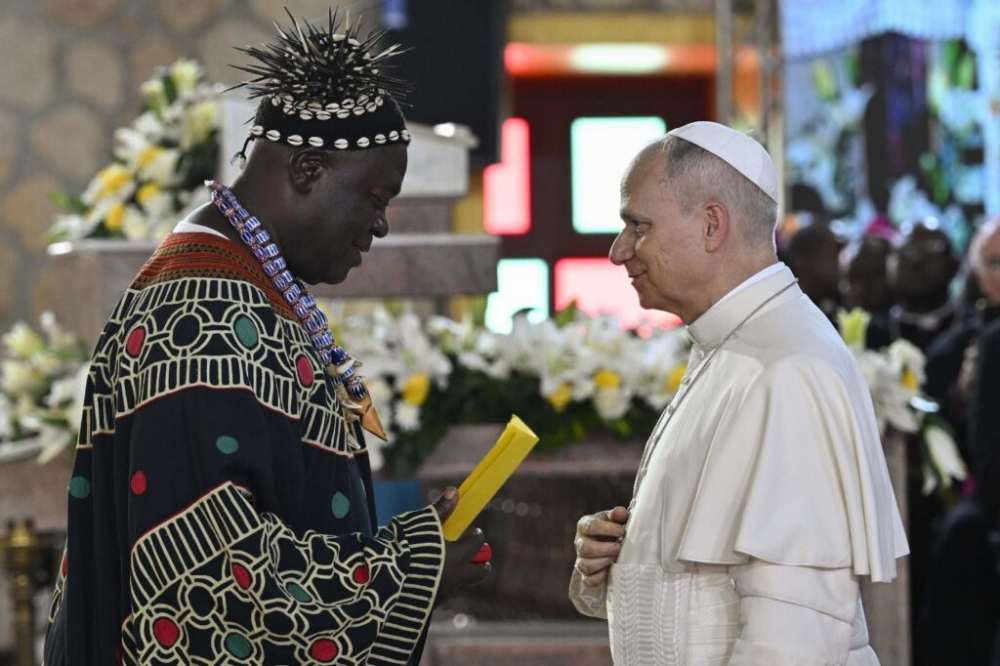
During his trip to Cameroon’s North West Region on April 16, 2026, Pope Leo XIV addressed people who have faced nearly a decade of civil unrest, displacement, and economic stagnation.
In a historic and emotionally charged visit to the Cameroon’s North West Region on April 16, 2026, Pope Leo XIV positioned himself as both a "pilgrim of peace" and a fierce critic of the systemic forces - both local and global - that have kept the region in a cycle of violence and poverty.
Keynote Messages
Across two landmark addresses delivered yesterday - a morning interfaith gathering at Saint Joseph’s Cathedral, Big Mankon and a massive open-air Holy Mass at Bamenda-Bafut International Airport - the Pontiff spoke directly to the "brokenhearted" of a region that has faced nearly a decade of civil unrest, displacement, and economic stagnation. His message was clear: while the world may see a "forgotten crisis," God sees a "city on a hill" capable of teaching the rest of the planet how to reconcile.
"World Turned Upside Down"
During his address at Saint Joseph’s Cathedral, Pope Leo did not mince words regarding the economic drivers of conflict. Speaking to a packed assembly of victims, religious leaders, and civil society, the Pope delivered a blistering critique of the international arms trade and the "plundering" of African resources.
"The masters of war pretend not to know that it takes only a moment to destroy, yet often a lifetime is not enough to rebuild," the Pope declared. He pointed to a bitter irony: that the very resources stolen from African soil are often used to fund the weapons that destabilize it.
Desecration Of God’s Creation
Labeling the current state of global priorities as a "world turned upside down," he lamented that billions of dollars are readily available for "killing and devastation," while the funds necessary for basic education, healthcare, and post-conflict restoration remain non-existent. This exploitation, he noted, is not just a political failure, but a "desecration of God’s creation" that every honest conscience must reject.
The Interfaith Miracle
One of the most poignant moments of the day occurred when the Pope addressed the unique cooperation between Christian and Muslim communities in Bamenda. In a region where identity politics often fuels division, the Pope marveled at how shared suffering has birthed an ecumenical "Movement for Peace."
Manipulation In God’s Name
"I find it is you who are proclaiming peace to me, and to the entire world," he said, visibly moved by the testimonies of local leaders. He offered a stern warning to those who would use faith as a tool for division: "Woe to those who manipulate religion and the very name of God for their own military, economic and political gain, dragging that which is sacred into darkness and filth."
Applause For Religious Harmony
The Pope specifically thanked the local Imam for ensuring the crisis did not devolve into a religious war. By referring to the people of Bamenda as the "descendants of Abraham," he reminded the crowd that fraternity is not an invention, but a biological and spiritual reality that must be accepted.
Liturgy Of Life At Airport
Under the afternoon sun, thousands gathered at the Bamenda-Bafut International Airport for a Holy Mass that served as a spiritual renewal for the "crushed in spirit." The Pope’s homily, grounded in Psalm 34, focused on the internal transformation required to change the course of history. He acknowledged the "unshakeable hope" of the Cameroonian people, even as they face a "mosaic of brokenness." He explicitly listed the grievances that have plagued the country.
Society’s Many Ills
Widespread poverty, exacerbated by a biting food crisis; systemic corruption - both moral and political, particularly in the management of national wealth. Systemic failure - deteriorating infrastructure, education, and healthcare. And the "Brain Drain" - large-scale migration of the youth who feel they have no future at home.
The Pope’s solution was a call to "holy courage." Citing the Apostles' defiance of the Sanhedrin, he urged the faithful to "obey God rather than any human authority." This was not a call to anarchy, he clarified, but a call to inner freedom - a refusal to resign oneself to evil or the st...
Cet article complet est réservé aux abonnés
Déjà abonné ? Identifiez-vous >
Accédez en illimité à Cameroon Tribune Digital à partir de 26250 FCFA
Je M'abonne1 minute suffit pour vous abonner à Cameroon Tribune Digital !

- Votre numéro spécial cameroon-tribune en version numérique
- Des encarts
- Des appels d'offres exclusives
- D'avant-première (accès 24h avant la publication)
- Des éditions consultables sur tous supports (smartphone, tablettes, PC)






Commentaires