
Interview: “11 New Testaments Are Ready For Printing And Dedication”
- Par Kimeng Hilton
- 21 Apr 2026 20:22
- 0 Likes
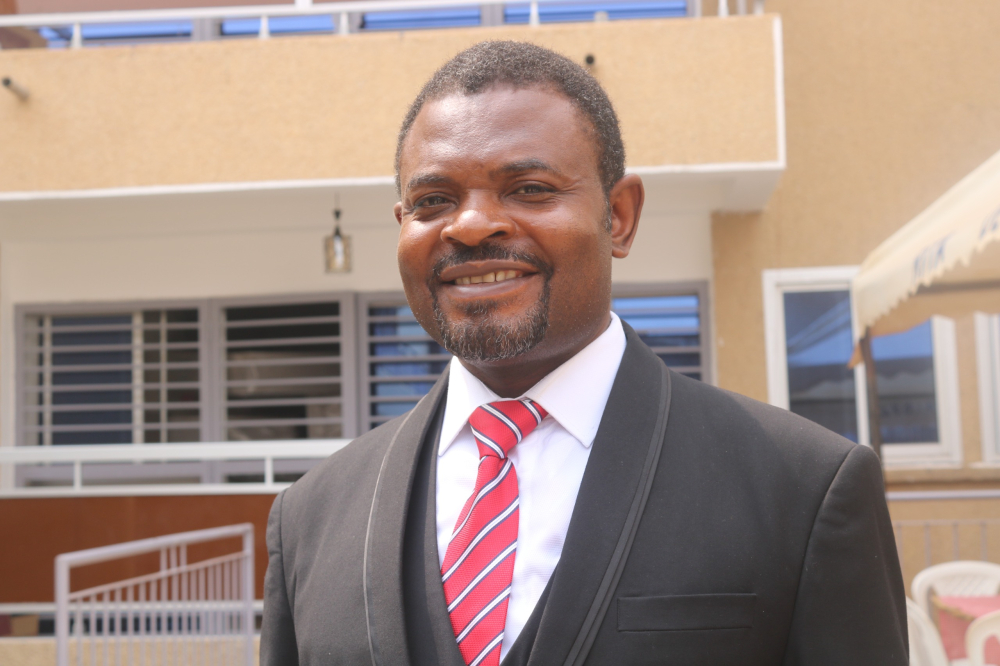
Dr. Keyeh Emmanuel Lufang, General Director, Cameroon Association for Bible Translation and Literacy, CABTAL.
Mr. General Director, you will be presenting CABTAL's 2025 Annual Report on April 24, 2026. What were the major achievements in the past year?
The past year has been one of steady progress and consolidation of CABTAL’s mission to make God’s Word accessible in the heart languages of communities in Cameroon. We remain committed to our vision of seeing individuals and communities transformed by God’s Word, and to see them using their languages for sustainable development.
A major highlight of the year 2025 has been the continued advancement of Bible translation projects across a number of language groups, bringing several portions of Scripture and the entire Bible closer to completion and publication. We have also seen strengthened community engagement, with local speakers increasingly taking ownership of translation and Scripture engagement activities.
In this light, we witnessed the successful launch of the campaign to start work in 10 new languages and to organise 10 Bible dedications in two years. We named it the 10 10 2 Campaign and so far, the Moghamo, Bakweri, Nulibie, Esu and Weh New Testaments were dedicated in 2025, and we also started final discussions for work in Mbuk, Mbessa, and Messaka. This is a mark of God’s hand at work. We ran 512 literacy classes across Cameroon’s 10 Regions. These classes were attended by some 18,319 learners, and 4,007 of them learned to read and write and graduated.
On the capacity-building front, CABTAL invested significantly in staff development, including technical training in areas such as translation, literacy, linguistics, Scripture Engagement, communication, and a lot more. This has improved both efficiency and the quality of our outputs.
We are also grateful for strengthened partnerships with churches, international Bible translation partners, and local communities, all of which have helped sustain and expand our impact.
What were the major challenges encountered? And how did you overcome them?
Like many organizations working in diverse and often remote contexts, we faced challenges related to logistics, funding stability, and access to some field locations due to terrain and infrastructure limitations. We also continue to navigate the challenge of serving crisis-affected communities in the North West, South West and Far North Regions of Cameroon. To address these challenges, CABTAL has strengthened its partnership approach, working more closely with local communities and church networks to ensure continuity of work even in difficult contexts. We have continued to advance digital literacy in hard-to-reach areas.
In addition, better planning, digital tools, and improved coordination across departments have helped us mitigate operational constraints and maintain steady progress.
What are your plans for the immediate and long-term future?
In the immediate term, CABTAL will focus on accelerating ongoing translation in 62 languages, print and dedicate some 11 New Testaments which have been completely translated, and then start translation in nine new languages. We are also looking forward to the dedication of the complete Bible in Mofu Gudur, a language spoken in the Far North Region and to also dedicate the New Testament in 11 other languages, notably Bamboko, Bafaw, Balong, Gavar, Buwal, Mbudum, Moloko, Numala, Tuki, Nuasue, and Mengako
We also plan to deepen community ownership of translation work by expanding literacy programmes and engaging more mother-tongue speakers in the process.
In the long term, CABTAL envisions a Cameroon where every language community is transformed by the Scripture which have been made accessible in a language and format they can read, hear, and understand. This includes not only printed Bibles, but also audio, digital, and other accessible formats.
We will continue to strengthen institutional capacity, expand partnerships, and integrate new technologies to improve the speed and quality of Bible translation work.
The other major project CABTAL commissioned recently is the Missional Complex. What has become of it?
The CABTAL Missional Complex remains a strategic infrastructure project for CABTAL, designed to strengthen our operational base and enhance long-term mission sustainability. The complex is already in use, hosting several international meetings and conferences organized by both our partners and the church. It is envisioned as a hub that will support training, coordination, and expansion of Bible translation work in Cameroon and the region.
Anything you would like to add about the forthcoming Annual Report presentation and CABTAL in general?
The forthcoming Annual Report reflects not just organizational performance, but the collective impact of communities, churches, partners, and staff who are committed to the vision of transforming lives through God’s Word in local languages.
We are grateful for every partner who walks with us in this mission. Each milestone recorded in the report represents real lives impacted, communities strengthened, and hope restored through Scripture.
As we present this report, we invite continued partnership, prayer, and engagement so that together we can advance the work of Bible translation and en...
Cet article complet est réservé aux abonnés
Déjà abonné ? Identifiez-vous >
Accédez en illimité à Cameroon Tribune Digital à partir de 26250 FCFA
Je M'abonne1 minute suffit pour vous abonner à Cameroon Tribune Digital !
- Votre numéro spécial cameroon-tribune en version numérique
- Des encarts
- Des appels d'offres exclusives
- D'avant-première (accès 24h avant la publication)
- Des éditions consultables sur tous supports (smartphone, tablettes, PC)




Commentaires