
Beyond The Syringe: The Technical Precision Of Vaccine Management In Kodek
- Par Kimeng Hilton
- 24 Apr 2026 21:58
- 0 Likes
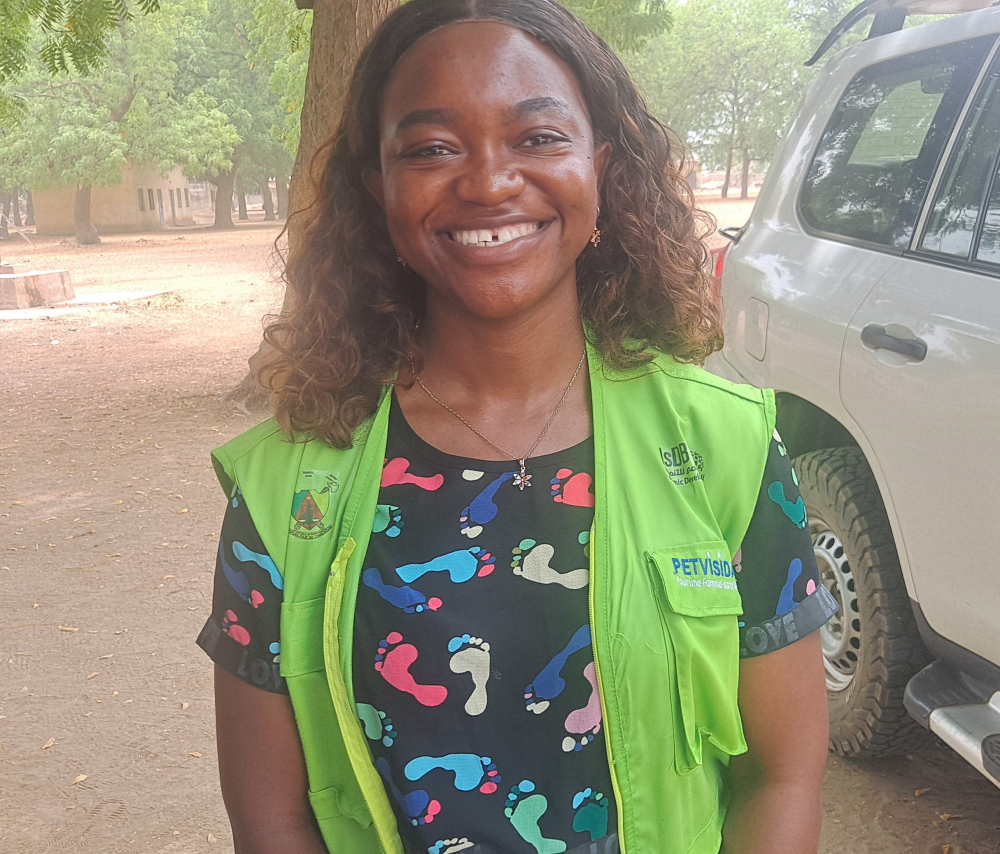
The Subdivisional Medical Centre in Maroua III Subdivision, Diamare Division of the Far North Region is heavily involved in the ongoing polio vaccination campaign.
As the sun crests over the Sahelian horizon at 6:00 am, the Maroua III Subdivision is already a hive of activity. In the Far North Region of Cameroon, time is not just a measure of progress; it is a vital resource in a race against a climate that turns the environment into an oven by midday.
April 24, 2026 is the second day of the "JLV 2.1" (Journées Locales de Vaccination) campaign. Across Kodek, a massive mobilization of human capital, traditional authority, and cold-chain technology is converging to protect nearly 4,000 children from a disease that has historically left a trail of paralysis in its wake.
The Commander’s Overview
At the Kodek Subdivisional Medical Centre (CMA), Dr. Kemgha Fokong Miviane Noël, the Director, oversees an operation that is as much about sociology as it is about biology. For Dr. Kemgha, the campaign’s success hinges on "Social Mobilization" - the period of intense communication that precedes the first vaccination.
"The campaign began on Monday (April 20, 2026) with social mobilization," Dr. Kemgha explains. "The actual vaccination started on April 23, 2026. Out of a target of 3,881 children, we reached 1,391 on Day 1 alone. That is 36% coverage in just 24 hours."
Approaching Target
By the afternoon of Day 2, Dr. Kemgha’s projections were even more ambitious. "We are approaching 70%," she notes with cautious optimism. This rapid uptake is attributed to a "Zero Refusal" environment. Unlike previous years where hesitancy might have slowed progress, the 2026 campaign is benefiting from a population that views vaccination not as an option, but as a collective shield.
"Families are aware that a vaccinated child protects their community; it’s immunity," says Dr. Kemgha. This awareness is the fruit of labor by social mobilizers and community leaders who have worked tirelessly to frame the vaccine as the foundation of a healthy future.
The Cold Chain Guardians
While the doctors manage the population, technical experts like Ndinga Tolum Floran manage the science. As a "Vial Monitor" (Vaccine Monitor) at the Kodek Health Centre, the 46-year-old medical technician is responsible for the "Cold Chain" - the uninterrupted series of storage and distribution steps that keep vaccines at the correct temperature.
In a region where temperatures regularly exceed 40°C (104°F), the vaccine's potency is under constant threat. Floran’s primary tool is the VVM (Vaccine Vial Monitor), which he refers to as the "PCV" (Partie de Contrôle du Vaccin).
The Technicalities
"There is a white square on the bottle," Floran explains. "It varies depending on the heat. When it is white, it means the vaccine is good. As it darkens, it indicates the vaccine has been exposed to too much heat and must be prioritized or discarded."
Floran’s day starts at 6:00 am, precisely when the teams deploy. He is the first person at the sanitary training center, preparing the "accumulators" - reusable ice packs - and ensuring each team leader’s score sheet matches the number of vials issued. His role is a blend of accounting and chemistry, ensuring that no team runs out of supply and that every drop administered is medically active.
The Climate Constraint
One of the most striking operational shifts in the 2026 campaign is the "Early Start, Early Finish" policy. Dr. Kemgha and her teams have had to adapt to a climate that becomes hostile to public health activities after noon.
"After 12 pm, the teams are no longer productive," Dr. Kemgha admits. The heat creates a double-sided barrier: the vaccination teams become exhausted, and the families they seek to reach withdraw into the shade of their homes.
"Mothers don't open their doors; they say they are tired. They are lying on mats and send the children alone," the Chief Medical Officer observes. To counter this, the campaign operates on a "blitz" model - maximizing output between 6:00 AM and 12:00 PM. By working during the cooler hours, the teams reach 100% of the households when the community is most receptive.
Institutional Support, Future Needs
The success of the 2026 campaign is not an isolated local achievement but the result of a robust partnership between the Cameroonian Ministry of Public Health, UNICEF, and international partners. Dr. Kemgha expressed "infinite thanks" to these organizations for providing the resources that allow children in remote areas like Kodek to grow up free from preventable paralysis.
However, challenges remain. Ndinga Tolum Floran points to a technical bottleneck in the cold chain. "We have a difficulty... we need another bottle monitor specifically for the ice accumulators," he notes. As the frequency of these campaigns increases to meet the goal of total polio eradication, the infrastructure - especially the "cold chain" technology - will need continued investment to keep pace with the rising Sahelian temperatures.
The Ghost Of Polio
Why such intensity for a disease that many in the West consider a memory? Dr. Kemgha reminds us of the stakes. "In the past, cases of acute flaccid paralysis were identified in the Maroua III Subdivision," she recalls.
Acute flaccid paralysis (AFP) is the most severe complication of the poliovirus, leading to permanent disability. For the parents in Kodek, the memory of these cases is a powerful motivator. They see the vaccine not as a foreign intrusion, but as a hard-won victory over a "silent crippler."
A Model Of Integrated Health
The 2026 Polio Campaign in the Far North is a masterclass in Integrated Public Health. It demonstrates that when a campaign respects the climate (6 AM starts), the culture (Lawan's involvement), the science (VVM monitoring), and the community (volunteer relays), near-perfect coverage is possible.
As the teams return to the Kodek Subdivisional Medical Centre to return their vials and tally their scorecards, the numbers tell a story of success. But the real victory is found in the children like little Haoua Idrissa, who sleep on the backs of their mothers - protected, immunized, and ready to grow up in a world where polio is no longer a threa...
Cet article complet est réservé aux abonnés
Déjà abonné ? Identifiez-vous >
Accédez en illimité à Cameroon Tribune Digital à partir de 26250 FCFA
Je M'abonne1 minute suffit pour vous abonner à Cameroon Tribune Digital !

- Votre numéro spécial cameroon-tribune en version numérique
- Des encarts
- Des appels d'offres exclusives
- D'avant-première (accès 24h avant la publication)
- Des éditions consultables sur tous supports (smartphone, tablettes, PC)






Commentaires