

The Shield Of Tradition: The King Driving Polio Vaccination In Moussourtouk
- Par Kimeng Hilton
- 24 Apr 2026 22:09
- 0 Likes
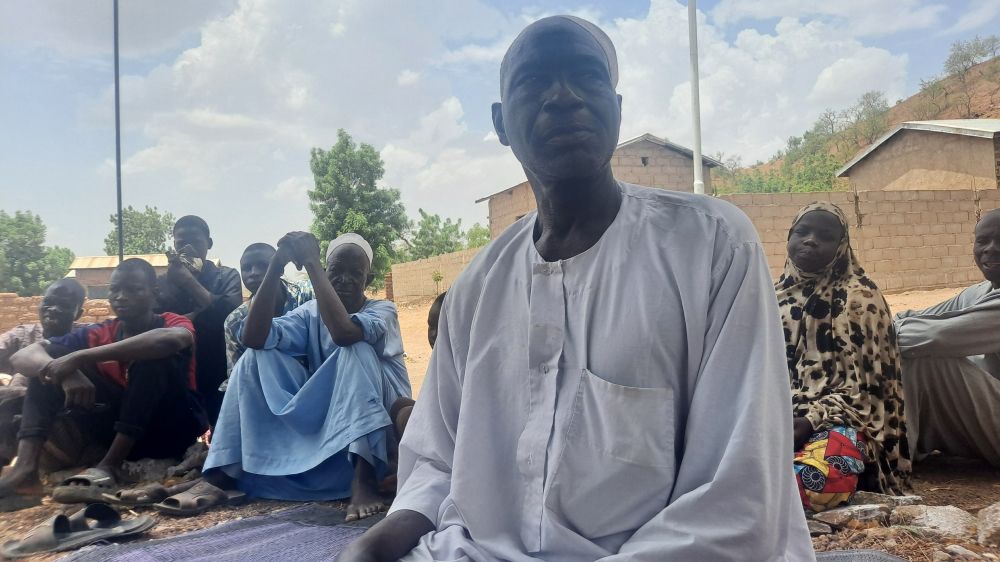
Lawan Waziri Djouma Kaï is the backbone of the ongoing campaign in his village in Mayo Kani Division in the Far North Region.
The morning sun in the Mayo Kani Division of Cameroon’s Far North Region does not rise so much as it strikes. By 10:00 AM, the heat is a shimmering veil over Moussourtouk village. Yet, beneath this unforgiving sky, a sophisticated human network is at work. It is the second day of the 2026 National Polio Vaccination Campaign (April 24, 2026). And in this corner of the Far North, the "invisible" work of public health is made visible through the sweat of volunteers and the proclamations of kings.
Case Study
The Moutourwa Health District has become a case study in social engineering. Here, the success of a vaccination drive is not measured merely by the number of vials used, but by the strength of the community’s "social contract." The overarching supervision of the health district, the moral authority of the traditional Lawanat, and the boots-on-the-ground sacrifice of community health workers.
The Royal Mandate
In the village of Moussourtouk, His Majesty Waziri Djouma Kaï, the Lawan, embodies this authority. For him, the debate over vaccination is not political - it is existential. "Without health, man can never live," the Lawan declares with a gravitas that hushes the room. "The medicines you give to our children and to us ourselves serve us greatly. If someone ignores these medicines... they have ignored their own life."
"It Doesn't Happen Here!"
His Majesty views the current campaign as a continuation of a historical blessing. He frequently reminds his subjects that their very presence as adults is a result of the "medicines and tablets" provided to them in their youth. By framing vaccination as a traditional value of survival rather than a modern imposition, he has eliminated the concept of "resistance" in his jurisdiction.
"I have never been called to say a person has refused," the Lawan says. "It doesn't happen here!"
Hierarchy Of Trust
Vankai Meleguedjeo, the Polio Vaccination Supervisor for the Moutourwa Health District, manages more than just logistics; he manages relationships. For Meleguedjeo, the village of Mouda is a strategic puzzle consisting of seven large villages, each governed by a Lawan (Traditional Chief).
"The role of traditional authorities is paramount," Meleguedjeo explains. "We start with advocacy meetings. We invite the seven Lawans and the influential political leaders. They are the ones who allow us to pass the message within the community."
This integration is vital because of the deep-seated respect the population holds for the chieftaincy. In Moutourwa, a medical directive is often viewed with caution until it is filtered through the Lawan. "A traditional head is always respected," Meleguedjeo notes. "People listen to them when they speak. Even if they don't apply the message 100%, they listen."
The Protocol Of Persuasion
What happens when a family refuses? Meleguedjeo describes a "Diplomacy of the Dropper" - a multi-tiered escalation system designed to resolve conflict without coercion: The first attempt at education. Adding a layer of technical expertise. A senior medical figure intervenes. The ultimate moral authority is invoked. Administrative authorities are used only as a final, legal resort.
Remarkably, in the current 2025-2026 cycle, the district has reported zero cases of refusal. The system works so well that the "higher powers" of the state are rarely needed.
Maternal Sacrifice On The Path
If the Lawan provides the soul of the campaign, workers like Hadjara Waziri provide the body. At 33 years old, Hadjara is a Community Health Worker (ASC) who has been serving since 2021. By midday, Hadjara and her partner have already vaccinated 148 children, exhausting three bottles of vaccine. What makes her feat extraordinary is the bundle on her back: her six-month-old daughter, Haoua Idrissa.
"Sometimes I go with my child. Sometimes I leave her with the children at home," Hadjara says. When asked if carrying a baby while trekking through the village to vaccinate other children is painful, her answer is a simple, haunting "Yes."
Hadjara is a "polyvalent" worker. She was chosen by her community not just for vaccination drives, but to manage malaria, conduct rapid diagnostic tests (TDR), and refer pregnant women to prenatal care (CPN). This multi-functional role is the secret to her success. She is not a stranger with a needle; she is the woman who saved the neighbor’s son from malaria last month.
The Economic Paradox
The motivation for this grueling work is shockingly low. Meleguedjeo reveals that door-to-door volunteers receive approximately 14,000 CFA francs (roughly $23 USD) for the duration of the campaign. "It represents nothing," the supervisor admits. "They are volunteers, volunteers, volunteers."
For Hadjara, the "motivation" is not the coins in her hand, but the health of the children she marks with purple ink. "I accept it for health," she says. "It’s for the good of my community."
A Forty-Year Marathon
The most striking revelation from the Moutourwa district is the sheer longevity of its commitment. Mass vaccination began here in 1986. For four decades, through various political and social shifts, the adherence of the population has remained unshaken.
"Since 1986 to our days... people still adhere," Meleguedjeo reflects. "They haven’t said they are tired." This endurance is a testament to the "Moutourwa Model": Relays work in their own neighborhoods where they are known. Traditional leaders are treated as partners, not obstacles. Vaccination is tied to broader community care (malaria, maternal health).
The Purple Fingerprint of Progress
As the sun begins its descent over the Mayo Kani Division, the blue vaccine coolers are returned to the health center, and the lists of the 148 children vaccinated by Hadjara are tallied. The story of Moutourwa is not one of high-tech intervention or massive funding. It is a story of Hadjara’s tired back, Lawan Waziri’s ironclad word, and Supervisor Meleguedjeo’s strategic diplomacy.
In a world where health misinformation can spread faster than a virus, Moussourtouk and Mouda stand as a reminder: to protect a child’s future, you must first respect a community’s present. Vaccination here is more than a medical act - it is a community’s vow to live.
As the Lawan ...
Cet article complet est réservé aux abonnés
Déjà abonné ? Identifiez-vous >
Accédez en illimité à Cameroon Tribune Digital à partir de 26250 FCFA
Je M'abonne1 minute suffit pour vous abonner à Cameroon Tribune Digital !

- Votre numéro spécial cameroon-tribune en version numérique
- Des encarts
- Des appels d'offres exclusives
- D'avant-première (accès 24h avant la publication)
- Des éditions consultables sur tous supports (smartphone, tablettes, PC)






Commentaires