
Transforming Agrifood Systems: Stakeholders Review Implementation of Continental Strategy
- Par Kimeng Hilton
- 27 Aug 2026 15:52
- 0 Likes
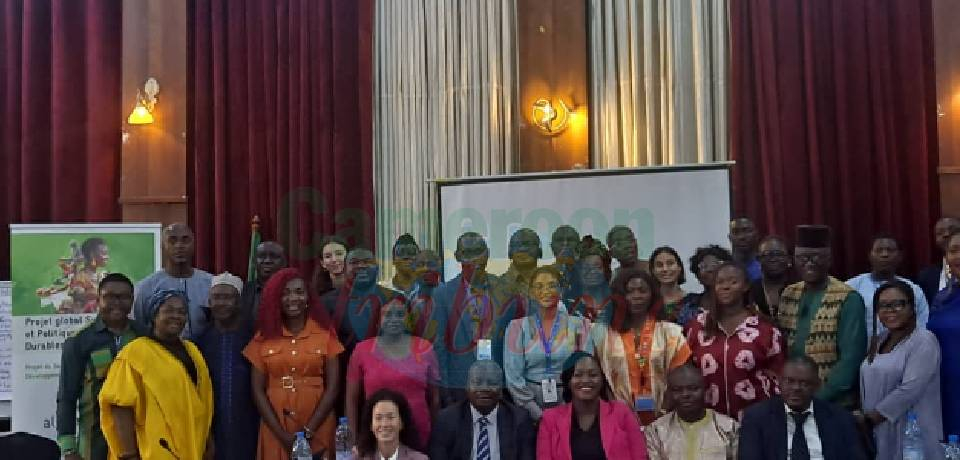
The workshop in Yaounde from August 26-28, 2026, is discussing Cameroon’s execution of the Comprehensive Africa Agriculture Development Programme, CAADP.
On August 26, 2026, key agricultural stakeholders, parliamentarians, international non-governmental organizations, and civil society delegates gathered in Cameroon for the official opening of the Comprehensive Africa Agriculture Development Programme, CAADP Non-State Actors (NSA) Learning Labs Curriculum and Training of Trainers (ToT) Workshop.
Decisive Operational Step
Designed to strengthen the technical capacity, advocacy skills, and monitoring frameworks of non-state actors across Africa, the three-day training marks a decisive operational step toward executing the CAADP Kampala Declaration (2026–2035).
Pan-African Partners
The initiative brings together a broad coalition of Pan-African and international partners - including CARE International, the African Parliamentarians Network Against Corruption (APNAC), ActionAid, GIZ, and DP World. Together, they aim to build an inclusive governance ecosystem capable of holding governments accountable to high-level agricultural commitments while ensuring African agrifood systems become resilient, self-sustaining, and community-driven.
High-Level Remarks
The opening ceremony featured statements from legislative, executive, and civil society leaders, highlighting a shared determination to bridge institutional divides and ensure sustainable agrifood policy implementation:
Parliamentarians Committed
"Honourable members of Parliament present here, our partners from DP World... let me formally welcome you to Cameroon... I express my sincere gratitude on behalf of APNAC—a platform of parliamentarians who have decided to fight against corruption in Africa. The workshop will address issues identified through surveys in Kenya, Zambia, and Madagascar...
“There is a gap that exists in communication between the government and non-state actors; such a program will facilitate that connection... I want to reassure everyone of our commitment as parliamentarians to see to it that these programs succeed in all its ramifications," Hon. Agha Oliver, Member of Parliament for Tubah (Mezam Division, North West Region of Cameroon) and representative of APNAC, commented.
Non-state Actors Must Grow
"CAADP stands for the Comprehensive Africa Agriculture Development Programme and was launched in 2003 at Maputo, Mozambique... The aim is to bridge the gap in production by providing a different approach to ensure that agricultural products improve in production and quality... Non-state actors have to also learn to grow at this moment.
“We are going to use these four days to find solutions that will make us handle issues concerning non-state actors better, ensuring the gap between state and non-state actors becomes minimal," said Tobie Ondoa Nicodème, CAADP National Focal Point for Cameroon and Inspector General in the Ministry of Agriculture and Rural Development (MINADER).
Ensuring Everybody Is Clear
Accoding to Chikondi Chabvuta, CAADP Continental Chair for the Non-State Actors Group (Malawi), "These three days are a learning lab where we will be learning from each other... Earlier this year, a study supported by CARE and GIZ identified several gaps... We had gaps in capacity, how we engaged with government, and even in knowing when to engage and with what.
“Governments would invite us to the table, but we would not speak something that would change the system. In these three days, we are going to work on those gaps, ensuring everybody is clear on who to talk to influence certain decisions and budgets to transform how food is traded and made available," Chikondi concluded.
Voice Of The Programme
David Manyonga, System Strengthening and Advocacy Advisor, CARE International remarked, "The Kampala Declaration—which is a declaration made by our Presidents out of the 54 countries of Africa - is very important for an organization like CARE and other civil society organizations because that is the policy direction our leaders at the highest level want us to take... CARE International fully appreciates this policy. That's why we are working with non-state actors to strengthen the voice part of this program. This is where policy meets the citizens of the continent."
Historical Context
The Comprehensive Africa Agriculture Development Programme (CAADP), initially established by the African Union in 2003 via the Maputo Declaration, was created to accelerate economic growth and eliminate hunger across African nations through agriculture-led development. Over the decades, subsequent frameworks have expanded this mandate to address modern challenges such as climate change, budget transparency, quality standards, and market equity.
Civil Society Inclusion
Despite high-level commitments made by African heads of state across all 54 nations, historical baseline studies - including recent evidence gathered across Kenya, Zambia, and Madagascar - revealed a persistent structural flaw: a significant breakdown in communication between state actors and non-state actors. While civil society, farmer groups, and private entities were frequently invited to government decision-making tables, they often lacked the strategic tools, political economy insights, and tracking mechanisms needed to influence public expenditure, legal reform, or national planning effectively.
The 2026 workshop in Cameroon directly targets these gaps, transforming non-state actors from passive observers into expert policy drivers capable of steering the Kampala Declaration's 10-year vision.
Workshop Curriculum
The training curriculum is structured around an intensive learning-lab model, translating theoretical policy commitments into concrete tools and strategic deliverables. The program spans sequential logic modules over three core working days:
The three-day CAADP Kampala Declaration (2026–2035) NSA Curriculum is structured to take non-state actors through a progressive learning journey, moving from foundational agrifood governance to advanced public resource tracking and actionable national advocacy.
The first day, focused on Agrifood Governance & Policy Foundations, establishes the working dynamic and maps out the systemic landscape. Participants begin by building a shared Learning Charter & Expectations Matrix to ground the training. From there, delegates analyze high-level policy commitments to produce a CAADP National Commitment Map, while sim...
Cet article complet est réservé aux abonnés
Déjà abonné ? Identifiez-vous >
Accédez en illimité à Cameroon Tribune Digital à partir de 26250 FCFA
Je M'abonne1 minute suffit pour vous abonner à Cameroon Tribune Digital !

- Votre numéro spécial cameroon-tribune en version numérique
- Des encarts
- Des appels d'offres exclusives
- D'avant-première (accès 24h avant la publication)
- Des éditions consultables sur tous supports (smartphone, tablettes, PC)







Commentaires