

Rethinking Employability: Why Need Critical Thinkers, Not Just Vocational Skills?
- Par Kimeng Hilton
- 03 Sep 2026 15:32
- 0 Likes
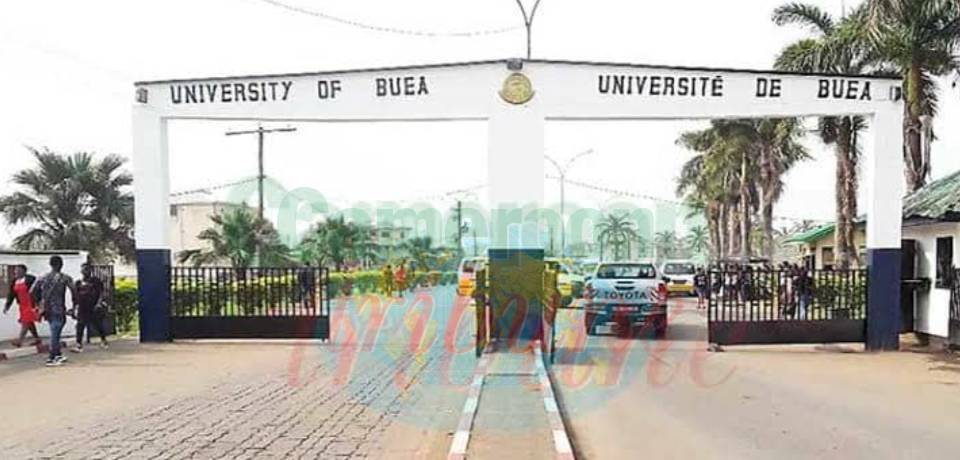
Many families are now wracking their brains on what career path their young high school leavers should embark on. Given the challenging employment environment in Cameroon.
Following the publication the Cameroon General Certificate of Education, GCE Advanced Level results, thousands of secondary school leavers across Cameroon stand at a critical crossroads. Faced with an evolving job market and lingering economic anxieties, these young people and their parents are now grappling with a central, high-stakes question: “Which career path guarantees a sustainable future?”
Long-held Societal Pressures
Contrary to long-held societal pressures urging students into traditional professions, prominent Cameroonian policy experts, researchers, and development consultants are advocating a fundamental shift. In how young people view higher education and employability. They argue that systemic unemployment stems not from "useless fields of study," but from broken governance, outdated curricula. And a failure to align academic disciplines with real-world application.
Redefining "Value" In Higher Education
Addressing newly minted high school graduates, Eugene N. Nforngwa, a Climate Policy Analyst, highlighted Policy Analysis as a high-impact, little-known career path capable of bridging multiple disciplines. He explained that policy analysts study society’s most important challenges. Ranging from education, energy, and climate change to public finance, technology, and economic development. And help governments, international organisations, think tanks, and businesses make better decisions.
Shaping National, International Decisions
Rather than requiring a specialized single degree, foundational training in economics, political science, law, sociology, statistics, or public administration can lead directly to shaping national and international decisions that affect millions of lives.
No Academic Dead Ends!
Echoing this multi-disciplinary approach, Dr. Monique Kwachou - a writer, researcher, youth development consultant, and Senior Research Associate at the University of Bristol, United Kingdom - strongly rejected the narrative that certain academic paths are dead ends. She asserted that there is no such thing as a useless field of study. Emphasizing that even traditional disciplines offer modern, high-demand specialisations.
Cartographers, Data Analysts
Rather than following outdated career trajectories, such as a geography graduate automatically becoming a secondary school teacher, Dr. Kwachou pointed to the urgent national need for cartographers and data analysts with spatial knowledge. Who can predict landslide risks and inform local administrators on how to preemptively address flooding. She noted that the real hurdle facing Cameroonian youth is not their choice of study. But a pervasive deficit in career counseling, poor educational application, and a lack of institutional support.
Rebuttal To Political Scapegoating
The debate over academic value comes on the heels of statements made in 2022 by Issa Tchiroma Bakary, Cameroon’s former Minister of Employment and Vocational Training. He later resigned to stand as a candidate in the October 2025 presidential election. At the time, Tchiroma publicly blamed youth unemployment on "students’ and parents’ poor choices." Singling out the humanities, history, geography, and modern languages as fields that would "never" yield jobs. While promoting Technical and Vocational Education and Training, TVET as the sole viable remedy.
IOM Data Says…
In a comprehensive response originally published in University World News, Dr. Kwachou dismantled Tchiroma’s claims, labelling them a convenient distraction from structural failure. She highlighted that graduate unemployment is a broad structural issue that cuts across all disciplines. Data from the International Organisation for Migration, IOM demonstrates that 23% of young graduates in Cameroon struggle to find formal employment. While the informal sector absorbs nearly 90% of the working population.
Blame System, Not Individuals
Dr. Kwachou observed that when agriculture graduates remain unemployed despite agriculture being the nation's largest employment sector. And engineering graduates face the same precarity as humanities majors in an overcrowded informal economy, the fault clearly lies with system-wide failures. Rather than individual student choices.
They Also Face Challenges
Furthermore, while TVET is often touted as an immediate fix, its graduates also experience severe job insecurity. Under-recognized certificates, under-funded facilities, and an economic landscape where state hiring is not ...
Cet article complet est réservé aux abonnés
Déjà abonné ? Identifiez-vous >
Accédez en illimité à Cameroon Tribune Digital à partir de 26250 FCFA
Je M'abonne1 minute suffit pour vous abonner à Cameroon Tribune Digital !

- Votre numéro spécial cameroon-tribune en version numérique
- Des encarts
- Des appels d'offres exclusives
- D'avant-première (accès 24h avant la publication)
- Des éditions consultables sur tous supports (smartphone, tablettes, PC)









Commentaires