

Data Collection, Treatment: Gov’t Steps Efforts To Curb AI Errors
- Par Mary NKEMNGONG
- 18 Nov 2026 08:09
- 0 Likes

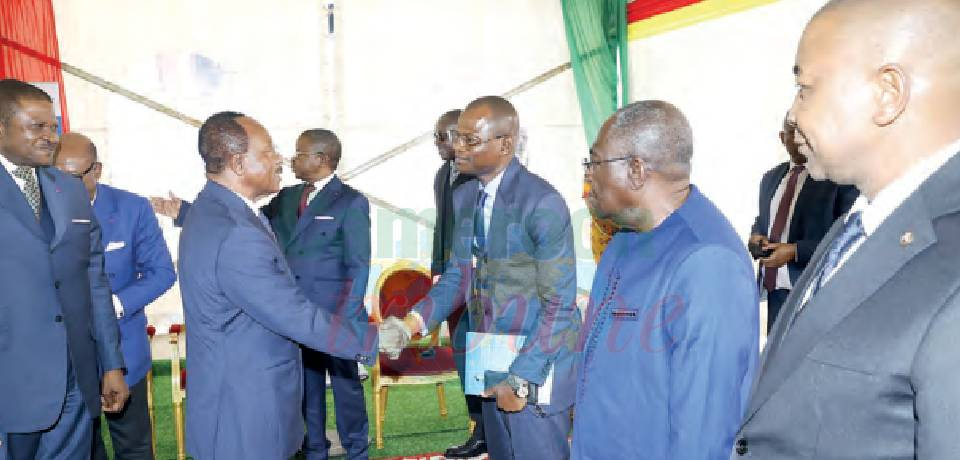
The necessity was echoed during the second ordinary meeting of the National Council for Statistical Information that held yesterday, November 17, 2026 in Yaounde.
C ameroon is overhauling how it collects and shares public data to meet strict international stan dards and protect official figures from artificial intelligence (AI) errors. This was revealed during the second or dinary meeting of the National Council for Statistical Information that held yesterday, November 17, 2026 in Yaounde. The Minister Delegate to the Minister of the Economy, Planning and Re gional Development, Paul Tasong, called for a "results-oriented" system that helps the government anticipate risks and track public spending. Un derscoring Cameroon’s economic re silience amid global trade tensions, commodity price swings, and climate challenges, Minister Tasong explained that the national economy grew by 4.3 per cent in 2025, matching the pace set in 2024. Meanwhile, inflation slowed to 3.27 per cent during the first nine months of 2026, continuing a downward trend from 3.4 per cent in 2025 and 4.5 per cent in 2024. Outlining the meeting's relevance for the economic and social management of Cameroon, INS Director General, Joseph Tedou, revealed that the ses sion focused on four major aspects aimed at modernizing Cameroon’s statistical system. First, the Council circulated a new National Quality As surance Framework for all public ad ministrations to implement. Tedou stressed that as artificial intelligence becomes more widespread, govern ment offices must monitor data clo sely to ensure official statistics do not originate solely from AI tools. Second, Cameroon is pushing forward with its commitment to adopt the International Monetary Fund’s (IMF) Special Data Dissemination Standard (SDDS). Meeting this demanding stan...
Cet article complet est réservé aux abonnés
Déjà abonné ? Identifiez-vous >
Accédez en illimité à Cameroon Tribune Digital à partir de 26250 FCFA
Je M'abonne1 minute suffit pour vous abonner à Cameroon Tribune Digital !

- Votre numéro spécial cameroon-tribune en version numérique
- Des encarts
- Des appels d'offres exclusives
- D'avant-première (accès 24h avant la publication)
- Des éditions consultables sur tous supports (smartphone, tablettes, PC)








Commentaires